Chemotherapy – A Magic Bullet?

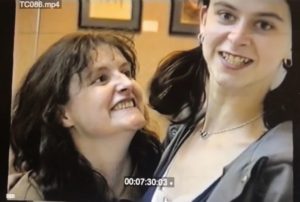
When I found out I was getting chemo I was curious to know what it was and how it worked. Prior to my treatment I picked up a booked called Understanding Chemotherapy. Published by Macmillan Cancer Support, it was aimed at people like me coming to chemo for the first time. It was clearly written, well-illustrated, and informative, but I wanted more. I wanted to get to the root of chemotherapy, to find out where it came from, when it started, how it developed. I started recording my impressions, keeping track of any side-effects, and Dini, my wife, put together a short video diary – vlogging a dead horse, as I thought at the time – after each session. But I wanted to step outside my own experience and try to understand the treatment by digging into its history. I believe in research as remedy and therapeutic practice. I used to joke about the healing power of footnotes. Some people might not want to know what’s happening to them but curiosity will kill me before cancer does. My impression of chemotherapy before my treatment started wasn’t a positive one. As far as I was aware, it roughed you up, then the cancer came back. That’s all I knew. I used to tell myself I’d refuse chemo if it was offered it. But when I found out that it would be the first line of defence in my battle against a cancer that was aggressive and advanced I changed my mind. Some people don’t like the military metaphor but I’m fine with it. I’m lucky as an academic to be able to access material that might be out of reach for others. I wanted to know exactly what form this treatment would take and how it would affect me. The first thing I learned was that chemotherapy has been around a long time and has a remarkable history. What follows is my attempt at a survey of this treatment from its origins to the present day.

Here’s a question. What do sleeping sickness (trypanosomiasis), malaria, syphilis, and mustard gas have in common? The answer is that they all lie at the tangled roots of chemotherapy. The earliest uses of chemotherapy were for sleeping sickness and syphilis. The story starts with founding figure Paul Ehrlich (1854-1915), a Polish-born German physician who did pioneering work in organic chemistry, immunology, oncology, haematology, pharmacology, and histology (the study of the microscopic anatomy of biological tissues).

Ehrlich’s thesis on “Contributions to the Theory and Practice of Histological Staining” earned him his doctorate at Leipzig University in 1878. Winner of the Nobel Prize in Physiology in 1908, Ehrlich is credited with coining the word ‘chemotherapy’ and defining its aim: “To be successful in chemotherapy we must search for substances which are fitted to annihilate the invading parasites with the least possible damage to the host organism.” Ehrlich approached his work like a cop trying to crack a case. Sir Henry Dale, Nobel Prizewinning pharmacologist and physiologist, said of Ehrlich’s personality: “I have heard him speak with enthusiasm […] of the Sherlock Holmes stories, and a portrait of Conan Doyle hung on his study wall; but that was because he prided himself on a supposed resemblance between Holmes’s detective methods and those of his own researches.”

Ehrlich’s interest in medicine and science began at an early age. During the school holidays, he mixed dye into the seeds fed to the family’s white pigeons. The birds were supposed to turn ‘a nice blue colour’. Instead, they died. Ehrlich persisted, and if pigeons were the earliest casualties of his search for a curative compound, then rabbits were also on the hit list. Ehrlich was ahead of his time in his interest in dyes as something that could be applied to living tissue as well as textiles. His PhD, completed in 1878, on selective staining of tissues was the basis of his future research. At this time chemotherapy was not considered as a treatment for cancer. Ehrlich’s research was directed towards a targeted treatment aimed at the destruction of harmful micro-organisms. Malaria was among the diseases he attempted to treat, but his breakthroughs came with the development of a single-dose treatment for Helicobacter pylori, and a treatment for syphilis in the form of a new compound called Salvarsan. The phrase, “magic bullet”, from the German “Zauberkugel”, was applied at this time to syphilis as a way of killing the parasite while preserving the host. The targeted treatment of cancer was still far off on the horizon. Ehrlich died in 1915, twenty years before the emergence of chemotherapy as a treatment for cancer, but his work laid the foundations for chemotherapy as we know it today.

One of Ehrlich’s early ideas was what he called ‘horror autotoxicus’: he argued that the body could never attack itself. Like Ehrlich’s other findings, this claim carried great weight, even when it ultimately proved untrue, but old theories die hard. When evidence mounted that the body could indeed attack itself, Ehrlich stuck fast to his original claim that this was an impossibility. According to Arthur M. Silverstein, “Ehrlich’s absolute dictum that autoimmune disease cannot occur would resound throughout the decades and prevent full acceptance of a growing reality”. Nonetheless, his ideas were crucial in providing the building blocks of modern methods for the treatment of cancer, as he was among the first to recognise the peculiarities of the disease.

In 1904, Ehrlich and his Japanese colleague, the distinguished bacteriologist Kiyoshi Shiga, investigated the use of dyes to treat trypanosomiasis, with mixed results. In 1910, Ehrlich developed an arsenical compound called salvarsan, the first targeted treatment of syphilis. Carl Browning, a medical student at the University of Glasgow, produced a study of chemotherapy for trypanosomiasis – aka “sleeping sickness” – as part of his MD thesis in 1908 in which he showed that Ehrlich’s treatment of a disease that had previously been fatal in animals with a ‘chemo-therapeutic agent’ was a game-changer. By 1912 chemotherapy was recognised as an emerging field.

The idea of “a magic bullet” persisted even after it became clear that there was no quick fix for any of the diseases to which chemotherapy was applied. But the phrase was hard to eradicate, and although its role in the search for a cure for syphilis was acknowledged, it soon became a byword for chemotherapy. A recent article on Ehrlich’s contribution to medicine, for example, speaks of his appointment in 1899 as director of Frankfurt’s Royal Institute of Experimental Therapy as a post that permitted him to pursue the “magic bullet”. One of the great ironies is that a phrase bound up with syphilis became indelibly associated with cancer, mainly because Hollywood produced a film in 1940 entitled Dr. Ehrlich’s Magic Bullet, starring Bucharest-born Edward G. Robinson. Playing Ehrlich came easily to Robinson, born Emanuel Goldenberg, because like Ehrich he had been on the receiving end of antisemitism, and proved to be a prominent anti-fascist in the period the film was made.

In 1941, Eric Boyland, a leading figure in molecular toxicology, stated: “Research on the chemotherapy of cancer is still in the stage of examining substances which inhibit tumour growth rather than cure it by causing complete disappearance of the tumour.” And the heels of chemotherapy turned slowly. In 1955, American clinical oncologist David A. Karnofsky cautioned against optimism around this new – or rather repurposed – treatment:

“Once cancer spreads beyond the site of origin, or when it appears initially as a disseminated disease, its subsequent and inexorable progression is determined largely by the biological characteristics of the disease in relation to the environmental situation provided by the host. The physician, in the past, has been frequently an interested but ineffectual observer, and this frustrating role has led to therapeutic discouragement and apathy. […] Only in recent years, beginning in the late 1930’s, were systematic efforts made to control the growth of certain forms of cancer by altering its physiological environment, and later, in the middle 1940’s, were drugs developed that temporarily restrained the growth of certain forms of neoplastic disease. Thus, in this brief period a new phase of cancer therapy was established-the search for drugs that could control, restrain, or destroy the growth of neoplastic cells wherever they existed in the body. A great deal of deliberate optimism was necessary to stimulate the growth of this field against the negativism that pervades any efforts to treat far-advanced or nonresectable cancer. Now a sound basic discipline of cancer chemotherapy is evolving.” Karnofsky, a non-smoker, died of lung cancer at the age of 55.

As recently as the 1960s, that is, in my lifetime, there was widespread scepticism in the medical community as to whether chemotherapy for cancer would be effective. Medical oncology was a fringe activity. The consensus was that cancer couldn’t be treated successfully in this way, and, as Vincent T. DeVita Jr and Edward Chu put it, “poison was the term in general use for anticancer drugs”. Resistance to chemotherapy within the medical establishment persisted. At Yale University innovative oncologist Paul Calabresi was frozen out due to his pioneering work with anticancer drugs, which was not popular with his colleagues. Again, as DeVita Jr and Chu observe: “It took plain old courage to be a chemotherapist in the 1960s and certainly the courage of the conviction that cancer would eventually succumb to drugs. Clearly, proof was necessary, and that proof would come in the form of the cure of patients with childhood acute leukemia and in adults with advanced Hodgkin’s disease.” A significant development in the USA was “the passage of the National Cancer Act of 1971 that launched the nation’s ever-controversial ‘war on cancer.’’’ This war on cancer was more than a magic bullet – it was a medical battlefield, and it remained so for decades to come.

By 2008, cancer researchers such as Vincent T. DeVita Jr and Edward Chu could look back on a century of chemotherapy:

“The use of chemotherapy to treat cancer began at the start of the 20th century with attempts to narrow the universe of chemicals that might affect the disease by developing methods to screen chemicals using transplantable tumors in rodents. It was, however, four World War II–related programs, and the effects of drugs that evolved from them, that provided the impetus to establish in 1955 the national drug development effort known as the Cancer Chemotherapy National Service Center. The ability of combination chemotherapy to cure acute childhood leukemia and advanced Hodgkin’s disease in the 1960s and early 1970s overcame the prevailing pessimism about the ability of drugs to cure advanced cancers, facilitated the study of adjuvant chemotherapy, and helped foster the national cancer program. Today, chemotherapy has changed as important molecular abnormalities are being used to screen for potential new drugs as well as for targeted treatments.”

My first experience of four months of chemotherapy between November 2023 and March 2024 was far from traumatic. In fact it made me appreciate the health service we have in Scotland, the quality of care and the company of fellow patients – I won’t say “sufferers”, as that assumes too much. I shared a room with several others undergoing the same treatment and we talked, laughed, read, listened to music and swapped ideas about diet and exercise. The drug I was administered during that first course of treatment was Docetaxel. I’ve now embarked on a second course of chemotherapy, Cabazitaxel, that will take me through to  July if all goes according to plan. I know this is no magic bullet, but I welcome the opportunity to kill some cancer cells and buy some time. For me, understanding chemotherapy has been a form of therapy. I feel prepared.

REFERENCES

Anyone interested in the reading I did on the road to writing this piece can find most of the sources here:

Adrian Albert, Selective Toxicity: The Physico-Chemical Basis of Therapy, 7th edition (London: Chapman & Hall, 1985; first published 1951).

Muhammad T. Amjad, Anusha Chidharla, and Anup Kasi, ‘Cancer Chemotherapy’, StatPearls. StatPearls Publishing, Treasure Island (FL); 2023. PMID: 33232037,

https://pubmed.ncbi.nlm.nih.gov/33232037/.

George Androutsos, ‘Paul Ehrlich (1854–1915): Founder of Chemotherapy and Pioneer of Haematology, Immunology and Oncology’, Journal of the Balkan Union of Oncology

9 (2004): 485-491.

Hans C. S. Aron, ‘Paul Ehrlich: His Contributions to Medicine: A Tribute at the Centennial of his Birthday’, Journal of the American Medical Association 154, 12 (1954): 969-972.

Julius M. Bernstein, ‘Chemotherapy’, in Applied Pathology (London: Published for The University of London Press by Hodder & Stoughton and Henry Frowde, 1913), 361-376.

Eric Boyland and Elinor Huntsman Mawson, ‘Experiments on the Chemotherapy of Cancer: The Effect of Aldehydes and Glucosides’, Biochemical Journal 32, 11 (1938): 1982-1987.

Eric Boyland, ‘Experiments on the Chemotherapy of Cancer: The Effect of Certain Antibacterial Substances and Related Compounds’, Biochemical Journal 32, 7 (1938): 1207-1213.

Eric Boyland, ‘Experiments on the Chemotherapy of Cancer: Further Experiments with Aldehydes and their Derivatives’, Biochemical Journal 34, 8-9 (1940): 1196-1201.

Eric Boyland, ‘Experiments on the Chemotherapy of Cancer: The Effect of Muscle Extract and Aliphatic Bases’, Biochemical Journal 35, 10-11 (1941): 1283-1288.

Eric Boyland, ‘Chemical Carcinogenesis and Experimental Chemotherapy of Cancer’, The Yale Journal of Biology and Medicine 20, 4 (1948): 321-341.

Carl H. Browning, ‘Chemo-Therapy in Trypanosome Infections: An Experimental Study’, Journal of Pathology and Bacteriology 12, 2 (1908): 166-190.

Carl H. Browning, ‘Chemotherapy’, in A System of Bacteriology in Relation to Medicine, Volume 6 (London: H. M. Stationery Office, 1929), pp. 501-516.

John Cairns, Peter Boyle and Emil Frei, ‘Cancer Chemotherapy’, Science 220, 4594 (1983): 252, 254, 256.

‘Chemotherapy and Cancer’, The British Medical Journal 1, 4039 (1938): 1216.

Henry Dale, ‘Paul Ehrlich’, British Medical Journal 1, 4863 (1954): 659-663.

Henry Dale, ‘Introduction’, in F. Himmelweit (ed.), The Collected Papers of Paul Ehrlich, 4 vols., Volume III: Chemotherapy (London: Pergamon Press, 1960), 1-8.

Luke Demaitre, ‘Medieval Notions of Cancer: Malignancy and Metaphor’, Bulletin of the History of Medicine 72, 4 (1998): 609-637.

Vincent T. DeVita Jr and Edward Chu, ‘A History of Cancer Chemotherapy’, Cancer Research 68, 21 (2008): 8643-8653.

Emil Frei, ‘Cancer Chemotherapy’ [Reply to Cairns and Boyle], Science 220, 4594 (1983): 254, 256.

Iago Galdston, ‘Some Notes on the Early History of Chemotherapy’, Bulletin of the History of Medicine 8, 6 (1940): 806-818.

Iago Galdston, ‘Ehrlich, Biologist of Deep and Inspired Vision’, The Scientific Monthly 79, 6 (1954): 395-399.

Carlos Gamio, ‘Of Rabbits and Men: The Tale of Paul Ehrlich’, Microessays 2016: Science Communication in Action: 6-11. A collection of short articles about microbiology written for the general public by Microbiology, Virology and Parasitology students from the University of Glasgow, https://www.gla.ac.uk/media/Media510620smxx.pdf#page=6

Gian Franco Gensini, Andrea Alberto Conti, and Donatella Lippi, ‘The Contributions of Paul Ehrlich to Infectious Disease’, Journal of Infection 54, 3 (2007): 221-224.

Susan Gubar, ‘In the Chemo Colony’, Critical Inquiry 37, 4 (2011): 652-670.

Chris Hoy, All That Matters, written with Matt Majendie (London: Hodder & Stoughton, 2024).

Venita Jay, ‘Paul Ehrlich: A Portrait in History’, Archives of Pathology & Laboratory Medicine 125, 6 (2001): 725-725.

David A. Karnofsky, and Joseph H. Burchenal, ‘Present Status of Clinical Cancer Chemotherapy’, The American Journal of Medicine 8, 6 (1950): 767-788.

David A. Karnofsky, ‘Chemotherapy of Cancer’, CA: A Cancer Journal for Clinicians 5, 5 (1955): 165-173.

Stefan H. E. Kaufmann, ‘Paul Ehrlich: Founder of Chemotherapy’, Nature Reviews Drug Discovery 7, 5 (2008): 373-373.

Perrin H. Long, ‘Paul Ehrlich and Modern Chemotherapy’, Bulletin of the New York Academy of Medicine 28, 5 (1952): 344-346.

Audre Lorde, A Burst of Light: Essays (Ann Arbor, Michigan: Firebrand Books, 1988).

Macmillan Cancer Support, Understanding Chemotherapy (2022), https://cdn.macmillan.org.uk/dfsmedia/1a6f23537f7f4519bb0cf14c45b2a629/9153-10061/mac11619-e16-chemotherapy?ga=2.224655770.1079658837.1705659312-2146784877.1705659312.

William Martindale, The Extra Pharmacopoeia, revised by W. Harrison Martindale and W.W. Westcott, 2 vols. (London: H. K. Lewis and Company, 1912).

Denis R. Miller, ‘A Tribute to Sidney Farber – The Father of Modern Chemotherapy’, British Journal of Haematology 134, 1 (2006): 20-26.

John Parascandola, ‘The Theoretical Basis of Paul Ehrlich’s Chemotherapy’, Journal of the History of Medicine and Allied Sciences 36, 1 (1981): 19-43.

Anna Piro, Antonio Tagarelli, Giuseppe Tagarelli, Paolo Lagonia & Aldo Quattrone, ‘Paul Ehrlich: The Nobel Prize in Physiology or Medicine 1908’, International Reviews of Immunology 27, 1-2 (2008): 1-17.

Steven Riethmiller, ‘Erlich, Bertheim and Atoxyl: The Origins of Modern Chemotherapy’, Bulletin for the History of Chemistry 23 (1999): 28-33.

Steven Riethmiller, ‘From Atoxyl to Salvarsan: Searching for the Magic Bullet’, Chemotherapy 51 (2005): 234-242.

John M. Riddle, ‘Ancient and Medieval Chemotherapy for Cancer’, Isis 76, 3 (1985): 319-330.

Bartolomeo Ruspini, Ruspini’s Styptic (Manchester: Butterworth & Co., 1884).

Arthur M. Silverstein, ‘Autoimmunity Versus Horror Autotoxicus: The Struggle for Recognition’, Nature immunology 2, 4 (2001): 279-281.

Arthur M. Silverstein, ‘Paul Ehrlich, Archives and the History of Immunology’, Nature Immunology 6 (2005): 639.

Susan L. Smith, ‘Mustard Gas and American Race‐Based Human Experimentation in World War II’, The Journal of Law, Medicine & Ethics 36, 3 (2008): 517-521.

Susan L. Smith, ‘War! What is it good for? Mustard Gas Medicine’, Canadian Medical Association Journal 189, 8 (2017): E321-E322.

Susan Sontag, Illness as Metaphor (New York: Farrar, Strauss and Giroux, 1978).

Fritz Stern, ‘Paul Ehrlich: The Founder of Chemotherapy’, Angewandte Chemie International Edition 43, 33 (2004): 4254-4261.

Alfred W. Stewart, Chemistry and its Borderland (London: Longmans, Green, and Co, 1914).

Michael Stolberg, ‘Metaphors and Images of Cancer in Early Modern Europe’, Bulletin of the History of Medicine 88, 1 (2014): 48-74.

Owsei Temkin, ‘In Commemoration of the Hundredth Anniversary of the Birth of Paul Ehrlich: The Era of Paul Ehrlich’, Bulletin of the New York Academy of Medicine 30, 12 (1954): 958-967.

B. T. Terry, Chemo-Therapeutic Trypanosome Studies with Special Reference to the Immunity Following Cure (New York: The Rockefeller Institute for Medical Research, 1911).

Peter Valent, Bernd Groner, Udo Schumacher, Giulio Superti-Furga, Meinrad Busslinger, Robert Kralovics, Christoph Zielinski et al, ‘Paul Ehrlich (1854-1915) and his Contributions to the Foundation and Birth of Translational Medicine’, Journal of Innate Immunity 8, 2 (2016): 111-120.

K. J. Williams, ‘The Introduction of ‘Chemotherapy’ Using Arsphenamine – The First Magic Bullet’, Journal of the Royal Society of Medicine 102, 8 (2009): 343-348.

Bernhard Witkop, ‘Paul Ehrlich and His Magic Bullets, Revisited’, Proceedings of the American Philosophical Society143, 4 (1999): 540-557.

Terminal Two: My Second Year With Cancer

Cancer like a silence grows. That’s why I like to talk about it, even to the point of oversharing. Last July I wrote about the first anniversary of my diagnosis and now the second anniversary is upon me. They say the sequel is never as good as the original, but it has been another great year despite the odd setback. This time last summer I felt I’d found a kind of equilibrium. I was still dealing with side effects: tiredness and bone pain, low-level background anxiety, chemo-induced neuropathy, brain fog. And the side effects from the hormone therapy, physical and emotional changes. But leaving these aside, I felt positive. My working life was coming to an end. I had more time to spend with my wife Dini and our grandkids, and we took some great trips, including our first visit to Ireland as Irish citizens. I was finding it easier to take pleasure in small achievements. In August a wee girl fell in the pond in our local park unseen by anyone else, and as I waded in to rescue her I had a fleeting thought: maybe I’ve been spared to do this one thing. The butterfly effect.
At the end of September I retired from the University of Glasgow after 30 years. I had no regrets about retiring, especially now that I was settling into a routine and had a good fitness regime going, something I could never have done while I was working. I spoke to a senior colleague many years ago who talked about ‘stopping distance’, and how you have to slow down in the months and years leading up to retirement – advice he never took himself – but this condition has made it easy for me to let go of my working life.
Among the first fruits of my retirement was a trip to Spain with my brother John. We had talked for years about making a visit to Salamanca, where our father was imprisoned in 1937 after his capture at the Battle of Jarama while fighting with the International Brigades. The trip would never have happened if it hadn’t been for the cancer lighting a fire under me and the burden of work being lifted off my shoulders.
In November I embarked on a course at Maggie’s cancer care centre called ‘Where Now?’ designed to provide guidance on next steps after treatment, aspects such as emotional well-being and managing side-effects, healthy nutrition and exercise. It was another thing I couldn’t have done while working, as it involved a regular commitment over a six-week period. The expert input from Maggie’s staff proved invaluable but what resonated most with me was the chance to share experiences with my new cancer comrades, my Maggie’s mates. By the time the course finished I felt ready for whatever lay ahead. Which was just as well.
On the 26th of November, I had what I thought was a routine telephone appointment lined up with the oncologist, but at the last minute I was told to attend in person. I was on my own, and that felt odd, because usually Dini accompanied me to in-person appointments. The oncologist asked me how I felt, and I gave my standard reply: ‘Fantastic!’ It was an honest answer, because at that time I was relatively pain-free, mobile, eating well, sleeping well, and exercising every day, doing weight training to ward off the risk of osteoporosis and fractures that comes from being on ADT (Androgen Deprivation Treatment). The doctor’s response was ‘I’m surprised to hear that.’ My recent blood tests, he said, had raised concerns about a discrepancy between the successful suppression of my testosterone by the ADT, and a steady rise in my PSA (Prostate Specific Antigen). This was likely to mean that the cancer was spreading. My PSA was actually doubling, albeit from a relatively low starting point in the wake of the chemo and hormone therapy. Maybe it was psychosomatic, but right after that appointment I started to feel pains in my back.
If clutching at straws was an Olympic event I’d win the Gold Medal. After that appointment I clung to a couple of things that could have some bearing on the upward trend in my PSA. When I’d seen the oncologist I was just two days away from my new 3-monthly ADT injection, so I was at the end of the last cycle; maybe this could explain the hike. And I was using a topical steroid cream to alleviate a skin problem. I’d read somewhere that such creams could raise PSA. I mentioned these things to the oncologist. He shook his head. I was lined up for some urgent scans and tests: a nuclear medicine bone scan, a CT scan, and further blood tests. Once all the results were in I was given an appointment for Christmas Eve.
While this was going on, Beatson physiotherapist Katie Booth put me in touch with Medical Illustration Services at Glasgow Royal Infirmary. She had suggested me as a narrator for a new public information film entitled ‘Physical Activity and Strength Training Whilst on Hormone Therapy for Prostate Cancer’. It was a welcome diversion, and I was glad to be making a small contribution to wider awareness of the disease and its treatment.
Early in December I read Chris Hoy’s brilliant book, All That Matters, about his first year with metastatic prostate cancer. He was diagnosed at the same time as me with the same form of the disease – stage 4, incurable, inoperable, terminal – and the same prognosis – 3 or 4 years. It turns out we went through chemo at the same time, finishing that course of treatment in March of last year. There the comparison ends, of course. Chris Hoy, Olympic gold medallist, was only 47 when diagnosed and has two young children, so his story has a particular poignancy and intensity. I appreciated his directness and the details of his thoughts and feelings after the diagnosis, how difficult he found it to tell people – much harder for him of course, as he had to tell his kids too, as well as the public eventually.
The most compelling aspect of Hoy’s memoir for me was the message of hope, and his stress on the value of living in the here-and-now. I’d recommend his book to anyone facing cancer or chemotherapy, or with family and friends facing it, though I’d caution against letting his alarming account of chemo instil trepidation. Every cancer is different, and as Hoy himself acknowledges, ‘Chemotherapy is different for every single person who goes through it.’ I sailed through my chemo, and I watched others do the same, chatting, reading, listening to music, looking out the window, one person even doing their business on the phone. I was lucky in that respect.
On Christmas Eve I went along to the Beatson to get the results of my various scans, with Dini at my side to take notes. The fears raised a few weeks earlier were confirmed: the treatment had failed, and the cancer had spread to my left arm, pelvis, and another part of my spine. This wasn’t the Christmas present I was hoping for. The treatment that had failed – ‘Triplet Therapy’, the gold standard for my condition – was supposed to buy me 3 or 4 years. My cancer had become ‘castration-resistant’, much more quickly than expected. I didn’t know whether to be proud or ashamed. Me and my cancer – Captain Howdy – had been co-habiting for a couple of years. We had a deal, an accommodation. Our little arrangement was that he’d hang around my spine and bide his time and I’d get on with my life as best I could, but he’d reneged on the deal.
January brought better news as I was thrown another lifeline. I had a call from the oncologist to say that the application for a new drug had been approved. I was to be offered a treatment even more pioneering than the last, called Lutetium-177 (aka Pluvicto), a radioactive isotope that targets the cancer cells directly, more so than the chemo. Some people call it ‘that treatment the guy from Duran Duran got’, in reference to John Taylor, who hailed it as a miracle. This trailblazing treatment would be delivered in six sessions over a seven- or eight-month period.
On Thursday the 13th of February I gave a short talk at the West of Scotland Cancer Prehabilitation Education & Engagement Event. The venue was the Sir Chris Hoy Velodrome/Emirates Arena. I spoke about my own experience and the challenges I faced, and about the benefits of exercise, specifically weight training. While I was talking there was an image on the screen behind me that had been left up by the previous speaker, Katie Booth. I had no idea this slide was about me till I zoomed in later on a photograph someone had taken at the time and saw that it was a graphic summary of my case notes from the previous February, and contained medical information that was news to me. The HPC (History of Presenting Complaint) laid out the bones of my skeletal metastasis in medical shorthand: ‘63yo male with T4 N1 M1b high risk high burden Gleason 5+5=10 carcinoma of prostate with bone mets (eg. Thoracic and Lumbar spine, sternum, proximal left humerus, sacrum, innominate bones and proximal left femur).’


That was a lot to take in, and I was glad to be getting another chance to lighten the burden. On the 31st of March my new treatment started. The radioactive isotope is administered intravenously. I was kept in overnight at the Beatson for monitoring after the first infusion, but will get the remaining doses as a day patient in the Nuclear Medicine Department at Gartnavel Hospital. The staff there are wonderful. There are no significant side effects so far. I have to shield after each session as it makes me radioactive, but COVID has made that kind of social distancing manageable. After each session a Geiger counter measures my radioactivity, then I get a bone scan during which I usually nod off. Bliss. For a week or so after the injection Dini and I need to sleep separately and keep a metre apart at all times. I can’t be in the presence of the grandchildren during that period, which is hard. And I have a letter of explanation in case I set off alarms if I go through airport scanners.


Lutetium-177 is given rarely, and currently only to those who have already gone through chemo and whose cancer has become castration-resistant. I feel lucky to have been given another chance. I’m calling it the lock-in after last orders at the bar, or maybe it’s the second wind that runners get, or, to use another sporting analogy, I am into Fergie Time. I’m hoping that this new treatment will give me another year, or three, or four, or more.

At the end of March I got an email from a friend who’d had a PSA test at my urging, one of several men I’ve sent to the doctors, some of whose checkups have resulted in ‘watch and wait’ guidance, or radiology, or in one case a prostatectomy. The writer of this email had got an amber light at an early stage, and was grateful to me for nudging him towards the doctor. He ended his message with. ‘So, maybe I’m another little girl you saved from drowning.’
In May I gave a short presentation at Cameron House, Loch Lomond, as part of a fundraising event for Maggie’s. That place has been a vital resource, giving me a boost of strength and support whenever I’ve needed it, as well as laughter during our fitness classes as we dance along to classics like ‘Kentucky Fried Chicken and a Pizza Hut’. Fast food is not part of my cancer-busting diet, but that daft song gave me an idea then for a fundraising event, a sponsored marathon disco called ‘Cancer Ya Dancer!’, which I’m told may well happen.


They say there are four stages to Stage 4 cancer: diagnosis, denial, defiance and death. I’m still at the defiance stage, and I realise denial never goes away. We can’t imagine our own death, even if we try to mimic it like kids do, lying on a mat and trying not to breathe. I was talking to someone recently who mentioned that he taught ‘death yoga’ and that struck a chord. The term was new to me, but as he spoke about what this activity entailed I realised I’d actually been practising it for the past two years. ‘Shavasana’, or Corpse Pose, a posture that stretches back to the fifteenth century, has been part of my daily routine since my diagnosis. I lie flat on my back, arms outstretched, and contemplate my own death, slowly letting go of any fears I might have, and embracing the silence. I may study for a black belt.

Terminal One: My First Year With Cancer

I was diagnosed with terminal cancer a year ago today. It’s been one of the best years of my life.

A blood test I was given on the morning of Tuesday 11th July 2023 – a Prostate Specific Antigen test – showed a reading of 269. For context: anything above 4 is considered a problem. It prompted a call at 5pm from the lead practitioner at my local surgery to tell me I had cancer. It was not normally something he would announce by phone, he said, but taken together with the result of an X-ray the previous week which revealed a possible collapsed vertebra, there was no time to waste. It was likely the cancer had gone into my spine and I was in danger of paralysis or worse. I had to pack a bag straight away and go directly to QEUH (Queen Elizabeth University Hospital).

His call came while I was  listening to Oscar Peterson’s “Angel Eyes” with my grandson. He was transfixed by the music, his face a picture. All was well in our world. Twenty minutes later Dini and I were in a taxi on the way to the Acute Assessment Unit, telling ourselves there must be some mistake. After a wait I was seen by a doctor who told me I had to lie down on a hospital bed and stay still, like a Ming vase with a crack in it, while tests were done. That was a long night for me, but also for Dini, who went home at midnight to an empty house not knowing what would happen or when I’d be home. I took a selfie while I lay there wondering what was to come.

At one point an oncologist came and crouched down beside me to talk. I don’t remember much of what he said, but the way he came down to my level rather than hovering over me moved me to tears. Eventually, at 2am, a bed was found for me on the 9th floor. The porters who took me up in the lift joked about the amount of pee I’d left in the urine bottle.

Next morning the MRI (Magnetic Resonance Imaging) showed that the collapsed vertebra was an old T5 wedge fracture, not directly linked to the cancer. This was good news. They believed the cancer must be on my spine, not in my spine, an important distinction. I could sit up and move about. I would be put on monthly stomach injections of Firmagon (Degarelix), a form of Androgen Deprivation Therapy (ADT), the standard treatment for reducing the testosterone on which the disease depends.

I saw four doctors in three days, a urologist and three oncologists. I was spoiled rotten. On the Wednesday morning after my MRI another doctor knelt at my bedside and asked if I understood what was happening. I didn’t really, and anyway they were telling me they didn’t have the whole picture yet. All I knew was that I had prostate cancer and it appeared to have spread to my pelvis and back. I saw a third oncologist on the Thursday morning who told me I was getting out of hospital. “But I’m institutionalised!” I said. He laughed, but I was half serious. With the trauma and the constant testing of my pee, blood being taken, and attention from nursing and medical staff, I felt I’d been in for forty days and not forty hours. This doctor pulled no punches about my condition, but he had constructive advice to give. People will say that you can’t do anything to help yourself, but that’s not true, he said. He explained how the hormone therapy would mean I’d lose muscle and bone density, increasing the risk of osteoporosis and fracture, but I could do weight training to help counter the effects. It would also make a difference if I ate well and stayed positive. I told him I had a conference coming up on the Tuesday of the next week that I’d spent years preparing for, which had already been postponed because of the pandemic. Don’t give up on anything that gives you pleasure, he said.

Five days later I was at the podium in Bute Hall introducing the Principal of the University at the opening of the first International Outlander Conference. Diana Gabaldon was our star speaker. I wore my loudest shirts and the conference went off like a cracker.

Although the diagnosis came out of the blue, I wasn’t completely surprised that there was something seriously wrong. I’d had sixteen months of symptoms prior to that PSA test, including back pain and inflammation from hip to shoulder on the right-hand side. It was the longest period of illness I’d had in my life, but because I’d been to the GP regularly and been given several blood tests I was confident it couldn’t be cancer. I had no idea what a PSA test was, and nobody had mentioned it. I thought I had some mystery illness.

When I got out of hospital I was given a discharge letter which provided details of the diagnosis for my GP. I gave it a cursory scan but didn’t look too closely. It’s true I read for a living, but I can be sloppy when it comes to reading things that matter. I passed the letter round family members that afternoon like a box of Quality Street, and they all read it. Dini scrutinised and digested it and began a long period of intensive research into prostate cancer on my behalf. I went off in a different direction, researching the history of cancer generally, and later, when I was lined up for that treatment, the history of chemotherapy.

Months later I came across the discharge letter and this time I read it properly. I confronted Dini with it. “Have you read this?” I said, shocked at the words “MRI confirmed bone metastases”. Of course, she had.

Over the next couple of months I had a CT Scan, a nuclear medicine bone scan, my second dose of Degarelix, and a biopsy. I inadvertently called it an autopsy when I was phoning to find out when it would happen, and I think that made the receptionist’s morning. Before I went in for the biopsy I sat in a waiting room with several other men around my age. It struck me that in our white gowns we looked like Roman Senators, dignified and resolute. We could have been carved in marble and set above the hospital entrance.

I still had to wait for all the results to be gathered and assessed before I would know the precise prognosis or programme of treatment. There were some delays, but to have had the diagnosis, CT Scan, bone scan and the appointment (for prognosis) within two months was a small miracle with the NHS under such enormous pressure. I met with a specialist cancer nurse at New Victoria Hospital on the 19th of September. He told me in a matter-of-fact manner that from the scans so far they could tell that the cancer had spread around my spine and possibly into my right lung, and I had a very advanced and aggressive form of the disease. Surgery wasn’t an option, but chemo was. I asked how long someone with my stage of cancer could survive. Five years at best, he said. As I left the hospital I saw in the grounds a monument in the form of a massive rock, and thought of Sisyphus.

A colleague who had had cancer recommended the Maggie’s Centre at Gartnavel and that was a godsend. Having a cup of tea there and chatting to others with cancer made me realise I was in good company. Not only did I now have access to fitness classes and yoga, counselling sessions and advice, but going there was important to me as an admission of my condition. That may sound strange, given that I have told family, friends, colleagues and the cats and dogs in the street about my cancer, but denial runs deep. Having conversations about the disease with people in the same boat, or a similar boat, brings it home. There’s a bond that forms instantly. “Cancer Conversations” is the name of a project I’m now working on with some colleagues who have also been through it, as a way to share our knowledge and experience.

It was decided I would be a good candidate for Triplet Therapy, a pioneering treatment for advanced prostate cancer. Three drugs were to be administered, the 3 Ds: my existing and lifelong monthly stomach injections of Degarelix; a new daily oral anti-cancer drug, Darolutamide; and the intravenous chemotherapy, Docetaxel. There were delays in starting, which was frustrating: the treatment had to be delayed for a week while clearance was confirmed for the Darolutamide; then I caught Covid and treatment had to be postponed for a further two weeks. On Wednesday 1st of November the chemo finally started. In my first session, sitting in a comfy chair in that big room with nine other people, winter sun slanting in, listening to Spotify – Genesis, the Jam, various compilations – and occasional chitchat, it didn’t feel like the end of the world.

I had minimal side effects, just twenty seconds of mild discomfort as the Docetaxel went in. My oncologist was a pioneering researcher with an interest in new treatments so I knew I was in good hands. The fact that I lived within walking distance of the Beatson West of Scotland Cancer Centre where I was getting the chemotherapy made things easier too. I often thought of those who had to travel some distance and find a place to stay overnight. On many levels I was lucky.

I took time off from work for the first couple of chemo sessions but after that I realised I could work fine from home and was able to answer emails while getting the chemo. Fortunately my side-effects were minimal. The hair loss paused at a sort of old Victorian doll look. I was tempted to shave the angel hair off but Dini persuaded me to let it take its course.

On chemo days I was given dexamethasone and hydrocortisone, and my feet were dancing in bed. I had no other side effects of note, just slight brain fog and an occasional hot flush.

When I had first heard I was getting chemo I’d called it “schemotherapy”. I like a pun as much as I like a podium and that coinage captured the attitude I hoped to take into the treatment. It also planted the seed of an idea for a rap under that title and in the middle of the treatment I started to scribble some lines. It came together quite quickly, and I thought I would share it with male friends who might be unaware of the need for vigilance around prostate health. When I recited the lines to my niece Norma she insisted I get it down on video. Norma filmed it at a location with a backdrop of graffiti to give it some street cred and I duly posted it on social media. It was picked up on by one of the first students I taught at the University of Glasgow, Paul English, and he interviewed me for The Herald about it. This was going public in a big way.

Around this time, as the result of a referral through the Maggie’s centre, I was contacted by Jill Robertson, Holistic Support Officer at the Improving the Cancer Journey Service based in Glasgow City Council. Before that phone call I thought I had everything under control, but talking to Jill made me realise just how much support and advocacy we all need as cancer sufferers even when we think we’ve got the hang of it. It was another lifeline.

In May I was given a new drug called Prostap (Leuprorelin), the first of a series of injections to replace the Degarelix to which I’d begun to have a bad reaction. In June I saw my oncologist to get the latest scan results – bone and CT – and he said they were “spectacular”. The treatment has improved my condition, and the cancer has shrunk significantly around my back and hip. The suspicious shadow on my lung turns out not to be cancerous after all, but some sort of bronchial issue. I asked the doctor about how much time I might have left. I had a wee joke with him that went like this:

ME: Have I got time to start a novel?

DOCTOR: It depends on how long you take to write it.

ME: I mean read a novel.

He said the prognosis based on the type of cancer I have remains 4-5 years from diagnosis, i.e. 3-4 years hence, so still quite life-shortening. My hope is that since I’ve responded well to treatment, I may be a statistical outlier. I plan to persist and to defy the data. New treatments are being developed all the time, and as my doctor said, “Cancer can’t read”, so it doesn’t know what it’s up against in future. I’ll do everything I can to cling onto dear life for dear life and for family and friends.

Cancer takes time off you, telescopes and truncates it, but it makes every minute count too. When I announced my plan to retire in September I had overwhelmingly warm, life-affirming responses from colleagues, friends and students. My hair has grown back thick and lush since the chemo and I’m averaging more steps a day this year than last, according to my phone. The weight training I’m doing to ward off the risk of osteoporosis and fractures is making me feel stronger and fitter, and I’m eating and sleeping better than before. It’s been a great year all round, and there’s more to come. I’ve never been so in love with my wife and with life, so keen to see my family and friends, so glad to enjoy the life outside work that was always just out of reach of the deadlines and demands of the job. No matter how many years are left, they will be all the more golden because of what has happened.


James Joyce in Glasgow: ‘clyding by on her eastway’

Willy Maley Blog

In Finnegans Wake, the most woke book in history, James Joyce alludes in his own unique oblique fashion to a match between two Scottish football clubs, Partick Thistle and St Mirren, a fixture played at Love Street, Paisley, on Holy Saturday, the 7th of April 1928, which ended in a 2-2 draw. (1) The University of Glasgow is hosting the International Joyce Symposium from 14-19 June 2024. The conference title, ‘Across the Waters’, is well-chosen, for as my colleagues organising this event point out, Joyce has a connection with this city that goes back to his earliest travels and forward to his last great work: ‘For James Joyce, as for many Irishmen and women, Glasgow was the first city he saw beyond his native shores. During the Summer of 1894, Joyce crossed to Scotland from Dublin on a Duke Line steamer with his father. It was also the city where his last book, Finnegans Wake, was printed by the firm of James MacLehose & Sons in Anniesland during the 1930s. 130 years after Joyce’s visit, the University of Glasgow is welcoming the James Joyce Foundation to Scotland for the first time to hold the 29th International Joyce Symposium.’ (2) Joyce was twelve years old at the time of his visit to Glasgow, and the short version is that it rained and his father drank too much and got into a fight. We only know about this jaunt at all thanks to his younger brother, Stanislaus, who describes it briefly but poignantly in his memoir, My Brother’s Keeper, published in 1958. James Joyce died in 1941, and Stanislaus in 1955, so neither brother was around to elaborate further on that Scottish journey. Richard Ellmann could take the story no further forward in his 1959 biography of Joyce, and scholars have subsequently lamented the fact that we have only a sketchy account of the writer’s first trip outside of Ireland. (3) Joyce’s visit to Glasgow with his father is touched on briefly by their respective biographers, who clearly haven’t visited the city in June, the rainy season, judging by comments like ‘The visit was spoiled by rain’, and ‘Depressingly, it poured with rain.’ I laughed out loud when I read those remarks. So, we don’t know much about Joyce’s Glasgow bucket list, except that it bucketed, but perhaps we know more than we think we know. We certainly know enough about the route Joyce would have taken to Glasgow by boat and train, and the things he might have seen on the way, to be able to follow in his footsteps – or wallow in his wake – up to a point. What I aim to do here is map out Joyce’s journey as far as is possible given the scarcity of sources and the barebones information provided by Stanislaus. (4)

Joyce’s first sight of Scotland would be the view of Princes Pier Station at Greenock, where the Duke Line docked. This was the first port of call for passengers on the way to Glasgow, some twenty miles from their final destination. In fact, we know exactly what Joyce’s first view of Scotland was, because we have some remarkable photographs of his landing point in 1894, the year after that it was revamped to compete with the neighbouring port of Gourock. (5)

The new station opened on 25th May 1894, so the Joyces would have disembarked here. But what did they see on their journey from Dublin? Imagine if we could join the young James Joyce on that trip with his father and see the journey through his eyes. Luckily we can, thanks to a tour guide from the time. Although published in June 1884, exactly ten years before Joyce’s journey, this account describes the overnight sea crossing in some detail, and points to the landmarks that passengers would pass as they travelled, from dawn to dusk, from Dublin to Greenock, from the Liffey to the Clyde. (6)

In Ulysses there’s a reference to ‘Dublin and Glasgow Steam Packet Company – The Duke Line, 70-72 North Wall Quay.’ Joyce was precise about these things. The Duke Line – or the Dublin & Glasgow Steam Packet Co., to give it its official title, as Joyce does – was formed in 1823, and sailed from the North Wall Quay on the Liffey to Princes Pier in Greenock and onwards by connecting train to Glasgow Central railway station, a total journey time of around 12-14 hours, the last leg by train in Joyce’s time taking between 45 minutes and an hour.

We don’t know the exact date of Joyce’s journey, though it probably took place sometime around June. We don’t have passenger lists for travel between Ireland and Scotland for this period so we don’t know which boat Joyce sailed on or the dates of travel. He could have been aboard any of the ‘splendid saloon paddle steam ships’ run by the company, including the Duke of Argyll, the Lord Clyde, and the Lord Gough. Joyce might have been onboard the iron paddle steamer, Duke of Leinster, built by Robert Duncan & Co. of Port Glasgow and launched in 1870. It was a vessel with a troubled history. On the 19th of November 1874 it ‘ran down jolly boat of HMS AURORA off Prince’s Pier (outward for Dublin); 15 of 30 in the rowing boat were drowned or killed by the impact.’ (7) Whatever vessel they travelled in, Joyce and his father would have stepped onto Princes Pier into a town that was a home from home.

First off, upon arrival in Greenock the Joyces may have been met by John Joyce, a 41-year-old railway porter living in the town at 21 Wellington Street. (8) They would have heard Irish accents aplenty. According to Shaun Kavanagh: ‘In the whole of Britain, by 1871 only London had more Irish migrants per head of population than Greenock.’ (9) Greenock was a hub of Irish cultural and political activity. The Greenock Irish National Association founded in 1865 would prove a seedbed for the Scottish contribution to the Easter Rising of 1916. (10)


Joyce would have been interested to know of the Greenock Burns Club, founded on 29 January 1802, and known as ‘The Mother Club’ because of its pioneering advocacy of the poet’s work. (11) Originating in Greenock Ayrshire Society in 1801, by the time of Joyce’s arrival in the town it was a bastion of Burns enthusiasm. According to the current website: ‘In 1894 the club’s activities were described thus: “Few if any clubs of a similar kind have done such excellent and praiseworthy work among the young people of the community. It has encouraged the reading of the great master’s poems, singing of his pure songs…and created and fostered a taste for the works of the other poets and literary men who shine with him in the galaxy of enduring fame.”’ The 1894 Invitation to the Greenock Burns Club reads: ‘Dr Nansen finds himself forestalled at the NORTH POLE by the proverbial Scotsman, but is consoled by an invitation to the local BURNS CLUB DINNER’, a reference to Norwegian Nobel prizewinning polymath Fridtjof Nansen’s polar expedition. Nansen is part of the ‘nansense’ of the Wake. (12)

There is so much to say about Greenock, this historic port town, the gateway to Glasgow for the young James Joyce, but what did the twelve-year-old Joyce make of Glasgow itself? Not much would be the short answer if we looked no further than Stanislaus, who speaks of a ‘visit of a few days in summer to Glasgow, at the invitation of the captain of one of the Duke liners, who was a friend of my father’s. The great joke of the visit, which was spoiled by rain, was that my father, soused to the gills on the return trip, had a heated and noisy argument about politics with the captain, an anti-Parnellite. Fortunately, the captain was a teetotaller on board though not one on shore. “By God, man”, my father would conclude in telling this wonderfully good story, “if he had been drinking he would have thrown me overboard.”‘ John Joyce was steaming on the steamer home, and steaming in Glasgow too. Stanislaus closes this account of his brother’s Glasgow visit with a couple of sentences that strike a chord: ‘I can picture my brother as a handsome young boy, all eyes and nerves, traipsing about in the muggy drizzle of Glasgow after his tipsy father. In Dublin I have more than once seen children, younger than my brother was at that time, trying to lead a staggering mother home.’ (13)

So there it is. On the surface, we know very little about Joyce’s Glasgow visit other than that it pissed, his father got pissed, and pissed off the ship’s captain, biting the hand that fed them their passage. All very Glasgow. (14) Not much trickledown besides the rain, the drink, and the piss. Yet 1894 was no ordinary year for the city. Joyce’s visit coincided with a defining moment for the arts and culture. The Glasgow Institute of the Fine Arts organised an ‘Exhibition Illustrative of Old Glasgow’ at the Galleries at 175 Sauchiehall Street. Items on display included books, chap-books, maps, magazines, manuscripts, periodicals, and portraits. Many were personal donations, but the University of Glasgow featured prominently as a contributor to the contents. A short prefatory note to the 450-page catalogue of the exhibition, published in July 1894, reads: ‘The Council of the Glasgow Institute of the Fine Arts have organized the Exhibition in order to illustrate the history and progress of Glasgow. The exhibits range in date from the earliest times until about the middle of this century. All the exhibits have a direct connection with Glasgow and its industrial, social, and civic life.’ (15)

So much for culture, what about sport. What might Joyce have made of Glasgow’s two great football clubs at the time – Celtic FC and Partick Thistle FC. We know that the name of the latter stuck in his mind from that mention in Finnegans Wake. It’s unlikely that Joyce saw a football match in Glasgow with his father in 1894, since he was there around June during close season, but he would have been aware of the importance of football as a form of popular culture. In season 1893-94, Celtic won League Division 1, finishing seven points ahead of their nearest rivals, Heart of Midlothian. The list of teams below them in the table of ten features some unfamiliar names to modern eyes: St Bernard’s, Third Lanark, Leith Athletic, and Renton. Partick Thistle finished fifth in League Division 2, topped by Hibernian. Again, a few unfamiliar names finished above and below them, including Cowlairs, Port Glasgow Athletic, and Abercorn.

At the risk of embarking on a wild goose chase, and providing some useless information, let me take a brief detour now and scrape some barnacles off the boat. It’s well-known that the starting-point for Joyce’s second novel, Ulysses, was his date with Nora Barnacle on 16th June 1904, ten years after his Glasgow trip, and that ‘when James Joyce’s father heard the surname of the girl with whom his son had run away, he exclaimed, as unable as his son ever to resist a pun, “Barnacle? She’ll never leave him”’. (16) If we go back to Glasgow ten years earlier we find another Barnacle, a Bearsden Barnacle. On the 19th of March 1894 Mary Ann Clark died in Bearsden (also known as New Kilpatrick) of apoplexy and congestion of the lungs. (17) She was 57 years old. Mary Ann’s maiden name was Barnacle, and her father, Thomas Barnacle, was a Master Baker. Norah Barnacle, Joyce’s first love and the muse behind the Bloomsday scenario, was also the daughter of a baker called Thomas. This is the kind of coincidence Joyce thrived on. But perhaps it was more than a coincidence. Perhaps Mary Ann was a relative of Norah’s. (18) Barnacle was a West of Ireland name, and Norah’s father, according to her biographer, ‘came from a line of Galway bakers’. (19) Whether that line stretched from Galway to Glasgow at some point in the mid-nineteenth-century I leave to others to untangle. Nora’s biographer, Brenda Maddox, tells us that ‘In the west of Ireland Barnacle was a common enough surname.’ (20) Conversely, there were only a handful of Barnacles in Scotland in the nineteenth century. (21) I wouldn’t wish to get into a bareknuckle fight with Joyceans – notoriously pugnacious – about whether Mary Anne Barnacle was a relative of Norah’s, although from my research it looks like neither she nor her father were born in Scotland.

Thus far James Joyce in Glasgow, but what about Glasgow in James Joyce. He appears not to have made much of his visit, but Joyce’s association with Glasgow did not end with that rowdy return trip to Dublin with his drunk dad. As Richard Barlow remarks, ‘Scotland provided Joyce’s first taste of a physical escape from Ireland. Later its literary culture would provide a different type of withdrawal.’ (22) Indeed when Stanislaus was trying to bail out his brother, Scotland became a great getaway story: ‘Stanislaus, still struggling to pay the debts Joyce had left behind, had new instructions for creditors: tell them he had gone to Scotland.’ (23) Stanislaus’s own admiration for Scottish literary culture is expressed in his memoir: ‘Scotland, too, has its Gaelic poets; but it has a host of poets even before Burns, in comparison with whose songs Anglo-Irish love poetry until Yeats is a very thin vintage.’ (24)

There are some passing allusions to Glasgow in the short story collection Dubliners, which has a Glasgow connection insofar as the publisher, Grant Richards, was born in Hillhead in the neighbourhood of the University. In ‘Grace’, Mrs Kernan reflects on her offspring: ‘Her  two eldest sons were launched. One was in a draper’s shop in Glasgow and the other was clerk to a tea-merchant in Belfast. They were good sons, wrote regularly and  sometimes sent home money.’ (25) In ‘The Dead’, Gabriel Conroy asks Mrs Malins about her crossing: ‘She lived with her married daughter in  Glasgow and came to Dublin on a visit once a year. She answered placidly that she had had a beautiful crossing and that the captain had been most attentive to her. She spoke  also of the beautiful house her daughter kept in Glasgow, and of all the friends they had there.’ (26)

References to Glasgow have been detected in Ulysses too, including Stephen’s line, ‘I suspect […] that Ireland must be important because it belongs to me’, which makes one editor ask ‘Could this be an allusion to the popular Scottish drinking song? “I belong to Glasgow, / Good old Glasgow town, / But what’s the matter with Glasgow / For it’s going round and round? / I’m only a common old working chap, / As anyone here can see, / But when I’ve had a couple of drinks of a Saturday, / Glasgow belongs to me.”‘ (27) ‘I Belong to Glasgow’ was written by Will Fyffe in 1920. Joyce would have liked the story behind it; ‘Fyffe, or so the story goes, met his greatest inspiration late one night at Central Station, Glasgow. […] That night at Central Station he met a drunk. According to Albert Mackie’s The Scotch Comedians (1973), the drunk was “genial and demonstrative” and “laying off about Karl Marx and John Barleycorn with equal enthusiasm.” Fyffe asked him: “Do you belong to Glasgow?” and he replied: “At the moment, at the moment, Glasgow belongs to me.”’ (28) ‘I Belong to Glasgow’ was not the only Scottish song that registered with Joyce. Stanislaus mentions a trip to London by James and his father in April 1900: ‘My father came back with funny garbled versions of popular songs, and my brother declared that the music hall, not poetry, was a criticism of life.’ (29) In ‘A Little Cloud’, one of the stories in Dubliners, Joyce alludes to the 1911 music hall song co-written and sung by Harry Lauder, ‘A Wee Deoch an Doris’. (30) Lauder became a weel-kent face in London as a stage Scotsman, but his professional debut took place in Larkhall in 1894. Joyce could have caught him in Dublin in July of that year when Lauder played in Dame Street. (31)

Joyce’s last work, Finnegans Wake was printed by the firm of James MacLehose & Sons, printers to the University of Glasgow, at their printing and bookbinding works at 15 Foulis Street in Anniesland in 1939. In 1972 MacLehose printworks, purpose-built in 1905, was taken over by another expanding business with strong University of Glasgow connections, Barr & Stroud Ltd, optical instrument engineers, co-founded by Archibald Barr, a former student of the University and later Regius Professor of Civil Engineering and Mechanics. Barr & Stroud were makers of periscopes and rangefinders for the navy and army, and built Scotland’s first minicomputer between 1958 and 1963. (32) In Finnegans Wake, in a passage rich in fleeting allusions to Scottish waterways like ‘so firth and so forth’ (200.13), ‘That’s the thing I’m elwys on edge to esk’ (202.15), and ‘Drop me the sound of the findhorn’s name’ (204.21), we find the following: ‘Linking one and knocking the next, tapting a flank and tipting a jutty and palling in and pietaring out and clyding by on her eastway’ (202.10-12). James Atherton noted that ‘“cly” with the meaning of “carry off illegally” is probably a part of “clyding” […] together with “gliding” and the river Clyde’. (33) Lawrence Rainey suggested ‘clyding merging “gliding” with the river Clyde in Scotland’, and ‘eastway echoing the word “estuary,’” but also saying which way the Liffey flows.’ (34) In ‘clyding’ we might also hear ‘colliding’ and ‘colluding’, and in ‘eastway’ we might detect the Clyde Estuary as well as the eastward direction of Joyce’s youthful journey from the lips of the Liffey to the mouth of the Clyde.

The bibliographical bloodhound will enjoy sniffing out more allusions to Glasgow and Scotland in Joyce. (35) In Finnegans Wake we find the query, ‘Arran, where’s your nose?’ (204.31-2.) This is, we are told, a reference to the notorious smell of Arran Quay on the Liffey in Dublin, the quay named after Richard Butler, Earl of Arran, whose title applied to the Aran Islands off the West coast of Ireland, not to be confused with Arran Island, ‘belonging to the Duke of Hamilton’, which Joyce’s boat nosed past at sunrise in the summer of 1894, unless, like the man himself, we rejoice in such confusion.

I end this excursus with a portrait of the Dublin artist by Glasgow counterpart, Gerry Mangan. The border text reads: ‘Portrait of the artist as an elderly metempsychotic, plucking the heartstrings on a minor quay of the Anal Livia harking to a harpie blowing his own Sireen ni Houlihan singing cocks and muscles alive aliffey a plurabell book and candlewicker to wake up Finnegan to begin again to plug in the five-pin djinn again to forge the cochlea of his race in the Smithfield of his sole mio before he flies too close to – yes – the Sony and melts the wax in his ear phoney in nomine patrimony et filibuster et mollification.’

IMAGE CREDITS

The images of Princes Pier Greenock in 1894 and Robert Maclehose the Printers in 1968 are courtesy of http://canmore.org.uk/collection. The image of the Celtic FC squad in season 1893-4 is from Celtic Wiki https://www.thecelticwiki.com/celtic-team-line-up-1893-94/. The Robert Maclehose 1905 colophon is courtesy of the University of Glasgow Special Collections, https://www.gla.ac.uk/myglasgow/library/files/special/exhibns/gupress/gupress20century.html. The images of Glasgow Central Station, St Enoch Station and Jamaica Street are awaiting credits. Please contact the author if you have details of the copyright holders. Greenock Burns Club Annual Dinner invitation is from Greenock Burns Club at https://www.greenockburnsclub.com/documents. And last but most joyous, ‘Portrait of the Artist as an elderly metempsychotic’ is by Glasgow poet, cartoonist, playwright and journalist, Gerald Mangan, and was produced in 1992 for The Honest Ulsterman, https://www.scottishpoetrylibrary.org.uk/poet/gerald-mangan/. 

USED NOTES

(1) This occurs in a fragment of radio commentary in a pub. ‘Partick Thistle agen S. Megan’s’ (Finnegans Wake, 378.18-19) is mentioned alongside a game between Crystal Palace and Walsall and the coincidence of the two results – a 4-goal draw and a 4-goal victory (Palace beat Walsall 5-1 at Selhurst Park) – has been painstakingly traced to this date. See Peter J. Reichenberg, ‘Finnegans Wake: The Dating Game’, James Joyce Quarterly 46, 2 (2009): 362-365, at 363. According to Richard Barlow: ‘Probably the similarity of “Partick” and “Patrick” attracted Joyce; the team name almost brings together the patron saint of Ireland with the national symbol of Scotland.’ Barlow, The Celtic Unconscious, pp.254-255, n30. Reichenberg offers more detail: ‘Partick Thistle and St. Mirren evoke the names of two Irish saints: Saint Patrick and Saint Mirren. The name Partick, from the Gaelic aper dhu ec, means the place at the mouth of the dark river. Partick is an area of Glasgow on the north bank of the River Clyde. Saint Mirren was an Irish monk, the founder and abbot of Paisley Abbey, Renfrewshire, Scotland. He is the patron saint of Paisley and of the St. Mirren Football Club.’ Reichenberg, ‘Finnegans Wake: The Dating Game’, p.364. The nicknames of these two clubs – the Jags and the Buddies – captures their prickly but friendly rivalry, and with St Mirren being also known as ‘the Saints’, and the Partick/Patrick pun, we can see why Joyce fastened on this particular pairing.

(2) Across the Waters: XXIX International James Joyce Symposium University of Glasgow, 14-19 June 2024, https://ijjf2024.glasgow.ac.uk/.

(3) I first became interested in Joyce and Scotland 25 years ago when I published a newspaper article on the subject: Willy Maley, ‘Bloomsday Scenario: James Joyce had a lot to say about Scotland … almost all of it bad’, The Sunday Herald (Seven Days: Scotland’s Current Affairs Magazine, 13 June 1999), p.10. The following year I published a critical essay on the subject: Willy Maley, ‘“Kilt by Kelt Shell Kithagain with Kinagain”: Joyce and Scotland’, in Derek Attridge and Marjorie Howes (eds.), Semi-Colonial Joyce (Cambridge: Cambridge University Press, 2000), pp.201-218.

(4) Richard Barlow, the major authority on James Joyce and Scotland, sets the bar high with his erudition and insight. In his groundbreaking book, The Celtic Unconscious, Barlow says: ‘It is unfortunate that so little is known about Joyce’s trip to Scotland.’ Barlow, The Celtic Unconscious, pp. 14-15. Despite the lack of flesh on the bones of Joyce’s Scottish sojourn, Barlow suggests that ‘it is highly likely that it would have brought him into contact with the results of waves of emigration, the mass movement of Irish labor-seekers into western Scotland in the late nineteenth century and early twentieth century. Indeed, given the very high numbers of Irish immigrating to Glasgow and environs in this period, it would have been difficult to avoid coming into contact with Irish workers.’ Barlow, The Celtic Unconscious, p.54.

(5) ‘Greenock Princes Pier was rebuilt for the Glasgow and South Western Railway in 1894 in a grand Italianate style. This was to counter the Gourock extension of the Caledonian Railway which opened in 1889 (and even the opening of Craigendoran Pier on the north bank in 1882).’ ‘Greenock Princes Pier (2nd)’, Railscot, https://www.railscot.co.uk/locations/G/Greenock_Princes_Pier_2nd/#:~:text=Greenock%20Princes%20Pier%20was%20rebuilt,the%20north%20bank%20in%201882). More information on the excellent Canmore site: ‘Princes Pier Railway Station, an impressive railway terminus overlooking the Firth of Clyde, was designed by the Glasgow architect, James Miller, and built in 1893 for the Glasgow & South Western Railway Company. The architectural photographer, Harry Bedford Lemere, was commissioned to photograph the building in 1894. The booking office occupied the central part of the terminus. It had a first-floor balcony with views across the pierside to the water, and was flanked by large Italianate stair-towers with tile-hung walls and pyramidal roofs that acted as imposing beacons for the paddle steamers drawing up to collect the train passengers at the quayside. In the late 19th century new rail networks encouraged leisure travel, and the Glasgow & South Western Railway Company’s line from Glasgow allowed holidaymakers to travel directly to Greenock to embark onto the paddle steamers that would take them ‘doon the water’ to the popular seaside resorts of Helensburgh, Dunoon and Rothesay on the Firth of Clyde. Source: RCAHMS contribution to SCRAN.’ Permalink http://canmore.org.uk/collection/716997, PHOTO CREDIT https://canmore.org.uk/file/image/716997. 

(6) J. H. D. Molony (ed.), The Tourist’s Guide, compiled by J.H.D. Molony. June, July, Sept., Oct. 1884 (Dublin: The Official Guide Ltd., 1884), June, p.8.

(7) Scottish Built Ships: The History of Shipbuilding in Scotland, https://www.clydeships.co.uk/view.php?ref=5573

(8) Post-Office Greenock directory for 1894-189, https://digital.nls.uk/87493573. This John Joyce’s death certificate was viewed at https://www.scotlandspeople.gov.uk.

(9) Shaun Kavanagh, ‘Home Rule, Sinn Féin and the Irish Republican Movement in Greenock’, in Kirsty Lusk and Willy Maley (eds.), Scotland and the Easter Rising: Fresh Perspectives on 1916 (Edinburgh: Luath Press, 2016), pp. 94-100, at p. 94.

(10) ‘The Young Ireland Society in Greenock organised weekly lectures, usually followed by a debate and singing of national songs.’ Kavanagh, ‘Home Rule, Sinn Féin and the Irish Republican Movement in Greenock’, p. 96. The Irish Revival had strong roots in Greenock: ‘In Greenock, this cultural revival took the form of associational culture; organisations like the Ancient Order of Hibernians and Gaelic football clubs such as St Patrick’s, Sarsfields, and Eire Og in Port Glasgow, fostered a sense of ethnic Irish identity in Greenock. Indeed, this new ethnic and cultural confidence led members of the republican Young Ireland Society to stand in defiant separation from electoral politics. In the process, they distanced themselves from the majority of the Greenock-Irish community. The pursuit of Gaelic ethnic virtues would ultimately be attained through political separatism. By rallying and maintaining support for anti-British sentiment and emotional Irish nationalism, Irish republicans appealed to simple expatriate feeling, evoking images and memories of ‘home’ through organisational meetings, and readily accessible writings and songs. In short, Irish republicanism in Greenock provided a portable identity – a way of ‘being Irish’ outside Ireland.’ Kavanagh, ‘Home Rule, Sinn Féin and the Irish Republican Movement in Greenock’, p. 96.

(11) See Clark McGinn, ‘The True Date of the Foundation of the Greenock Burns Club’, Burns Chronicle 131, 2 (2022): 156-170.

(12) https://ichscotland.org/wiki/greenock-burns-club. On Nansen, see Alison Lacivita, ‘Polar Exploration in Finnegans Wake’, Joyce Studies Annual (2013): 312-326.

(13) Stanislaus Joyce, My Brother’s Keeper: James Joyce’s Early Years edited, with an introduction and notes by Richard Ellman, preface by T. S. Eliot (New York: Viking Press, 1958), p. 60. On this passage, and Stanislaus’s own qualities as a writer, see Wyatt Mason, ‘A  Staggering Mother’, Harper’s Magazine (July 2, 2008), https://harpers.org/2008/07/a-staggering-mother/.

(14) Joyce’s visit to Glasgow with his father is touched on briefly by their respective biographers, who clearly haven’t visited the city in June, the rainy season, judging by comments like ‘The visit was spoiled by rain’, and ‘Depressingly, it poured with rain.’ Richard Ellmann, his first critical biographer, drawing on the recollection by Stanislaus observes: ‘He was the only one of the children who got along easily with their father. The two liked to travel together, and that summer of 1894 John Joyce brought James along on a trip to Glasgow. He had made friends with the captain of one of the Duke liners that sail between Dublin and Glasgow, and took up the captain’s invitation to make the journey. The visit was spoiled by rain, but it gave John Joyce another sea story; on the return trip he and the captain quarreled violently over Parnell. “By God, man,” John Joyce would say afterwards, “if he had been drinking he would have thrown me overboard.”‘ Richard Ellmann, James Joyce: New and Revised Edition (New York: Oxford University Press, 1982; first published 1959), pp.40-41. The biographers of Joyce’s father likewise touch on the episode: ‘In June news came that Jim had vindicated his father’s boasts about him to Fr Conmee and had been awarded £22 for himself and £1 2-4s.od for the College in the 1894 Preparatory Grade Intermediate Examination. The money was paid to John but he passed it on to Jim, who promptly began to spend it, even taking his parents out to dinner at an expensive restaurant. It was probably this windfall and the goodwill it engendered between them that prompted John to invite Jim to accompany him on a summer trip to Scotland (perhaps, as “The Dead” seems to hint, for the wedding or funeral of one of the Malinses) . John did not have to pay for the sea crossing: as a seafaring man who knew the language since his Queenstown days, he had made friends with some of the personnel of the shipping companies when he was a Collector in the North Dock Ward and persuaded the captain of one of the Duke Line steamers to allow them an unused berth up the Irish Sea. Jim with his winnings could help to subsidise food, entertainment and somewhere to stay.

As Stanislaus remembered, they went first to Glasgow, then a city with a greater claim than Dublin to be the Second City of the Empire: its industrial vigour – in shipbuilding and locomotives – was quite unlike anything to be found in Dublin. James Joyce’s notes for Stephen Hero, however, strongly suggest that their final destination was beyond Glasgow and that a visit to Edinburgh featured in the lost chapters of that book – the existing parts of which are firmly rooted in fact. Depressingly, it poured with rain, which likely forced them to spend much of their time sheltering in city gin palaces. In delineating the development of the father-son relationship on this jaunt, another Stephen Hero note on the same page states darkly: “We cannot educate our fathers.” On the return voyage to Ireland the kindly captain was severely provoked by his inebriated friend who insisted on arguing vehemently and tediously with him about his favourite subject – Parnell. Afterwards, as he acted out an entertaining version of the story for the family, John reflected wryly that he was lucky not to have been seized bodily and thrown into the Irish Sea. Jim may not have been able to educate his father, but he was certainly learning a good deal from him and about him.’ John Wyse Jackson and Peter Costello, John Stanislaus Joyce: The Voluminous Life and Genius of James Joyce’s Father (London: Fourth Estate, 1998; first published  1997), pp.185-6.

(15) Glasgow Institute of the Fine Arts: Exhibition Illustrative of Old Glasgow (Glasgow: William Hodge and Company, 1894), p.vi.

(16) Brenda Maddox, Nora: The Real Life of Molly Bloom (New York: Houghton Mifflin, 2000), p. 9.

(17) Mary Ann’s death certificate was viewed at https://www.scotlandspeople.gov.uk. Mary Ann was married to Edward Clarke in the Kelvin Registration District of Glasgow in 1877. Her marriage certificate gives her name as ‘Mary Anne Barnacle’.

(18) According to her biographer, ‘Nora Barnacle was born in March 1884 on either the twenty-first or the twenty-second (church and state records disagree). Her birth took place in the Galway City Workhouse, not because her family was penniless — they were not — but because the handsome limestone-terraced institution, which had sheltered more than a thousand people during the Great Famine of 1847-48, later served as general hospital for the city.’ Maddox, Nora, p. 9. Norah Barnacle became Nora after meeting Joyce, dropping the ‘h’. She was ‘Norah’ on her birth certificate but ‘Nora’ after she met Joyce. Norah Barnacle’s parents were called Thomas and Annie (nee Healy) and they had a daughter called Mary, Norah’s older sister.

(19) Maddox, Nora, p. 9.

(20) Maddox, Nora, pp. 9-10.

(21) On the 28th August 1848 Charles Barnacle married Elizabeth Tullo in Dundee, and the 1851 census lists three Barnacles in Canongate – Elizabeth Barnacle, aged 24, Henry Glanville Barnacle, aged 31, and Henry, aged 1. Information taken from https://www.scotlandspeople.gov.uk.

(22) Barlow, The Celtic Unconscious, p.15.

(23) Maddox, Nora, p. 76.

(24) Stanislaus Joyce, My Brother’s Keeper, p.158.

(25) Harry Levin (ed.), The Essential James Joyce (St. Albans, Herts.: Granada, 1977), p.124.

(26) Levin, The Essential James Joyce, p.149.

(27) Don Gifford, Ulysses Annotated: Notes for James Joyce’s Ulysses (Berkeley: University of California Press, 1988), p.550.

(28) Ian Jack, ‘Will Fyffe: Glasgow and the art of drinking’, The Guardian (3 June 2006), https://www.theguardian.com/books/2006/jun/03/featuresreviews.guardianreview23.

(29) Stanislaus Joyce, My Brothers Keeper, p.96.

(30) See Cóilín Owens, ‘Harry Lauder: A Little Cloud’, James Joyce Literary Supplement 15, 1 (2001): 6-8.

(31) Owens, ‘Harry Lauder: A Little Cloud’, p.6.

(32) See Paul A. V. Thomas, ‘Solidac: an early minicomputer for teaching purposes’, IEEE Annals of the History of Computing 15, 4 (1993): 79-83.

(33) J. S. Atherton, ‘Ā Few More Books at the Wake’, James Joyce Quarterly 2, 3 (1965): 142-149, at 144.

(34) Lawrence Rainey (ed.), Modernism: An Anthology (Oxford: Blackwell, 2005), p.291, notes 283-4.

(35) Richard Barlow is the exemplary scholarly sleuth in this regard, and The Celtic Unconscious is a treasure chest of material on Joyce and Scotland. Here I have simply thrown a pebble into the water to make a small ripple.


FURTHER READ HEARINGS

S. Atherton, ‘Ā Few More Books at the Wake’, James Joyce Quarterly 2, 3 (1965): 142-149.

J. B. Baddelay, Ireland, Part I. Northern Counties, including Dublin and Neighbourhood. 20 Maps and Plans, by Bartholomew, 4th edition, Thorough Guide Series (London: Dulau, July 1897).

Richard Barlow, ‘Crotthers: Joyce’s Scots Fellow in Ulysses’ in Notes and Queries 57, 2 (2010): 230-233.

Richard Barlow, ‘The “united states of Scotia Picta”: Scottish Literature and History in Finnegans Wake’, James Joyce Quarterly 48, 2 (2011): 305-318.

Richard Barlow, ‘“Northern Ire” and “invertedness”: Macbeth, the Wake, and the North’, in John McCourt (ed.,) Shakespearean Joyce – Joycean Shakespeare (Roma: Anicia, 2016), 121-130.

Richard Barlow, The Celtic Unconscious: Joyce and Scottish Culture (Notre Dame, Indiana: University of Notre Dame Press, 2017).

Richard Barlow, ‘James Joyce and Walter Scott: Incest, Rivers of History, and “old useless papers”‘, Scottish Literary Review 12, 1 (2020):1-18.

Finn Fordham, ‘“A hubbub caused in Edenborough”‘, review of The Celtic Unconscious: Joyce and Scottish Culture by Richard Barlow, Breac: A Digital Journal of Irish Studies (July 17, 2019: https://breac.nd.edu/articles/a-hubbub-caused-in-edenborough/

Glasgow Institute of the Fine Arts: Exhibition Illustrative of Old Glasgow (Glasgow: William Hodge and Company, 1894).

Clive Hart, ‘Notes on the Text of Finnegans Wake’, The Journal of English and Germanic Philology 59, 2 (1960): 229-239.

Ian Jack, ‘Will Fyffe: Glasgow and the art of drinking’, The Guardian (3 June 2006), https://www.theguardian.com/books/2006/jun/03/featuresreviews.guardianreview23.

Stanislaus Joyce, My Brother’s Keeper: James Joyce’s Early Years edited, with an introduction and notes by Richard Ellman, preface by T. S. Eliot (New York: Viking Press, 1958).

Joseph Kelly, ‘Stanislaus Joyce, Ellsworth Mason, and Richard Ellmann: The Making of “James Joyce”‘, Joyce Studies Annual 3 (1992): 98-140.

Eleni Loukopoulou, ‘James Joyce and the Modern Scots’, The Journal of Modern Periodical Studies 12, 1 (2021): 87-124, https://doi.org/10.5325/jmodeperistud.12.1.0087

John Lurz, ‘Literal Darkness: Finnegans Wake and the Limits of Print’, James Joyce Quarterly 50, 3 (2013): 675-691.

Hugh MacDiarmid, In Memoriam James Joyce (Glasgow: William MacLellan, 1955).

Clark McGinn, ‘The True Date of the Foundation of the Greenock Burns Club’, Burns Chronicle 131, 2 (2022): 156-170.

Carol McGuirk, ‘Reading Scotland in Later Joyce’, review of The Celtic Unconscious: Joyce and Scottish Culture by Richard Barlow, James Joyce Literary Supplement 33, 1 (2019): 14-16.

Willy Maley, ‘Bloomsday Scenario: James Joyce had a lot to say about Scotland … almost all of it bad’, The Sunday Herald (Seven Days: Scotland’s Current Affairs Magazine, 13 June 1999), p.10.

Willy Maley, ‘“Kilt by Kelt Shell Kithagain with Kinagain”: Joyce and Scotland’, in Derek Attridge and Marjorie Howes (eds.), Semi-Colonial Joyce (Cambridge: Cambridge University Press, 2000), pp.201-218.

Vivian Mercer, ‘When The Artist Was A Young Man’: Stanislaus Joyce, My Brother’s Keeper: James Joyce’s Early Years edited, with an introduction and notes by Richard Ellman, preface by T. S. Eliot (New York: Viking Press, 1958), The New York Times (2 February, 1958).

Wim Van Mierlo, ‘Editing the Wake’, review of Finnegans Wake by Danis Rose and John O’Hanlon, James Joyce Literary Supplement 25, 2 (2011): 6-9.

H. D. Molony (ed.), The Tourist’s Guide, compiled by J.H.D. Molony. June, July, Sept., Oct. 1884 (Dublin: The Official Guide Ltd., 1884), June, pp. 3-8.

Edwin Morgan, ‘Dialogue I: James Joyce and Hugh MacDiarmid’, In James Joyce Broadsheet 9 (1982): 5.

Edwin Morgan, ‘James Joyce and Hugh MacDiarmid’, in W. J. McCormack and Alistair

Stead (eds), James Joyce and Modern Literature (London, 1982), 202-217.

Cóilín Owens, ‘Harry Lauder: A Little Cloud’, James Joyce Literary Supplement 15, 1 (2001): 6-8.

V. M. Plock, ‘“Knock knock. War’s where!”: History, Macbeth and Finnegans

Wake’ in Joyce Studies Annual, article no. 9 (2006): 212-223.

Peter J. Reichenberg, ‘Finnegans Wake: The Dating Game’, James Joyce Quarterly 46, 2 (2009): 362-365.

J. Tutty, ‘The City of Dublin Steam Packet Company’, Dublin Historical Record 18, 3 (1963): 80-90.


Irish History Month – A Modest Proposal?: Towards marking Scotland’s Irish heritage in the month of March

Scotland and the Easter Rising.

On the 30th July 2009 four men had a beer in the White House Rose Garden. (1) All were of Irish descent. Barack Obama and Joe Biden were well-known, the other two less so, though Harvard Professor Henry Louis Gates Jr., a founding figure in African American Studies, would be familiar to some. The fourth man, Police Sergeant James Crowley, had arrested Professor Gates while he was trying to gain entry to his own home, having found the gate jammed shut on his return from a research trip. The report of a Black academic being apprehended by a white cop for apparently breaking and entering his own home was viewed as a case of racial profiling, and Gates’s arrest got a lot of media attention. The Irish heritage of Obama and Gates is well-documented. (2) Enslavement lies behind Black diasporic history and genealogy. (3) Settler colonialism and famine gave rise to the Irish diaspora. As Gates says of his own family research, “I don’t think you can know who you are without looking into your ancestry. I think it’s empowering to learn where you came from.” (4) Who could disagree? Gates once told a fascinating story based on his experiences in London over fifty years ago: “In 1973 I was amazed to hear a member of the House of Lords describe the differences between Irish Protestants and Catholics in terms of their ‘distinct and clearly definable differences of race’. ‘You mean to say that you can tell them apart?’ I asked incredulously. ‘Of course’, responded the lord. ‘Any Englishman can’”. (5)

Anti-Irish prejudice has a long history, and has at times been tangled up with problematic ideas about “race”. (6) It’s also been bound up with so-called “Afro-Celtic” connections, links between Irish struggles and those of Black Americans. (7) Claude McKay, author of Home to Harlem (1927), after attending an Irish rally in London in 1919, declared: “For that day at least I was filled with the spirit of Irish nationalism – although I am black”. (8) The following year, 1920, Marcus Garvey drew inspiration from events in Ireland. (9) As has been pointed out: “This black/Irish analogy has a history […] Many […] leaders of the Harlem Renaissance in the 1920s looked to the Irish Renaissance of the turn of the century for a model of creating new art that would be by and for themselves, and that would provide more accurate representations of their people … Maya Angelou provides a more recent example, stating [in 1992] that she would like to see a production of her play And Still I Rise, about the oppression of African-Americans, with an Irish cast.” (10) None of this is straightforward; nothing ever is. (11) Alongside efforts at solidarity we find arguments that align with “white American romanticism, theft, and ignorance of African-American” culture that “back away from the political alliance they claim to make”. (12)

An Irish History Month for Scotland is an idea for a way of celebrating and commemorating the Irish contribution to Scottish life through immigration, history, politics and the arts in the month of March, pivoting around St Patrick’s Day. From plantation to partition, through the Famine and the Troubles, from De Valera to Devolution, through the St Andrews Agreement to Brexit and beyond, Irish history impinges on Scottish culture and politics at every level. (13) Irish History Month is not a new idea, but it is one bound up with racist resistance to Black History Month, a celebration which can trace its origins back over a century. (14)

From its inception, Black History Month has been dogged by “whataboutery”. Intriguingly, according to the OED the word “whataboutery” has its origins in Irish history. (15) Whataboutery is at the heart of a desire to displace or supplant the focus on Black lives and culture. Such debates have been around for decades and are especially fraught in the United States. In 1992 an editorial in The Champion, the magazine of Liberty University in Lynchburg Virginia, cast doubt on the value of a distinct history month. (16) A student at the University of Maine speaking in The Maine Campus newspaper in 1995 during a discussing of Black History Month said: “We also have to consider everyone […] There is no Scottish History Month, French History Month or Irish History Month.” Daveta Saunders, Associate Dean at the Centre for Multicultural (Center4Me) at Liberty University took a more nuanced and inclusive stance in 2007: “We don’t deal with people of different races. We deal with different cultures. Everybody is a Center4Me. Everybody has a culture. We all come from different regions (and) different religious backgrounds.” Center4Me’s planned events at the time included Hispanic History Month and Irish History Month.

In 2007, the Irish Arts Foundation in Leeds introduced a month-long marking of that city’s Irish heritage, and other institutions with an Irish Studies focus have participated in that city’s events, including St Mary’s University, Twickenham. In 2018 a petition was started to persuade the British Government to support a UK-wide initiative around an Irish History Month. It found little support. (17)

Scotland of course is different, distinct, unique – its Irish history is arguably richer, deeper, more complex due to a long history of settlement, migration and collaboration. That the leading political theorist of the Easter Rising was Edinburgh-born James Connolly is evidence of the links between the two countries. Irish-Scottish studies as a comparative field – cultural, historical, political – has made significant inroads into teaching and the arts over the last thirty years or so. A recent event on Scottish-Irish Cultural Diplomacy and Relations is typical of the kind of high-end academic forum that has been key to this development. (18)

The Irish-Scottish connection deserves the kind of sustained attention and exploration that an Irish History Month would provide. The Decade of Commemorations has drawn to a close it is time to take a closer look at a history that is integral to Scotland’s current cultural and political makeup but which is increasingly overlooked outside of academic study and specific Irish-interest organisations and institutions. The Research Institute of Irish and Scottish Studies (RIISS), founded in 1999 in step with the Good Friday Agreement, Devolution, and the establishment of an Irish Consulate in Edinburgh, has done much to break down academic barriers between Ireland and Scotland.

Irish History Month would go deeper and wider. Its purpose would be to educate and inform right across the board, and to be inclusive in its understanding of the ways in which Ireland has impacted upon Scotland and vice versa, including through language, labour, and sport, as well as showcasing the rich tradition of Scottish writing influenced by Ireland. Irish History Month would enhance understanding of a relationship too often viewed in terms of troubles and traditions rather than creativity and resilience. It would bring together a range of partner institutions and organisations in order to create a grassroots, ground up organising body. (19)

Finally, while at times the idea of an Irish History Month – particularly when raised in the United States – has been put forward as a challenge or objection to Black History Month, and has thus assumed racist overtones, we should see an Irish History Month in a Scottish context as enhancing and enriching our understanding of cultural diversity, including links between Black Irish and Scottish writers, at a time when the diversity of both cultures is being increasingly noted and celebrated. (20) What is clear is that Irish and Scottish culture are both more diverse than they were a generation ago. (21) An Irish History Month in Scotland would have the aim of offering multiple opportunities for public engagement with the ways in which Ireland and Irishness have impacted on Scotland, and for acknowledging the Irish contribution to Scottish culture and society. The University of Glasgow was able to flee the impoverished East End of the city and move to an affluent West End neighbourhood thanks in part to the Irish labourers who built the Glasgow-Edinburgh railway line from 1838-42, allowing the railway company to purchase the old medieval site formerly occupied by the University. (22) The Irish contribution to Scotland deserves to be more widely known. Of course, some may ask, “What about Scottish history?” It ought to be taught all year round, and will be once we get our independence. It could be argued that one reason for the relative ignorance of Scottish history lies in Anglo-Irish history, and the squeeze on Scotland as a result of that history. In 1895, the pioneering Scottish ecologist Patrick Geddes lamented the lack of awareness of Scottish history and culture despite the fashion for celebrations and commemorations: “For we have gone on increasing our libations and orations every St Andrew’s Day, the same for St Robbie’s and now for St Walter’s, till all the world perforce must join our revels. But all this while the history we boast of has become well-nigh unknown among us.” (23)


NOTES

This is the text of a short talk presented at the 2023 Centenary Conference assessing the impact of the Church of Scotland Report, The Menace of the Irish Race to our Scottish Nationality, at the University of Glasgow on Tuesday 23rd May 2023.

(1) Obama had a Bud Light, Biden had a Bucklers, Gates a Sam Adams Light, and Crowley drank a Blue Moon. See Frank James, ‘Obama Beer Photo Op Now White House History’, The Two-Way (July 30, 2009),

https://www.npr.org/sections/thetwo-way/2009/07/obama_beer_photo_op_now_part_o.html

(2) On Obama, see https://www.newyorker.com/culture/culture-desk/rediscovering-obamas-irish-roots. For Gates, see https://www.cbsnews.com/baltimore/news/professor-asks-residents-to-help-solve-mystery/. In his autobiography, Gates remarks: “I rebel at the notion that I can’t be part of other groups, that I can’t construct identities through elective affinity, that race must be the most important thing about me. Is that what I want on my gravestone: Here lies an African American? So I’m divided. I want to be black, to know black, to luxuriate in whatever I might be calling blackness at any particular time – but to do so in order to come out the other side, to experience a humanity that is neither colorless nor reducible to color. Bach and James Brown … I am not Everynegro. I am not native to the great black metropolises: New York, Chicago, or Los Angeles, say. Nor can I claim to be a “citizen of the world.” I am from and of a time and a place – Piedmont, West Virginia – and that’s a world apart, a world of difference. So this is not a story of a race, but a story of a village, a family, and its friends. And a sort of segregated peace. What hurt me most about the glorious black awakening of the late sixties and early seventies is that we lost our sense of humor. Many of us thought that enlightened politics excluded it”. Henry Louis Gates, Jr., Coloured People, Coloured People (Viking: London, 1994), xv-xvi. See also Toni Morrison, ‘Rootedness: The Ancestor as Foundation’, in Dennis Walder (ed.), Literature in the Modern World: Critical Essays and Documents (Oxford: Oxford University Press, 1990), pp. 326-332. Interestingly, Gates and Crowley are said to share the same Irish lineage: https://www.oregonlive.com/race/2009/08/harvard_professor_gates_shares.html.

(3) This history too is complex. Sir Hilary McDonald Beckles, vice-chancellor of the University of the West Indies, who recently signed a memorandum of understanding with the University of Glasgow as part of reparations for slavery, has written extensively on the slave trade (https://www.uwi.edu/vcbiography.asp). He is a pioneering historian of the links between black slavery and the “oppressed landless British working class who were a critical part of Empire and of the slave societies of the British Caribbean”, and who resisted planter-class hegemony. What Sir Hilary has to say of the early period is fascinating: “The system of commodity production was built upon the labour of thousands of indentured servants imported from England, Ireland, Wales and Scotland. Unlike the Spanish settlements in the Greater Antilles, Barbados and the Leewards were not densely populated with Indians who could be reduced to chattel slavery. […] The rise of the plantation system, like the development of white ‘proto-slavery’ preceded the emergence of ‘sugar and black slavery’. The demands of commodity production had the effect of creating a new form of servitude out of the old institution, one which was more suitable to the market requirements of the early planters. This subject has gone largely unresearched because of the greater involvement of African slave and Asian indentured labour in plantation development in the West Indies. Much work has been done on the servant trade and the displacement of servant labour by black slaves particular [sic] on the mainland colonies, but the economic nature of early West Indian servitude on the plantations is still in need of researchers. However, it is important to realise that the development of plantation economy in the early decades of West Indian colonisation was based upon white labour, and it was upon this basis that expansive black slavery emerged between 1645 and 1650.” Hilary McD. Beckles, ‘Plantation Production and White “Proto-slavery”: White Indentured Servants and the Colonisation of the English West Indies, 1624-1645’, The Americas 41, 3 (1985): 21-45, at 30 and 45.

(4) Genealogy can compound identities and challenge hardened perspectives: “The purpose of history, guided by genealogy, is not to discover the roots of our identity but to commit itself to its dissipation. It does not seek to define our unique threshold of emergence, the homeland to which metaphysicians promise a return; it seeks to make visible all of those discontinuities that cross us”. Michel Foucault, Language, Counter-Memory, Practice: Selected Essays and Interviews, ed. D. F. Bouchard, trans. D. F. Bouchard and S. Simon (Ithaca, N.Y: Cornell University Press, 1977), 162.

(5) Henry Louis Gates, Jr, ‘Writing “Race” and the Difference it Makes’, in Henry Louis Gates, Jr. (ed.), ‘Race,’ Writing, and Difference (Chicago; London: University of Chicago Press, 1986), p.5.

(6) The Irish philosopher George Berkeley observed in 1749: “The Negros in our Plantations have a Saying, If Negro was not Negro, Irishman would be Negro. And it may be affirmed with Truth, that the very Savages of America are better clad and better lodged than the Irish Cottagers throughout the fine fertile counties of Limerick and Tipperary.” George Berkeley, A Word to the Wise: or, the Bishop of Cloyne’s Exhortation to the Roman Catholic Clergy of Ireland (Dublin: George Faulkner, 1749), 4. As Lauren Onkey observes of the later development of this discourse: “The discursive relationship between the Irish and African Americans has a long and sometimes surprisingly reciprocal history. Its roots lie in English prejudice; as anthropology developed powerful cultural purchase in the mid-nineteenth century, the Irish were represented often in English novels, plays and cartoons as a race of blacks”. Onkey, “Celtic Soul Brothers”, 148. According to Keith Booker: “Theodore Allen’s The Invention of the White Race […] details the close historical parallels between racist treatment of blacks in America and the figuration by the British of the Irish as an inferior and primitive people”. M. Keith Booker, “Late Capitalism Comes to Dublin: ‘American’ Popular Culture in the Novels of Roddy Doyle”, ARIEL 28 (1997): 27-45, at 32.

(7) This has to be viewed historically since early alliances were wrecked by racism and competition in the labour market. See Daniel T. McClurkin, ‘A Parallel Case?: The Irish in Abolitionist Thought and the Emergence of White Labor in the United States’, Atlantic Studies 20, 1 (2023): 134-149. See also Kieran Quinlan, Strange Kin: Ireland and the American South (Baton Rouge: Louisiana State University Press, 2005), and Geraldine Higgins, ‘Tara, the O’Haras, and the Irish Gone With the Wind’, Southern Cultures 17, 1 (2011): 30-49.

(8) Cited in Timothy D. Taylor, “Living in a Postcolonial World: Class and Soul in The Commitments”, Irish Studies Review 6, 3 (1998): 291-302, at 291.

(9) See Desmond Jagmohan, ‘Between Race and Nation: Marcus Garvey and the Politics of Self-Determination’, Political Theory 48, 3 (2020): 271-302: A 1920 bureau report cautioned that Garvey was, in fact, encouraging African Americans to emulate the Irish and Indian struggles” (278). Garvey’s comparative politics was complicated, and although he drew an analogy between Irish independence and the rights of African Americans he pointed to the fact that the Irish struggle was about national liberation rather than more fundamental freedoms (276).

(10) Taylor, “Living in a Postcolonial World”, 291. According to George Bornstein, “Afro-Celticism […] reflects a long history of cross-constructions between those two cultures, usually driven by a common experience of oppression and hope of emancipation […] Perhaps the tracing of Afro-Celtic connections here suggests that ethnic interaction is the normal state of cultural production, and that fantasies of separatist purity and tradition are themselves urgently in need of demystification”. George Bornstein, “Afro-Celtic Connections: From Frederick Douglass to The Commitments”, in Tracy Mishkin (ed.), Literary Influence and African-American Writers: Collected Essays (New York and London: Garland Publishing, Inc., 1996), 171-88, at 172, 185.

(11) Lauren Onkey sounds a cautionary note in assessing Irish appropriations of Black radicalism: “These works revere African Americans as a source of spiritual and sexual vitality, and create an alliance between the Irish and African Americans as a means to reveal a sense of essential Irishness lurking under colonial oppression or economic difficulties. These works sometimes hearken back to the nationalist rhetoric of the Irish Ireland movement, transforming the Irish-speaking Gael of the West into an oppressed, tuneful, antimodern, ‘Celtic soul brother’”. Lauren Onkey, “Celtic Soul Brothers”, Éire-Ireland 28, 3 (1993): 147-58, at 148.

(12) Onkey, “Celtic Soul Brothers”, 158. Lorraine Piroux argues that “to inscribe Irishness within blues and soul music … is to retain the memory of a specific colonial discourse that had constructed a common ancestry for the Irish and the African-Americans and had represented both groups with similar attributes of primitive barbarism.”. Lorraine Piroux, “‘I’m Black an’ I’m Proud’: Re-Inventing Irishness in Roddy Doyle’s The Commitments”, College Literature 25, 2 (1998): 45-57, at 46.

(13) For De Valera, see https://www.irishtimes.com/culture/heritage/irish-independence-owes-an-enduring-debt-to-scottish-support-1.1854392. On the St Andrews Agreement see https://www.gov.uk/government/publications/the-st-andrews-agreement-october-2006.

(14) On the origins of Black History Month see https://www.history.com/topics/black-history/black-history-month.

(15) From its inception, Black History Month has been dogged by “whataboutery”. Intriguingly, according to the OED the word “whataboutery” has its origins in Irish history. “The practice of responding to an accusation or difficult question by making a counter-accusation or raising a different issue. Also in later use: the practice of raising a supposedly analogous issue in response to a perceived hypocrisy or inconsistency.  […] Originally with reference to the Troubles in Northern Ireland”. The source is The Irish Times (2 February 1974): “We have a bellyfull of Whataboutery in these killing days and the one clear fact to emerge is that people, Orange and Green, are dying as a result of it.” This neologism is a response to a letter in the same newspaper a few days earlier, on 30 January 1974: “I would not suggest such a thing were it not for the Whatabouts. These are the people who answer every condemnation of the Provisional I.R.A. with an argument to prove the greater immorality of the ‘enemy’, and therefore the justice of the Provisionals’ cause.”

(16) “The original intent of Black History Month was to create an awareness of achievements made by black Americans. This purpose, although honorable and correct, has often been distorted into a tool to promote unity and equality. It has accomplished neither. Black history month promotes unity and equality as much as the assassination of Martin Luther King Jr. eased tensions between whites and blacks. The cry is for equality, so why set yourself apart from those with whom you are equal? If Black History Month provides equality, then there must also be an Irish History Month, along with a French, Indian, Mongolian, Korean, Spanish and Polish […] Black History Month only accentuates the differences within our society. […] An American History Month would instill the strength of unity while recognizing the abundant diversity in its proper context, which acts more like a chemical reaction that unifies several elements into one, rather than the splintering of wood under extreme heat. A serious look at American history cannot result in finger pointing and division. We must concentrate on the premises of our nation: one people, under God, indivisible with liberty and justice for all. Accentuating the differences will only cause deeper chasms within the greatest nation on earth.”

(17) It did not garner many signatures: https://you.38degrees.org.uk/petitions/irish-history-month.

(18) See https://rse.org.uk/whats-on/event/scottish-irish-cultural-diplomacy-and-relations/. The event can be watched online at https://www.youtube.com/watch?v=R6hJG_IYt6I.

(19) The Strathclyde Irish Festival that ran between 1989 and 1993 encompassing dance, drama, music and lectures, so there is a precedent for this kind of extended cultural celebration.

(20) Comparisons are always vexed where identity is concerned. Lauren Onkey traces the genealogy of this the Irish-Black analogy as it arose out of a political struggle with a strong literary and cultural component: “in his preface to The Book of American Negro Poetry (1930), James Weldon Johnson writes, ‘What the coloured poet in the United States needs to do is something like what Synge did for the Irish; he needs to find a form that will express the racial spirit by symbols from within rather than by symbols from without; such as the mere mutilation of English spelling and pronunciation’. In The New Negro (1925), Alain Locke writes, ‘In Harlem, Negro life is seizing upon its first chances for group expression and self determination which are playing a creative part in the world today … Harlem has the same role to play for the New Negro as Dublin had for the New Ireland’. The writers of the Harlem Renaissance looked to the Irish for a rhetoric of pride and advancement, and for their attempt to find value and inspiration from an indigenous ‘folk’ culture”. Onkey, “Celtic Soul Brothers”, 149. In Ralph Ellison’s Invisible Man (1952), a Black teacher harangues his students with an Irish analogue: “I could see him vividly, half-drunk on words and full of contempt and exaltation, pacing before the blackboard chalked with quotations from Joyce and Yeats and Sean O’Casey; thin, nervous, neat, pacing as though he walked a high wire of meaning upon which none of us would ever dare venture. I could hear him: ‘Stephen’s problem, like ours, was not actually one of creating the uncreated conscience of his race, but of creating the uncreated features of his face. Our task is that of making ourselves individuals. The conscience of a race is the fight of its individuals who see, evaluate, record … we create the race by creating ourselves and then to our great astonishment we will have created something far more important: We will have created a culture’”. Ralph Ellison, Invisible Man (New York, NY: Vintage International, 1995), 347.

(21) For Ireland see https://eitw.nd.edu/articles/immigration-and-contemporary-irish-literature-in-post-celtic-tiger-ireland/. For Scotland, see https://academic.oup.com/edinburgh-scholarship-online/book/38398/chapter-abstract/333417914?redirectedFrom=fulltext.

(22) “The population of Glasgow had quadrupled, and the University was surrounded by a dense mass of the labouring population living in overcrowded, unsanitary accommodation. Close at hand were a mixture of undesirable chemical and other dirty manufacturing concerns that created far from satisfactory environment conditions which the memorialists saw as being detrimental to the successful redevelopment of the existing University site”. David Grant, ‘Removal of the University of Glasgow to Woodlands Hill 1845–9 and Gilmorehill 1853–83’, Proceedings of the Society of Antiquaries of Scotland 135 (2005): 213–258, at 231-2.

(23) Patrick Geddes, ‘The Scots Renascence’, Edinburgh Review 88 (1992): 17-23 (p.19).

No Mean Fighter (1992)

No Mean Fighter (1992)

CAT. A THEATRE COMPANY


A unique collaborative project involving inmates of Barlinnie Special Unit, students of the Royal Scottish Academy of Music and Drama, and Glasgow band The Basement.
Mayfest 1992 (Arches Theatre, community and prison tour Edinburgh Fringe 1992 (De Marco Gallery). Scotsman Fringe First Winners 1992. Scottish Tour Spring 1993 (The Tron, Glasgow; The Lemon Tree, Aberdeen; Edinburgh community tour; Scottish prisons)
Directed by Irvine Allan
Script edited by Willy Maley
Written by Irvine Allan, Steve Cooper, Kate Dickie, Billy Elliott, John Gordon, James McHendrie and Willy Maley
Poems by Tommy Campbell and Hugh McDiarmid
All songs by Derek Lang, except for No Mean Fighter (words by Willy Maley) and John Maclean (words by Billy Elliott, chord progression by Joe Kydd)

About The Play
“I would rather be immediately put to death than condemned to a life sentence in Peterhead.” – John Maclean.

No Mean Fighter is a musical about Peterhead prisoners, past and present, including one of Glasgow’s most celebrated socialists, John Maclean. The idea for the musical came out of discussion in the Special Unit between inmates, students of the RSAMD, and members of Glasgow band The Basement. There are five songs in the show – John Maclean; Sandman of Peterhead; We’ll Take Our Chances; Tell us who you are, John Maclean; and No Mean Fighter.
John Maclean is well-known as a Red Clydesider. What people sometimes forget is that John Maclean was also a Peterhead prisoner, a man who did time in one of Scotland’s toughest jails. His experiences mirror those of modern inmates. Speeches by Maclean, and tributes to him, are interwoven with material from Special Unit inmates based on their experiences of Peterhead.
Peterhead Prison, situated 34 miles north of Aberdeen, was built in 1888. It’s history goes back to 1881 when a Committee on the Employment of Convicts reported that the ‘most likely prospect for benefitting the shipping and fishing interests of the country at large and at the same time profitably employing convicts is the construction of a harbour of refuge at Peterhead in Aberdeenshire’. Peterhead was designated a General Convict Prison for male prisoners sentenced to a minimum of five years.
John Maclean was kept out of circulation in prison. He complained of his food being tampered with, and being constantly fed false information by the authorities about his family and friends. Red Clydeside is gone, but Peterhead still feeds off young Scotsmen.
Two prisoners, John Maclean and another are in solitary in Peterhead in the same cell at different times. Their experiences are told through speeches, poems, songs and voices. We also hear the views of other prisoners, visitors and a warder.


Scene 1
GOVERNOR: Our aim is to provide a secure environment within which all who live and work at Peterhead Prison are encouraged to participate in a positive and progressive yet structured and controlled regime. We are committed to developing a constructive working relationship at all levels. Thus forming the basis for mental trust and consensus. We must continue to shape and respond to society’s expectations, and to meet the objectives of the Scottish Prison System.
Security. Control. Humanity. Opportunity. Responsibility.

Scene 2
[Prisoner hides knife and finds diary]
PRISONER: What’s this? A wallet? Naw. It’s a book. Somebody’s diary.
PRISON OFFICER: Still here Maclean?
JOHN MACLEAN: Aye, caged in body but not in spirit. Shiteing out the poison yous are feeding me.
PRISON OFFICER: Paranoia you suffer from, laddie. That and allusions of grandeur.
[Maclean returns to writing furtively in diary]
JOHN MACLEAN: I had for some months here starting in December been feeling very ill, with what I can only describe as a chemical-induced pain. I went on sick roll. Now then, I come to the doctor. The doctor I refer to is the prison doctor.
DOCTOR: Well, saviour of the human race, what ails you this time?
MACLEAN: I told you, when I first arrived in Peterhead it was plain sailing.
PRISON OFFICER: Aye. Now you’ve realised you’re marooned. Got bored with four walls for scenery.
MACLEAN: Doctor, I was fevered up. And being able to combat that, I then chilled down. Two men came to see me at the end of December.
PRISON OFFICER: Santa and a pal?
MACLEAN: Doctor, do I have to suffer these types of remarks while describing the state of my health?
DOCTOR: He’s not interrupting me. You were just about to mention your two visitors.
MACLEAN: One a prominent lecturer in this country, and Mr Sutherland MP. And to them I protested that my food was being drugged. I said that there was alcohol in the food.
DOCTOR: Nonsense.
MACLEAN: Doctor, I know alcohol in the food can lower my temperature. I know also that potassium bromide is given to people in order to lower their temperatures. I was aware of what was taking place in Peterhead from hints and statements from other prisoners.
DOCTOR: Are you complaining, or boasting? Alcohol!
PETERHEAD PRISONER: Don’t let them play mind games with you, John. You keep it going, man. We’re all with you.
[Song: ‘John Maclean’]
John Maclean, John Maclean, tell us who’s to blame?
John Maclean, John Maclean, you’re like a burning flame.
When you were here, when you were here, the Clyde was red.
Since you’ve been gone, since you’ve been gone,
all the colours bled.
In Peterhead. In Peterhead. Oh they wished you dead.
But you returned, yes you returned,
with a vision instead.
John Maclean, John Maclean, tell us who’s to blame?
John Maclean, John Maclean, you’re still a burning flame.

MACLEAN: I know you’re watching me. I can hear you breathing. I know I’m under observation. You’ll not intimidate me. When I get out I’ll make sure people know what’s going on in here. This is inhumane. I’m sick of your petty tyrannies. If you’re a doctor, you ought to be ashamed of yourself. How can you expect a man to keep his health in these conditions? If you’re a turnkey, you’re wasting your time. There’s nothing to see here.
WARDER: Talking to yourself again, Maclean? My God you’re paranoid.
MACLEAN: I won’t be cowed by your bullying.
WARDER: There’s time yet. Don’t be in a hurry to be a hero.
MACLEAN: I’m only a man, mister. I never pretended to be anything else. No saint. No sinner. Just a man.
WARDER: A man with convictions, eh? And time on his hands. Well, I’m a man, too, Maclean. One of your precious working men. Earning an honest shilling. You can see I love my work. The bosses are good to me. What’s all your talk done for you?
MACLEAN: I am a teacher. I am a socialist. I am a fighter for justice.
WARDER: Socialism? The war put a stop to all that. It’s all king and country now. Except for traitors and troublemakers.
MACLEAN: What about the Rent Strikes?
WARDER: You don’t need to worry about rent strikes, Maclean. You can stay here rent-free.
MACLEAN: Nothing’s free. The state is paying to keep me out of its hair, and the money comes from the workers. All this ugly business is being done in their name. I’m a prisoner of war. Class war.
WARDER: The war’s over for you, Maclean. You’ve had your war. Now give us peace.
MACLEAN: There’s no peace in Peterhead. It’s always war here. Did you hear me? I said there’s no peace in Peterhead!
WARDER: Not for you!
MACLEAN: Not for anybody. You’re in jail, too, mister. You’re just too bloody stupid to notice it!
[Maclean returns to scribbling in his diary]
MACLEAN: “From January to March, the so-called winter period, the doctor is busy getting the prisoners into the hospital. Breaking up their organs and systems…I give notice that I take no food inside your prison. Absolutely no food. If food is forced upon me, and if I am forcibly fed, then my friends have got to bear in mind that if any evil happens to me I am not responsible for my actions”. (Delirious, repeating his famous speech from the dock) No human being on the face of the earth, no government is going to take from me my right to protest against wrong, my right to do everything that is for the benefit of mankind. I am not here, then, as the accused; I am here as the accuser of Capitalism dripping with blood from head to foot.
PRISON OFFICER: Are you pulling yourself in there, Maclean?
MACLEAN: (Writing) “… I’ve seen the monster face to face. There’s no velvet glove in Peterhead. Only an iron fist. This is where the bosses show their true colours. The poor men in here are testimony to the injustice of the capitalist system. I leave this account here for a future inmate. It may be my last will and testament. I don’t know if I’ll ever get out of here alive. What I leave to mankind, my only worldly possession, is my rage against tyranny”.
[He hides the notebook].

Scene 3
PETERHEAD PRISONER: Who’s that? Who’s there? Bastards!
PRISON OFFICER: What do you want, son?
PETERHEAD PRISONER: A pen and some paper.
PRISON OFFICER: What do you want with a pen?
PETERHEAD PRISONER: I want to write.
PRISON OFFICER: Then scratch the walls, son. That’s what everybody else does. This isn’t a school, you know.
PETERHEAD PRISONER: They say the pen is mightier than the sword. Frankly, ah’d rather get chibbed with a pen. But then again, a nib’s a chib. You can take some bastard’s lamp out with it!
[Song: No Mean Fighter]
This man was a visionary, a teacher, and a writer
When he raised his fist on Glasgow Green
He was No Mean Fighter
This man he defied the law, its chains were pulling tighter
So they poisoned him in Peterhead
He was No Mean Fighter
This man was a burning flame, a flame still burning brighter
The people they recall his name
He was No Mean Fighter
This man had no stolen wealth, to make his burden lighter
All he had was his own self
He was No Mean Fighter
This man took a narrow mind, and made it open wider
He made them see who once were blind
He was No Mean Fighter
This man was a Glasgow Boy, and a Red Clydesider
They sent him to an early grave
He was No Mean Fighter

Scene 4
1st WOMAN: They used to send them to Australia. Had them building roads and railways hell-knows-where.
2nd WOMAN: Now they’ve got them caged at the other end of the country.
3rd WOMAN: Getting there from Glasgow is a nightmare. Travelling all day. And for what? To look at a broken man through a glass partition.
1st WOMAN: A couple of hours once a month. Twelve hours on a bus for that.
2nd WOMAN: They built the prison there so that the prisoners could build the harbour.
3rd WOMAN: Now the harbour’s built, and the quarry’s closed, but the men are still there.
1st WOMAN: Isn’t there something in Glasgow they could build?
2nd WOMAN: Like houses.
3rd WOMAN: They don’t build houses anymore, just jails.
1st WOMAN: They’ve made prisoners of us too.
2nd WOMAN: Breaking up families.
3rd WOMAN: Like stones in a quarry. Smashed to pieces. Good for nothing but breaking glass.
1st WOMAN: Dirty protests.
2nd WOMAN: Hunger strikes.
3rd WOMAN: Solitary confinement.
1st WOMAN: Rooftop protests.
2nd WOMAN: Ugly suicides.
3rd Woman: Cries for help we never hear.
1st Woman: Voices in the wilderness.
2nd WOMAN: Like a seabird in a storm.
3rd WOMAN: They come out worse than they went in.
1st WOMAN: On an elastic band.
2nd WOMAN: No future.
3rd WOMAN: Shell-shocked.
1st WOMAN: Further away from us than ever.
2nd WOMAN: Pacing up and down.
3rd WOMAN: Turning outside in.
1st WOMAN: They had them making nets. To catch fish.
2nd WOMAN: Cold eyes staring into space.
TOGETHER: Gutted!

Scene 5
PRISON OFFICER: Aye, you were a big man in court, MacLean. But you’re no such a big man now! If they could see you, they bloody comrades of yours. Standing there in your drawers, with your shirt tail hanging out.
MACLEAN: Freedom is a flame that never goes out.
PRISON OFFICER: Aye, you’re a political animal alright, MacLean. But there’s no politics in Peterhead, only animals. How does it feel, MacLean, to be locked up with murderers and thieves?
MACLEAN: Don’t tell me there’s policemen, and bosses, and government ministers in here!
PRISON OFFICER: You’re always on about the workers, MacLean. Well you’ll get plenty of work to do here. All the prisoners are workers.
MACLEAN: And all the workers are prisoners.
PRISONER: Yes, get it up you!
PRISON OFFICER: Keep that noise down!
MACLEAN: You can break my body, but you’ll never break my spirit. You can take away my clothes, but you’ll never take away my dignity. You can take me out of the struggle, but you’ll never take the struggle out of me.
PRISONER: Well said, my man!
PRISON OFFICER: Quiet in there!
PRISONER: (Holding up Maclean’s prison diary, reciting poem by Hugh MacDiarmid)
Look at it, you fools, with unseeing eyes,
And deny it with lying lips!
But your craven bowels well know what it is
And hasten to eclipse
In a cell, as black as the shut boards of the Book
You lie by the light no coward can brook.
As Pilate and the Roman soldiers to Christ
Were Law and Order to the finest Scot of his day,
One of the few true men in our sordid breed,
A flash of sun in a country all prison-grey.
Speak to others of Christian charity; I cry again
For vengeance on the murderers of John Maclean.
Let the light of truth in on the base pretence
Of Justice that sentenced him behind these grey walls.
All law is the contemptible fraud he declared it.
Like a lightning-bolt at last the workers’ wrath falls
On all such castles of cowards whether they be
Uniformed in ermine, or blue, or khaki.
PRISON OFFICER: We’re all equal in here, Maclean. There are no leaders here. No saviours either. You’re on your own. No big crowds to cheer you on. No flags waving. No fists clenched but your own. Look at him. Look at the saviour of the working class. Where’s yer comrades now, Maclean? Your friends have deserted you. Your wife has left you. You’re losing your mind, Maclean.
MACLEAN: Liar!
PRISON OFFICER: The red flag’s flying at half-mast now, Maclean.
MACLEAN: Where e’er we go, we’ll fear no foe. We’ll keep the red flag flying high.
PRISON OFFICER: I’ll weave you a red flag alright, and make you wear it for a shroud.
PRISONER: Nothing changes.
MACLEAN: Not without struggle.
PRISONER: Where Were you when we needed you?
PRISON OFFICER: Is that you talking to yourself, Maclean?
MACLEAN: Who’s that?
PRISONER: Who’s there?
PRISON OFFICER: Keep that bastarding noise down.
[Song: The Ghost of John Maclean]
I can feel your heartbeat next to mine
Though we live in different times
Oh how times have change
But in Peterhead, they’re still the same
I can feel your pain
Tell me who you are, John Maclean
John Maclean …
I can feel your anger towards me
Johnny can’t you see
No-one knows like me
What it’s like to be insane.
I can hear you breathing in my sleep
Pacing up and down will you greet
You were just a working man trying to lend a hand
I understand.
There is no answer I can give to you
They lock you up for what we do
Knock you black and blue
Yes that’s what they do, well it’s true.
I can feel your heartbeat next to mine
Though we live in different times
Oh how times have changed
But in Peterhead, they’re still the same.
WOMAN: No child is born a criminal: no child is born an angel: he’s just born.

Scene 6
[Woman at home. Man enters.]
WOMAN: Come in. You’re late.
MAN: It was a long drive, and it wasn’t me who was driving or I would’ve been here hours ago.
WOMAN: What’s the hurry? The less time you’re here the better.
MAN: Some homecoming. I didn’t think it would be like this when I saw the house again.
WOMAN: You weren’t home when you were needed.
MAN: I’m sorry.
WOMAN: I had to arrange everything myself.
MAN: There was nothing I could do about that. I couldn’t get here any earlier.
WOMAN: You should never have been away in the first place.
MAN: We’ve been through all this a thousand times. I’m here now.
WOMAN: He wanted to be like his daddy. He said he wanted a scar. He got more than he wanted…
MAN: Stop it!
WOMAN: …All my scars are on the inside.
MAN: I tried to tell him right from wrong.
WOMAN: He didn’t listen to what you said. He learned from what you did. I’m burying two men today. I mean it. You can stay in that tomb up there till hell freezes over.
MAN: Please. Don’t…
PRISON OFFICER: (Intruding) When you two are finished fighting we should go. The cars are waiting.
MAN: It’s our funeral, you bastard! We’ll leave when we’re fucking ready!
WOMAN: The last thing I needed today was you with one of those vultures at your shoulder.
VOICE: Winston Churchill, of all people, once said “You can tell how civilised a society is by looking inside its prisons.”

Scene 7
[Three prisoners playing cards]
1st PRISONER: Unsatisfactory.
2nd PRISONER: Diabolical.
3rd PRISONER: Atrocious.
1st PRISONER: Counter-productive in the imaginary sphere of reform.
2nd PRISONER: Dehumanizing.
3rd PRISONER: Barbaric.
1st PRISONER: Hygiene’s a dirty word in here.
2nd PRISONER: You never feel clean.
3rd PRISONER: Two wash-hand basins.
1st PRISONER: Two showers.
2nd PRISONER: For forty men.
3rd PRISONER: One a week.
1st PRISONER: If the S. O. okays it…
2nd PRISONER: The shower heads are, what, four foot up the
wall?
3rd PRISONER: You’ve just about got to kneel.
1st PRISONER: On your knees for the privilege of cleanliness.
2nd PRISONER: The smell of the place.
3rd PRISONER: It stinks.
1st PRISONER: I’ve got dead pigeons in my air vents.
2nd PRISONER: There’s live ones flying about the hall.
3rd PRISONER: Pigeons, sparrows, starlings. You name it.
1st PRISONER: Wee feathery bastards.
2nd PRISONER: Birdshit all over the place.
3rd PRISONER: In your food and everything. ALL: And can you spot the difference?
PRISON OFFICER: 1952 Rules, Rule 101: The diet shall at all times be wholesome and appetising, reasonably varied and adequate for the maintenance of health.
1st PRISONER: Ever had spaghetti hoops for breakfast?
2nd PRISONER: Or a salad when it’s below freezing outside?
3rd PRISONER: Most of us supply our own vitamins.
1st PRISONER: Paid for out of our own wages.
2nd PRISONER: Oh aye, the wages.
3rd PRISONER: If you’re working.
1st PRISONER: If they’ll let you work. Had me unknotting a goal net last week.
2nd PRISONER: How about tearing up bits of foam for soft toys?
3rd PRISONER: It passes the time.
1st PRISONER: Sometimes.
2nd PRISONER: Then it’s time for…
ALL: REC-RE-ATION!
1st PRISONER: A telly.
2nd PRISONER: A pool table.
3rd PRISONER: A video.
1st PRISONER: Between, what, forty guys?
2nd PRISONER: Cannae get near it.
3rd PRISONER: And the noise.
2nd PRISONER: Can’t even get peace to write a letter.
[Pause]
3rd PRISONER: The mail.
1st PRISONER: One free letter each week at public expense.
2nd PRISONER: Public property as far as the screws are
3rd PRISONER: Our mail gets delayed.
1st PRISONER: Withheld.
2nd PRISONER: Censored.
3rd PRISONER: And the screws all get a good laugh at you, the cunts.
1st PRISONER: For example.
2nd PRISONER: Observe the screw with the sleekit grin and the pole up the whole walk.
1st PRISONER: Operation wind-up is about to commence.
PRISON OFFICER: Mail! Jackson! MacDonald!
3rd PRISONER: Now watch this carefully. This particular screw’s had it in for Morrison ever since he came in.
1st PRISONER: It’s nothing personal.
3rd PRISONER: Just doesn’t fucking like him.
PRISON OFFICER: Morrison. Letter from your wife. It’s a ’Dear John’. Did you hear me, Morrison? I said it was a Dear John’!
[Long pause, then prisoners erupt, table flies, others freeze, but John moves again as his wife appears]
PRISONER: Who’s there?
WIFE: Who’s that?
PRISONER: How did you get in here?
WIFE: How did you get out?
PRISONER: Am I seeing things?
WIFE: Is it you, James?
PRISONER: Is that you Ann?
WIFE: Am I hearing things?
PRISONER: How could you leave me when I needed you most?
WIFE: How could you leave me when I needed you most? The weans need a daddy. I need somebody. I waited as long as I could.
PRISONER: I got your letter. Now I know what a paper cut is. It went through me like a knife through butter.
WIFE: It was as hard to write as it was to read.
PRISONER: All I had left was my family. Who’ll visit me now?
WIFE: Everything begins and ends with you.
PRISONER: You never had the guts to tell me to my face.
WIFE: You wouldn’t have the spine to take it. Hard man my arse. You’re as soft as shite.
PRISONER: I worry about you darling. Out on your own.
WIFE: Don’t worry.
PRISONER: It’ll no be long till I’ve finished my sentence.
WIFE: You never let me finish a sentence.
PRISONER: I love you.
WIFE: Heard it. You never showed it.
PRISONER: We’ll start over again when I get out. I’ll go straight.
WIFE: You’ll be as straight as a spiral staircase.
PRISONER: You cannae take my weans away from me.
WIFE: You took their daddy away from them.
PRISONER: I’m being punished enough as it is.
WIFE: Poor you. You’re used to propping up bars. A big man with a drink in you. Sober, you’re no so big.
PRISONER: I’m all alone.
WIFE: I’m lonely.
PRISONER: I live for your visits.
WIFE: That’s no a life. It’s mental torture. The weans greet non-stop on visiting day. It’s tearing them apart. I knew what I was getting into. They deserve better.
PRISONER: Don’t you judge me. Where do you think you’re going? Come back here and give me a fair hearing.
WIFE: You never listen.

Scene 8
PRISON OFFICER: Scumbags the lot of them. No loyalty among thieves. Sell one another for a cigarette. Too many bleeding hearts these days. What about the victims? What about their families? There’s open visits at the cemetery. They do it to their own kind as well. No fucking loyalty. Colleague of mine lost an eye. Some monster with a coat hanger. Can’t trust them with anything. If they’re no wanking and working-out, then they’re up to something. Okay, so I’m bitter. But that disnae mean I’m bad, does it? We’re not all brutes, ye know. We’re not the way we’re made out to be. I take my kids to the pictures. To the park. I prefer the park. I like open spaces. Truth be told, I’m a bit of a fresh air fiend. A bit of a one for the great outdoors. Well, you don’t get much fresh air in the tin pail, do you? Not when there’s people emptying their pisspots over you. Kicked a young fella to death, so they did. Nobody lifted a finger. They won’t grass. Grassing’s worse than murder in their book. If they want the prison population reduced and our job made easier, then give the public what they want. Bring back the noose. The only place they bastards should be kicking is at the end of a rope.

Scene 9
GOVERNOR: Scottish Prison Service Report 1990. Nice and glossy, eh? “The Secretary of State for Scotland has expressed his concern that steps should be taken to minimise the harmful effects of the prisoner’s removal from normal life (particularly in terms of family responsibilities and job prospects). Paragraph 4 – Access to Families. We agree the prisoner must have greater access to his family, however, it would be very difficult to provide the additional visit facilities within already cramped prison sites, and it would also be very expensive. We feel that this approach would, in any case, only increase the artificiality of the prisoner’s access to his family.”
Can you imagine the mental torture of having your wife and wens an arm’s length away from you, once a month, for five years, without being able to touch them?

Scene 10
[Women in visits. We hear snatches of their side of conversations with men]
1st WOMAN: … I’m no going through all that again … I know it helps you sleep; you told me that … Awright. One more time, but that’s your last … You only say that when you want me to do something for you … It is true … Look, have I ever missed a visit before? … Well then … I know it’s hard for you. Do you think I’m living the life of Riley or something? I’ve got more locks on my door than you. I couldn’t afford to feed a dog … It’s no easy being a woman on your own … Don’t start that. It’s not a fucking man I need. It’s a babysitter and a job … Aye, he came round with it last week … Of course I appreciate it. It got a bag of messages … It’s called inflation. You wouldn’t know much about it … I’m no raising my voice …
2nd WOMAN: … The wee yin’s with her granny … It’s no exactly a day oot, is it? … I wasn’t well … That’s you all over. Act first, then have a wee think about it … What do you mean, am I no looking after myself? I’m doing the bloody best I can … No it’s no easy … Is that right? Your nose’ll bleed for me in a minute … Damn right I will … You dare … What did you do with the last one I gave you? … In that case you can look at a magazine instead. I’m no posing like that again. I couldn’t look my sister in the eye … Alright. Calm down. I’ll see what I can do … You bought me that six years ago. It didn’t so much wear out as disintegrate … ! wasn’t your baby doll five minutes ago … You look sorry … You’ve lost a lot of weight too … We should be touching, no talking …
3rd WOMAN: … How did you get they marks? … see you, you could start a fight in an empty house … Then you’d be better off in solitary … Are you kidding? What would I want you out the way for? You’re already out the way as far as I’m concerned. It took me six hours to get here … No if you meet me with a greetin face it’s no … You cracked up the last time when Big Alex gave me a lift … That’s your problem … Every man’s your enemy or your friend. There’s nobody in between. It’s a feast or a famine with you… I dream about you, too. Though God knows at times it’s more like a nightmare … George was asking for you … Aw, has he been excommunicated as well? … They’ve got lives to live the same as you … No, they’re no doing a lifer, but they cannae just drop everything and come running because you need them … No, neither can I …. Exactly, “Till death us do part”, no “till Peterhead do us part”. There wisnae any provision for this … I know you didnae plan it. I didnae plan to marry you either … That’s no what I meant. We’ve made our beds now … Mine’s might as well be a jail bed for aw the warmth there is in it …

Scene 11
GOVERNOR: You know, it’s alright knocking authority. Lampooning leadership. Mocking management. Taking the mickey out of your superiors. Who was it said, “Sarcasm is the lowest form of wit”? Some sarky bastard, no doubt. Satire is the sport of the impotent, that’s my view. My humble opinion. We all have our crosses to bear, and if society washes its hands of these people, somebody’s got to step in and take control. Somebody’s got to put their shoulder to the wheel. It’s alright kidding and swanking, joking aside, though, it’s a bit of a cliche, call me old-fashioned if you like, but at the end of the day, when all is said and done, the buck stops here, with those who bear the burden of responsibility. Of course, maintaining order in an establishment such as this is no easy task. The prisoners are often recalcitrant, anti-social and disruptive towards the prison community – staff and other inmates alike. Firmness is essential when dealing with cases like the one I am about to hear this morning. A vicious, sustained and unprovoked assault upon an officer during a mail call. Bring in the prisoner!
[Prisoner – John Morrison – brought in by warder, obviously in some pain]
PRISON OFFICER: Stand to attention, back straight, hands out of pockets – prisoner Morrison, Sir!
GOVERNOR: Thank you, officer. Morrison?
PRISONER: Yes sir?
GOVERNOR: Morrison, you are charged with… This prisoner appears to be experiencing some difficulty in standing upright, officer.
PRISON OFFICER: Prisoner Morrison required some considerable restraint, sir.
GOVERNOR: I see. You know what Rule 42 is?
PRISONER: Yes, sir.
PRISON OFFICER: Silence when addressing the Governor!
GOVERNOR: Rule 42 – our disciplinary system revolves around it and it’s eighteen sub-sections. Where would we be without it, officer? Where would we be?
PRISON OFFICER: Drowning in a sea of chaos, sir.
GOVERNOR: How true, how very true. I’ve said it so many times myself. Drowning in a sea of chaos. And the particular brand of chaos you instigated yesterday was of a sort I will not, I repeat, will not tolerate under any circumstances. I regard an assault on a member of my staff as an assault not only on the officer concerned, but as an attack on the very fabric of our establishment, of our authority, of our system of criminal justice which is our only bulwark against … against…
PRISON OFFICER: Mindless anarchy and mob rule, sir!
GOVERNOR: Thank you, officer!
PRISON OFFICER: Sir! Stand to attention, Morrison!
PRISONER: Yes, sir.
PRISON OFFICER: Silence!
GOVERNOR: Yes, mindless anarchy and mob rule. Therefore I have no hesitation, in view of our…Aw fuck it! All this sanctimonious patter’s fine for the cameras and the Scottish Office but you cannae talk to scum like that, they’d think you were a poof or something – anyway, I’m new here and I don’t want anybody thinking that they can take advantage. I’ve got to make it crystal clear to all and sundry that I’m the Governor. I’m the daddy in here, biggest barn on the block, as hard as… as… as…
PRISON OFFICER: A very hard thing, sir?
GOVERNOR: Aye, that’ll do. The likes of him would never respect you otherwise. Okay then, big man, fill me in?
PRISON OFFICER: Sir?
GOVERNOR: Tell me what happened. Slag’s going to solitary anyway.
PRISON OFFICER: Right then sir, for the record. I was handing out the mail and I called out this one’s name and he went for us.
GOVERNOR: Oh, did he now? This wee bastard thinks he can gub one of my officers, does he? Do you, Morrison? Do you really think you can get away with it? Do you?
PRISONER: Sir. No I don’t, sir.
GOVERNOR: So would you care to attempt to explain yourself to me?
PRISONER: Well sir – I was in the hall – mail came round – and this officer shouts us over – says it’s a “Dear John” – and – sir …
GOVERNOR: A “Dear John”? Is this correct, officer?
PRISON OFFICER: Yes, sir.
GOVERNOR: A “Dear John” prisoner Morrison!
PRISONER: Sir?
GOVERNOR: What’s your name, Morrison?
PRISONER: Sir, my name sir? It’s Morrison, sir.
PRISON OFFICER: The prisoner is being disrespectful, sir. Shall I. … ?
GOVERNOR: Not just yet officer. I meant your first name, Morrison.
PRISONER: Sir, my first name, sir?
PRISON OFFICER: His name is John, sir. John Morrison.
GOVERNOR: I see. Get him out of here. Oh, and officer …
PRISON OFFICER: Sir?
GOVERNOR: No accidents, please. Just re-acquaint the prisoner with our regulations.
PRISON OFFICER: As you say, sir.
[Prisoner is led away]
GOVERNOR: A new broom. I’ll show them who’s in charge here. There will be no fucking about in my jail!
[Prison officer strikes prisoner, who falls]

Scene 12
[Woman and man seated at table]
MAN: Any other mail?
WOMAN: Just bills. That bloody Poll Tax as well. I’m no paying it anyway. Neither is anybody in the street.
MAN: You tell them.
WOMAN: That tea’s like tar.
MAN: It always is.
WOMAN: You were always complaining about mine being weak, too.
MAN: Hot water knocked stupid.
WOMAN: It was you that was knocked stupid.
MAN: You’re right there.
WOMAN: I was always right.
MAN: How’s Daniel?
WOMAN: The usual. Never in. Takes after his father.
MAN: Tell him I’ll take after him.
WOMAN: You’d have to be fast to catch him. He’s like a bloody whippet.
MAN: Sure, I raced whippets for years, did I not?
WOMAN: I’m getting a new bed from the social.
MAN: What are you telling me that for?
WOMAN: I thought you’d be pleased. The springs were coming through on the old one.
MAN: Happy days.
WOMAN: It’s nearly time.
MAN: It flies when you’re enjoying yourself.
WOMAN: The weather’s been a lot better. In Glasgow anyway.
MAN: It’s been miserable here. What I’ve seen of it.
PRISON OFFICER: Finish off your visits now please!
[The couple clasp hands and stare at one another]

Scene 13
PRISONER: They fucking beasts. Hanging’s too good for them. Fucking castration, that’s what they want. Let’s fucking riot and fling them off the roof along with the slates. Scumbags. Slags. Rides. Fucking perverts. Them and the grasses. Rapists. Muggers. Fucking low-lifes. Over the bannisters with them. That one Tarzan’d a wee boy. Him there raped a lassie then beat her to a pulp. We’ll be the fucking judge and jury with they bastards. Take a razor to their balls. A sheet with a knot in it. Under the ear. Watch them kicking, and screaming, and shiteing their trousers. Fucking vermin.
Scene 14
WOMAN: You’ve got that look in your eyes again. It’s getting stronger every time I come. What’s this place done to you that you can’t even trust your wife? You keep saying I don’t understand. Of course I don’t. How could I. But I am trying. I am trying to see what they have done to you that’s making you a stranger to me. My eyes are searching yours, looking for some sort of sign, but the shutters are down. I can’t see past the “Trust no-one” signals that are flashing as strong as the love that once used to be there. Of course I long for someone at night, to wake up in the morning and feel wanted instead of lonely, to love and be loved. But you won’t believe me when I tell you again and again it’s only you I yearn for. Have these bastards degraded you so much that you don’t feel human any more? That you don’t believe I could still love you as wholly and as consuming as before. The mental barriers are closing down slowly, bit by bit until one day I know I will be told to go away. It’s you that’s leaving me not the other way round. I hope those bastards can sleep at night, cos I can’t.

Scene 15
[Psycho in Solitary – poem by Tommy Campbell]
PRISONER: I wish I had a spider
I’d feed it your guts
Fucking wee fly bastards
I’ve never liked you much
Splat!
There goes another one
Zap! Oh! What fun
scatter little insects
I’ve got you on the run
Wow!
Did you see that there? I walloped two in one
Wouldn’t like to see what I could do
If I had a gun
Pow!
Backhand, forehand
Gee whiz I’m some kid
Is anybody watching this?
I’m full of little tricks
Growl!
See that little fucker? Nearly got away
These wee cunts are getting flyer
But I’m getting flyer tae
Aw – Biff!
Little suckers, another two-er tae
man! That makes way over fifty
and nothing’s getting away
man oh man! So nifty
psycho in solitary.
WOMAN: It’s called sensory deprivation, you know. It’s torture of the mind. Keeping him locked up. It’s no right. He wisnae bad, he was just sick with the drugs. And to see the weans and that, the way they were. They had nothing. Stealing for need, is that a crime? Christ, what chance did he have? Keeping him locked away, it’s no right, so it’s no. That’s all he ever did. Folk that wanted to turn the key on him. In the cupboard under the stairs. Locked in the headmaster’s office. Stuck in the jail for Christ’s sake! Just a wean too, so he is. Jails for weans, for Christ’s sake.
Still jail weans now too, so they do. They do, you know. or maybe we do, you know. In our names. You used to only have to be late in, in the old days, and they could jail you, so they could. Call you a whore and jail you. Well, they cannae do that now. And one day there’ll be no more jail, so they’ll no. One day, somebody up there, it’s going to dawn on them. And they’re going to have to say, “That was barbaric that, wasn’t it? How could they have done that to folk? That was terrible, that”, they’ll say, “bit short-sighted”, they’ll say, “in the long run”. Aye, one day, and I’ll tell you again, there’ll be no more jail. “They couldn’t have known about it”, they’ll say. “Jailed more young folk than anyone else in Europe. It’s hard to believe. No the Scots. They were well-educated. Had a sense of nationhood, so they did. They probably didn’t realise. Aye, that’s it. It was probably kept secret from them”. “Or maybe they were just feart, somebody else will say, “you know, temporarily lost the use of their imagination… and their compassion… desensitised to the horror… it’s called sensory deprivation, you know…”
PRISONER: You fucking looking at, eh? What are you fucking looking at. What do you know, eh? What do you care? Who the fuck are you? See me. I’ve done more time than Big Ben. I’ve had more porridge than Goldilocks. I’ve done more solitary than Howard Hughes. What do you know about me, eh? Do you want to welcome me back into your community? Oh, welcome home, son. All is forgiven. Well, answer me this. What fucking community? Eh? What fucking community? Community care? Community charge? Community policing? Community service? That’s all that’s left of your fucking community! Reform? Rehabilitation? Resettlement? Care? Who cares? Reform yourself, ya slag! Rehabilitate yourself, ya bastard! Resettle you, ya hopeless case! It’s got to be bad in here. Sure it’s bad in here. It’s got to look bad in here. That way it doesn’t look so bad out there. Am I right? Just tell me! Where do you live? How much freedom have you really got? How much time? How much space? How many visitors? How do you sleep? What’s your number? I don’t envy you. I don’t need your sympathy. The only place I want your bleeding heart is on the end of a fucking skewer. What are you fucking looking at, eh? Don’t look at me. Look at you. There’s your fucking prisoner! You’re doing life, ya mug. You’re doing a seventy stretch, but you don’t even know it!
…Who rattled your cage?
[Poem: Take Heed (Ode Note – to my children) – Tommy Campbell]
PRISONER: This is the dungeon
In which I reside
These are the bars
Which keep me confined
This is the slab
Upon which I sleep
This same cold stone
Where the cockroaches feed
This is the ceiling
This is the floor
This is the spyhole
my steel-studded door
These are the walls
all spattered in spite
This is my world
this is my fight
This is the wind
that roars so loud
As scavenger gulls
screech all around
This is the salt
I smell from the sea
This is my vault
And yes!
This is me
This is forever
This is for real
This pain of my vision
The sorrow I feel
This is my tomb
where tumbleweed blow
Dark side of the moon
Where you must not go
This is my anger
this is my pain
This is my hunger
For freedom again
These are my bones
my skull, my teeth
This is my heart
I beg you – take heed
[Cast cross the stage repeating lines from earlier scenes]
PRISONER: Having your liberty taken away is punishment enough, because it’s not just today, it’s tomorrow, and the next day, and the next day…etc.
GOVERNOR: Slag’s going to solitary anyway…etc.
WOMAN: Making people understand is like giving them a blindfold and saying ‘“Now you know what it’s like to be blind…etc.
WOMAN: They’ve made prisoners of us too…etc.
PRISONER: Hate factories … etc.
[Riot scene and gunshot. Freeze]
1st WOMAN: Rooftop protests.
2nd WOMAN: Ugly suicides.
3rd WOMAN: Cries for help we never hear.
1st WOMAN: voices in the wilderness.
2nd WOMAN: Like a seabird in a storm.
THREE WOMEN: Gutted!
[Song: Sandman of Peterhead – solo by Derek Lang]
Close your eyes now, have no fear,
The Sandman will soon be here, etc.
[Song: We’ll Take Our Chances]
Is there a man these days that has no trouble brewing
Taking hame a pay the way that maist men should
They say a government is there to do you good
Do you think those crooks in London really could.
Can you tell me how it came to be this way
You try to drag us down and take our pride away
Do you really think your kind is here to stay
Well we’ll march until we see our light of day.
We’ll take our chances on our own
We’ll make a stance ‘till every working seed’s been sown
And tae hell and back I’ll roam
Just to see a crooked system overthrown.
And you tell me that these bad times soon will change
You patronize your lies and try to shift the blame
You’ve got to understand that every man’s the same
Well you’ve got to work to feed your wife and weans
John Maclean would say the same.
We’ll take our chances on our own, etc.
So get tae fuck and leave us all alone,
We’ll take our chances on our own.


POOR THINGS and the Rich Pickings of Alasdair Gray’s Imagination

Alasdair Gray’s Poor Things catching the eye in Glasgow Central Station

I’m standing in Glasgow Central Station at the New Year and two giant screens are showing the trailer for Poor Things on a loop. This new adaptation of Alasdair Gray’s novel is setting the heather alight and bringing Gray’s literary pyrotechnics to a global audience three years after it was first announced as being in the works. Poor Things, published in 1992, is a brilliant book, and like all of Alasdair’s fiction it is much more than a novel. On the surface the narrative is a patchwork quilt, riffing on nineteenth-century novels from Frankenstein to The Master of Ballantrae, but deep down it offers a rich exploration of social class, education, empire, equality, feminism and independence, both personal and political, issues that fired Gray’s imagination and remain pressingly relevant. In form it is a gothic time machine, a typographical feast, with its graphic devices, maps and illustrations, clearly a fertile seedbed for a storyboard. Gray’s work with its stunning visual artistry has long been an open invitation to filmmakers. Yet until recently this novel received relatively little critical attention compared to Lanark (1981), Gray’s best-known work. Poor Things is equally remarkable, and its surreal qualities were always likely to lend themselves to the screen. In fact, twenty-odd years ago there was talk of an adaptation based on a script by Gray himself. The major roles were cast, a director was in place, and a date set for production, but that adaptation never materialized. On 21 February 2004 an editorial in The Herald newspaper bemoaned the state of cinema in Scotland and asked about a raft of creative projects that had withered on the vine:
“What happened, for instance, to the Robert Burns biopic that’s been whispered about for years, often in close conjunction with words such as Johnny and Depp? Where’s that long-mooted remake of Greyfriars Bobby? Things have also gone quiet on Craig Ferguson’s proposed ‘‘socialist musical’’ about Clydeside shipbuilders. And what about the film adaptation of Alasdair Gray’s novel Poor Things, which went so far as declaring principal cast members (Helena Bonham Carter, Robert Carlyle, Jim Broadbent) and a director (Sandy Johnson) before vanishing off the radar? No-one ever rose to the not inconsiderable challenge of putting Gray’s magnum opus Lanark on the big screen, either; and while we’re on the subject of great novels, isn’t it possible that there’s a Confessions of a Justified Sinner-shaped hole in the period-thriller market?”

Now, twenty years later, the challenge has finally been taken up by award-winning Greek director Yorgos Lanthimos, whose experimental style matches Gray’s creative vision. When asked what drew him to Gray’s novel, Lanthimos has said, “I have a Scottish friend who’s a big fan of his, […] so I read quite a bit of his stuff. When I read Poor Things, I was immediately taken by it. I went to Scotland to meet Gray, actually. He was very, very generous and energetic. He showed me all the places in Scotland he imagined the story taking place. When we got back home, he gave me his blessing.” And the rest is cinematic history. Poor Things is now on general release, starring Emma Stone, Mark Ruffalo and Willem Dafoe, in an adaptation that is garnering awards and generating massive critical attention. The reviews have been exceptional.
With its fantastic female figure, a mannequin-turned-independent woman Poor Things is very much of the moment. Gray’s gothic heroine, Bella Baxter, is Barbie meets Barbarella. The story of a woman who refuses to be moulded by her alleged male creator – Godwin “God” Baxter – is a tale for our times. Emma Stone won a Golden Globe for her performance as Bella, and in her acceptance speech she said, “Bella falls in love with life itself”, and that the character “made her look at life differently”. That’s a big statement but entirely understandable given Gray’s imaginative powers and Stone’s performance.
Alasdair may have given his blessing for the film to be made but having showed Lanthimos “all the places in Scotland he imagined the story taking place”, many people feel he would surely have been dismayed at the exclusion of those places from the finished film. The fact that the adaptation has transplanted the beating heart of the novel – Glasgow, Gray’s great civic muse – to London, has not been well received, particularly by Scots. A recent documentary, “Poor Things & Alasdair Gray’s Legacy”, produced by filmmakers Gavin Lundy and Jack O’Neil, responds to these concerns about Scotland’s omission from the film. It stresses Gray’s rootedness in Glasgow, but also acknowledges that his art transcends the city and country of his birth. In his contribution to this documentary Rodge Glass speaks of Gray’s fusion of the local and the universal. You can take Gray out of Glasgow but can you take Glasgow out of Gray? The question persists: why was the film adaptation of Poor Things not set in the city that gave birth to it? Glasgow has after all been used to excellent effect as a film location in recent years. If it was photogenic enough for The Batman and for Indiana Jones and the Dial of Destiny then why not for Poor Things, which has the city hard-wired into its system?

A reflective piece by Elspeth King added weight to the criticisms by pointing out that Gray’s novel was a response to cultural neglect and official disdain for the poor things of the city: “In future, there will be many film productions of Poor Things and other works by Alasdair Gray. Like Robert Burns, Gray was always confident that his work would be appreciated by later generations. Whether that will be in Scotland and by Scots is in doubt, for Gray’s talent has had less than lip-service here. It is no accident that he characterized the city of Glasgow as Unthank in his novel Lanark and twice refused the ‘honour’ of the St. Mungo Prize.”
Alasdair was a passionate advocate of Scottish independence and was always dismayed by the patronizing attitude that refused to see the rich cultural potential of Scotland. From this perspective, he too would have lamented the relocation of this film adaptation. But Gray is a writer of global significance, and if this adaptation brings new readers to his writing and his art, and to the myriad ways in which he represents and celebrates Scotland, it will have been worth it.
I’ve had a strong interest in Poor Things since its publication over thirty years ago. What has struck me whenever I’ve taught the novel or written about it is that Alasdair’s appeal really is universal. His work is eminently adaptable, like that of all great writers. The charge of parochialism sometimes aimed at Scottish writers – a charge that usually masks class snobbery – can never be leveled at the fruits of his capacious imagination. If this film version of Poor Things leads to a dramatic uplift in the novel’s readership and generates the interest in Gray’s creative art that it so richly deserves then it will have done its work, and who knows, perhaps some enterprising production company will see the potential for a serial adaptation.
Poor Things – the novel itself – is certainly worth revisiting. A new edition of the novel bearing the legend “NOW A MAJOR MOTION PICTURE” is already in bookshops, although it’s bittersweet to see Emma Stone on the cover rather than Alasdair’s own distinctive artwork.

Poor Things – Now a Major Motion Picture

Asked by Mark Axelrod in 1995 what we can expect in the future, Gray answered that he hoped the financing would be secured to make the film version of Lanark. That hope is strengthened by the success of Poor Things and Lanark now awaits its film adaptation. I wonder who’ll play Duncan Thaw …

The Ghost of John Maclean: The story of NO MEAN FIGHTER (1992), a landmark in Scottish political theatre

It all started when a guy called Billy Elliott phoned me out of the blue in January 1991. “When can you get up here?” he asked. I didn’t know who he was or where “here” was. It slowly became clear, while Billy spoke nineteen-to-the-dozen, that he was in prison, doing life: in HMP Barlinnie Special Unit to be precise. We had a mutual friend, Jamie Burns, who had been working with Billy on Glasgow Boy, a play about his life. Jamie had mentioned me as someone Billy might like to know, since my father was from the Calton, my mother from Cowcaddens, and I was from Possilpark, three places Billy knew well. A play I’d co-written with my brother, From the Calton to Catalonia, had been on at the Pearce Institute in Govan in December 1990, and Jamie had been telling Billy about it. Billy was steeped in the Calton – he had been a member of notorious Glasgow gang the Calton Tongs in the 1960s. Something clicked. We were from similar backgrounds, but I was an aspiring academic and Billy was serving a life sentence for murder, as were other inmates of the Special Unit.

John Maclean in Peterhead Prison Tuesday 9th May 1916

I visited the Special Unit the following day, then the following week, then every week for the following year. I was fascinated by Billy’s stories. Looking back now it’s obvious there was a Pip and Magwitch dimension to the relationship, though I didn’t see that at the time: I was too caught up in his endless tales about growing up in Glasgow. I gradually got to know the other inmates and their visitors and learned about the lives of these lifers. Because of my commitment, my education, and my background, the Governor, Dan Gunn, asked if I’d like to act as a writer-in-residence for a few months. The Unit was famous for attracting people from the arts and Dan felt that since I’d been in the Unit so much and knew the “community” – as the inmates plus staff were called – I would be a good person to work with them on developing some writing projects.

My first task was organising an arts festival and exhibition in the Unit in December 1991. Visitors included artists and writers as well as families and friends and at that event I got to know Irvine Allan, a final year drama student at the RSAMD (Royal Scottish Academy of Music and Drama). I told him about the plan to put a play on at Mayfest, Glasgow’s community arts festival, a prison drama based on discussions I’d had with Billy over the previous months. Irvine came up to the Special Unit in January with a group of drama students keen to collaborate, to listen and to learn. That led to the spark of an idea for a collectively-written musical drama, No Mean Fighter. The drama students in the cast were joined by Special Unit visitor James McHendrie, a talented writer and actor who brought a streetwise directness to the table.

Carol Raffert & Billy Elliott in Barlinnie Special Unit

No Mean Fighter had begun to take shape around conversations with a group of Special Unit inmates who had served time in Peterhead Prison during the riots and dirty protests there in 1987. Billy had heard that John Maclean, the Scottish socialist leader, had been kept in the same cell as him, back in 1916. That was the seed for the play – a latter-day inmate finding a prison diary that linked the past to the present. We wanted to explore the links between a notable political prisoner and historical figure like Maclean and the conditions that persisted in Peterhead into the 1980s. Social class was a factor in the makeup of prisons, so the politics was there to begin with. Maclean, the renowned Red Clydesider, had famously said, “I would rather be immediately put to death than condemned to a life sentence in Peterhead.” His experiences there seemed to echo those I spoke to who had been incarcerated there. We learned that Maclean was kept out of circulation in prison. He complained of his food being tampered with, and of being constantly fed false information by the authorities about his family and friends.

Tony Curran and Stephen McDowall

Peterhead Prison, built in 1888, had its roots in an 1881 report by the Committee on the Employment of Convicts which declared that the “most likely prospect for benefitting the shipping and fishing interests of the country at large and at the same time profitably employing convicts is the construction of a harbour of refuge at Peterhead in Aberdeen shire.” Peterhead was designated a General Convict Prison for male prisoners sentenced to a minimum of 5 years.

The premise of the play is that two prisoners, John Maclean and another, are in solitary confinement in Peterhead in the same cell at different times. Their experiences are told through speeches, poems, songs and voices. We also hear the views of other prisoners, visitors and a prison officer, interwoven with extracts from the fictitious diary of Maclean. One scene early in the play captures the voices of the women who make the journey from Glasgow to Peterhead to visit their menfolk and distils the history of the prison and its location:

Cat A Theatre Company during rehearsals

Scene 4
1st WOMAN: They used to send them to Australia. Had them building roads and railways hell-knows-where.
2nd WOMAN: Now they’ve got them caged at the other end of the country.
3rd WOMAN: Getting there from Glasgow is a nightmare. Travelling all day. And for what? To look at a broken man through a glass partition.
1st WOMAN: A couple of hours once a month. Twelve hours on a bus for that.
2nd WOMAN: They built the prison there so that the prisoners could build the harbour.
3rd WOMAN: Now the harbour’s built, and the quarry’s closed, but the men are still there.
1st WOMAN: Isn’t there something in Glasgow they could build?
2nd WOMAN: Like houses.
3rd WOMAN: They don’t build houses anymore, just jails.
1st WOMAN: They’ve made prisoners of us too.
2nd WOMAN: Breaking up families.
3rd WOMAN: Like stones in a quarry. Smashed to pieces. Good for nothing but breaking glass.
1st WOMAN: Dirty protests.
2nd WOMAN: Hunger strikes.
3rd WOMAN: Solitary confinement.
1st WOMAN: Rooftop protests.
2nd WOMAN: Ugly suicides.
3rd WOMAN: Cries for help we never hear.
1st WOMAN: Voices in the wilderness.
2nd WOMAN: Like a seabird in a storm.
3rd WOMAN: They come out worse than they went in.
1st WOMAN: On an elastic band.
2nd WOMAN: No future.
3rd WOMAN: Shell-shocked.
1st WOMAN: Further away from us than ever.
2nd WOMAN: Pacing up and down.
3rd WOMAN: Turning outside in.
1st WOMAN: They had them making nets. To catch fish.
2nd WOMAN: Cold eyes staring into space.
TOGETHER: Gutted!

Gillian Hamilton & Kate Dickie

The writing team included Kate Dickie, Billy Elliott, John Gordon, James McHendrie and myself, with poems by Tommy Campbell and Hugh MacDiarmid. All the songs were written and performed by Derek Lang, with lyrics to “John Maclean” by Billy Elliott, based on a melody by Joe Kidd. I was script editor and contributed the words to the title song. Cast improvisations directed by Irvine also fed into the final script, and there were extracts from printed sources including The Gateway Exchange “Independent Inquiry into the Peterhead Riots”, The 1990 Scottish Prison Service Report, a report from the European Committee for the Prevention Of Inhuman or Degrading Treatment or Punishment, John Maclean’s “Condemned from the Dock” speech, and James D. Young’s John Maclean: Clydeside Socialist. With so many fragments in front of him, Irvine had to be much more than a director. He proved to be an expert tailor who took the patchwork of speeches and songs given to him and sewed them into a magnificent banner. Irvine reflected on the creative process at the time:

“Some say great plays come through individual genius. The making of No Mean Fighter […] has been a collaboration involving many people in research, writing, improvising and song-writing. It was my job to find a shape for the myriad of ideas, scripts, poems and songs which emerged, and to harness the creative energies of all involved. During this process I have tried to circumvent the strict divisions of labour which normally apply in the creation of a play, by allowing all those who wanted to contribute the chance to do so.”

Irvine Allan directing Derek Munn, Suzie Fannin and Tony Curran

Theatre, like all the arts, is full of egos, but there was something about this play and this project that made a diverse and strong-willed set of individuals want to work together and sink their egos into the collective pool. I mentioned cast improvisations. One cast member, drama student Kate Dickie, contributed to the script at a crucial stage when we were looking for a series of intercut monologues before the big ending. Kate came in with a standout speech that she performed, one that nailed the inside/outside relationships that the play sought to explore:

“WOMAN: You’ve got that look in your eyes again. It’s getting stronger every time I come. What’s this place done to you that you can’t even trust your wife? You keep saying I don’t understand. Of course I don’t. How could I. But I am trying. I am trying to see what they have done to you that’s making you a stranger to me. My eyes are searching yours, looking for some sort of sign, but the shutters are down. I can’t see past the ‘Trust no-one’ signals that are flashing as strong as the love that once used to be there. Of course I long for someone at night, to wake up in the morning and feel wanted instead of lonely, to love and be loved. But you won’t believe me when I tell you again and again it’s only you I yearn for. Have these bastards degraded you so much that you don’t feel human anymore? That you don’t believe I could still love you as wholly and as consuming as before. The mental barriers are closing down slowly, bit by bit until one day I know I will be told to go away. It’s you that’s leaving me not the other way round. I hope those bastards can sleep at night, cos I can’t.”

Kate Dickie delivering her monologue, one of the standout pieces in the play

Because it was a drama and not a policy document we had different voices offering different perspectives. For example, in one scene a prison officer sick of dirty protests and violence among the inmates gets it off his chest:

“PRISON OFFICER: Scumbags the lot of them. No loyalty among thieves. Sell one another for a cigarette. Too many bleeding hearts these days. What about the victims? What about their families? There’s open visits at the cemetery. They do it to their own kind as well. No fucking loyalty. Colleague of mine lost an eye. Some monster with a coat hanger. Can’t trust them with anything. If they’re no wanking and working-out, then they’re up to something. Okay, so I’m bitter. But that disnae mean I’m bad, does it? We’re not all brutes, ye know. We’re not the way we’re made out to be. I take my kids to the pictures. To the park. I prefer the park. I like open spaces. Truth be told, I’m a bit of a fresh air fiend. A bit of a one for the great outdoors. Well, you don’t get much fresh air in the tin pail, do you? Not when there’s people emptying their pisspots o’er you. Kicked a young fella to death, so they did. Nobody lifted a finger. They won’t grass. Grassing’s worse than murder in their book. If they want the prison population reduced and our job made easier, then give the public what they want. Bring back the noose. The only place they bastards should be kicking is at the end of a rope.”

James McHendrie, Stevie Cooper, Tony Curran, Stephen McDowall and Derek Munn during rehearsals

The voices of prisoners are heard too – tender and paranoid in visits, frightened and threatening in solitary, angry and dangerous out of their cells, addressing the audience directly on one occasion:

“PRISONER: You fucking looking at, eh? What are you fucking looking at. What do you know, eh? What do you care? Who the fuck are you? See me. I’ve done more time than Big Ben. I’ve had more porridge than Goldilocks. I’ve done more solitary than Howard Hughes. What do you know about me, eh? Do you want to welcome me back into your community? Oh, welcome home, son. All is forgiven. Well, answer me this. What fucking community? Eh? What fucking community? Community care? Community charge? Community policing? Community service? That’s all that’s left of your fucking community! Reform? Rehabilitation? Resettlement? Care? Who cares? Reform yourself, ya slag! Rehabilitate yourself, ya bastard! Resettle you, ya hopeless case! It’s got to be bad in here. Sure it’s bad in here. It’s got to look bad in here. That way it doesn’t look so bad out there. Am I right? Just tell me! Where do you live? How much freedom have you really got? How much time? How much space? How many visitors? How do you sleep? What’s your number? I don’t envy you. I don’t need your sympathy. The only place I want your bleeding heart is on the end of a fucking skewer. What are you fucking looking at, eh? Don’t look at me. Look at you. There’s your fucking prisoner! You’re doing life, ya mug. You’re doing a seventy stretch, but you don’t even know it! Who rattled your cage?”

Irvine Allan on the phone, beside Gillian Hamilton

We formed a company around the play called Cat. A, named after Category A prisoners, “those that would pose the most threat to the public, the police or national security should they escape”. In other words, the kind of men who ended up in the Special Unit. The cast – Tony Curran, Steve Cooper (aka Stephen Clyde), James McHendrie, Derek Lang, Carol Rafferty, Claire Miller, Suzie Fannin, Kate Dickie, Stephen McDowall, Michael Connolly and Derek Munn – did an outstanding job, putting in performances that lit up the stark set, and we had a hugely supportive crew in Gillian Hamilton, Fraser Kerr, Colin Begg, Gary Brunton, Suzie Fannin, Mark Stevenson, and Jake McIlvenna. Pavla Milcova and Mark Stevenson took some striking photos.
Cat A Theatre Company 1992

The play was performed first at Mayfest in 1992, with a run at the Arches Theatre as well as a community and prison tour. Joyce McMillan’s review in The Guardian on 8th May was the first sign that we had something special on our hands:

“The Category A theatre company’s No Mean Fighter at the Arches Theatre – a devised piece by a team of five writers and a 12-strong cast, including professional performers and people with direct experience of the Scottish prison system – is one of those shows which could have been a self-indulgent shambles. Instead it emerges as a powerful, strikingly well-acted polemic against the regime in Scotland’s top security prison at Peterhead, using the words of the great Glasgow political activist John Maclean – himself a prisoner in Peterhead 70 years ago – to expose the brutalisation and agony the system imposes on prisoners, their families, and prison officers alike.” (1).

No Mean Fighter at The Arches for Mayfest 1992

A review in Scotland on Sunday two weeks later was equally enthusiastic:

“No Mean Fighter has the directedness and strength of a protest song. It is a series of scenes, monologues and ballads about prison life which have been tightly meshed into an emphatic performance by the director, Irvine Allan, a final year student at the RSAMD. […] The issues are familiar enough: the brutality of the system breeding monsters amongst both prisoners and staff; the suffering of wives, mothers and girlfriends torn between two worlds; the inhuman stupidity of society’s sledgehammer solution to crime. The performance rises above the level of documentary, however, creatively channelling its anger into expressive, vehement theatre.” (2)

Edinburgh Fringe Flier for No Mean Fighter 1992

After Mayfest and a tour of community and prison venues the play went to the De Marco Gallery for the Edinburgh Fringe Festival. The play was extremely well-received in Edinburgh. Flagged as a Critics’ Choice in The Sunday Times on 30th August, it justified its billing, winning a Scotsman Fringe First for Outstanding New Production. I was credited as Project Co-ordinator and got my name on the much sought after Fringe First wee bronze plaque (now lost, but the memories are golden). John Linklater’s review of the play says a great deal both about the production and the background against which it was staged:

No Mean Fighter reverse of Edinburgh Fringe Flier 1992

“Employing an effective spareness of set and lighting, Cat A Theatre Company recreate the degrading world of Peterhead Prison with individual inmates occupying small square pallets spread like rafts around the open stage. There are no iron bars or cages to introduce the false notion that the lives portrayed in this collaborative piece, and the issues raised by it, can be conveniently dubbed up and forgotten. Society imprisons itself if it ignores the inhumanity of its penal system, and you can quote no less a source than Churchill to that effect. […] The impressive thing about Cat A’s treatment is that it focuses strongly on the damaging effects of imprisonment for wives and family, and its emphasis on the men’s responsibilities in this area is just one of the strands which saves the piece from polemic. Neither is the piece blind to the needs of its audience. Songs performed by the ensemble, with Derek Lang on guitar, are of high quality, and there are some splendid theatrical touches. The women confront the audience with their grievances. The men throw theirs down in a game of cards. The riot scene at the end is loud enough to drown out the bulldozers outside on Blackfriars Street, thoughtfully provided yesterday by Lothian Region for road operations in the final week of the Festival.” (3)
Stevie Cooper and Tony Curran getting ready to riot

Reflecting on Festival highlights in a Guardian review a few days later, Joanna Coles applauded “the excellent No Mean Fighter by Category A”. (4) On the same note, Jackie McGlone, writing in The Herald pointed to the play as a dramatic high spot: “It has been a vintage year for high-voltage performance, with the acting honours going to Cat A’s powerful ensemble drama No Mean Fighter”. (5) A further run followed in the spring of 1993, with dates at The Tron Theatre in Glasgow and The Lemon tree in Aberdeen, as well another community venue and prison tour. That tour was accompanied by an exhibition with research by Julia Allan and layout by Celine McIlmunn and Gerry Clark.

No Mean Fighter Tron Theatre, Community and Prison Tour 1993

During the spring 1993 tour of the play Irvine was interviewed by his former mentor George Byatt, known for This Man Craig, The Troubleshooters, and Sutherland’s Law. Irvine told George: “There has got to be something wrong with a society where you can go to prison for months if you strip the lead off a roof but can get a knighthood if you strip the assets of a company.” George thought the play Irvine had woven out of workshops was a form of political theatre that deserved a wider audience and praised the new company for its social awareness and class politics: “No Mean Fighter with its authentic and committed writing, passionate acting and powerful presentation, lives up to the company’s aims as described by Irvine Allan. If any group deserves to inherit the mantle of John McGrath’s 7:84 (Scotland), it is this one.” (6)
One of the most insightful reviews of No Mean Fighter was penned by Stewart Hennessey, who homed in on the play’s movement between political drama, prison drama and domestic drama:

Cat A Theatre Company with the Edinburgh Fringe First Award

“This impressionistic drama, whose seven writing credits include inmates of Barlinnie Special Unit, works as a hard-hitting fast-paced catharsis. However, the in-your-face action and emotional outpourings don’t always square tidily with the wide ranging attitudinising which underpins the play. The unrelenting energy, while pulling the play along at an entertaining rate, is less persuasive and moving than the tragedy implicit in the love-sex dynamics. The first-rate performers (including students from the RSAMD), imbue the visiting scenes with an almost awesome futility. Lonely, impoverished wives waiting years for degraded men, amid stifling suspicion and bitterness, lend eloquence to the play’s one consistent and indisputable contention; isn’t it enough punishment to lose liberty? Aside from gratifying the base urge for revenge, what purpose does it serve to treat men as animals? And why be surprised if they then leave jail ready to commit more crimes?” (7)

Equally insightful and even more incisive was the response of Ajay Close, who went to the heart of the play’s tensions and contradictions in a review as hard-hitting as the drama it described:

“Politics encloses No Mean Fighter like electrified wire, leaving the audience two choices: inside or outside. Only fools and masochists sit on the fence. Cat. A is one of the success stories of the Barlinnie Special Unit, a theatre company whose purpose is to ‘agitate, educate and inform.’ Its current concern is the brutal prison regime which provoked the Peterhead riots, and this stirring piece of theatre certainly makes an unanswerable case for change. But by placing John Maclean, Glasgow’s Bolshevist consul, at the heart of the drama, the argument goes beyond penal reform into social analysis, identifying crime as a product of capitalism and projecting a utopian future where no one need lose their liberty. Sympathisers who wimp out of the complete package are liable to find themselves straddling 1,500 volts. Devised by inmates of the special unit and drama students at the RSAMD, the play is a collage of songs and scenes which betrays its collaborative origins by never quite forming an organic whole. This is both its failure and its strength, allowing the polemic to be subverted by odd moments of raw truthfulness. Tony Curran, all milk white skin and sinew, eyes glittering like some medieval martyr, does his best to bring Maclean’s words to life, but they’re no match for the best of the contemporary dialogue. The most powerful scenes in the play concern the pressure prison places on emotional relationships, the interplay of love and resentment, the longed for visits passed in bickering or silence. Both Stephen Cooper and James McHendrie make uncomfortably plausible hardmen, ‘saft as shite’ with their women until crossed, then petrifying into fist clenching domestic tyrants. Archetypes abound in this production: hardmen with soft centres, feisty, yet self sacrificing wives. It’s easy to dismiss this as crude stereotyping, but it is a cliche of life, not art. For me it provides one of the play’s more interesting insights: the lifeline between myth and powerlessness, the sustaining but ultimately limiting comfort of the old roles. The Glasgow hardman is simultaneously deplored and celebrated, at once the brutalised product of the system and a magnificent challenge to it. Never mind the contradictions: when capitalism crumbles we’ll have a whole new ball game. Which is fine as long as you can wait for the revolution. Director Irvine Allan can afford to ignore such cavils; he knows his audience and, to judge by the foot stomping applause and fulsome tributes at the public discussion afterwards, they loved it although, amid the praise, some questioned the relevance of John Maclean to prison life 70 years after his incarceration. But then, isn’t that that the crux of No Mean Fighter, whether you’re inside or outside the wire: the world has moved on, but the message hasn’t? The play ends with the entire cast belting out a rousing anthem complete with clenched fist salutes and the chorus line ‘Why don’t they get to fuck and leave us all alone?’ Not, I fear, a realistic blueprint for political change.” (8)

During the 1993 run of the play, Loudon Wainwright III visited the Special Unit and performed with the cast, inspiring a wonderful review of the event by Keith Bruce in The Herald:

“The tall American singer-songwriter propped his battered leather guitar case against the treadmill. Over a 20-year career, it was the first time he had ever been asked play in a prison. […] In his rugby shirt, denims and horn-rim glasses, Loudon Wainwright III looks more like a lecturer in film and TV studies. He is best known for singing about dead skunks, golf, and not being Bob Dylan, but for his appearance at Barlinnie’s Special Unit he dredged up an oldie, Samson And The Warden, about the trials of being shaved and shorn for jail. If he forgot the words it didn’t matter — his audience knew them all. Wainwright was between two sell-out performances at the Renfrew Ferry as part of Mayfest. […] He […] lent his guitar to another visitor, Derek Lang, who was joined by members of the Cat A Theatre Company for songs from the play No Mean Fighter, co-written by [Billy] Elliot. […] Over his stay, Wainwright spent more time listening than playing, and his fans were as keen to tell him about their creativity as to compliment him on his. ‘I had trouble understanding what they were saying, but I get the enthusiasm,’ he drawled. ‘It was a powerful experience, but I don’t want to trivialise it with words …’. A song on the next record will do fine, Loudon.” (9)

Loudon Wainwright III’s Johnny Cash moment was just one of many highlights on the road with No Mean Fighter. He had more than one relevant lyric in his locker too. In 1976 he had released a song entitled ‘California Prison Blues’. But perhaps the most significant song was the one he released 20 years after visiting the Special Unit, a cover of “The Prisoner’s Song” by Vernon Dalhart, first recorded in 1924, a year after John Maclean’s death. The closing lines capture something of the spirit of No Mean Fighter:

“Now if I had the wings like an angel
Over these prison walls I would fly
And I’d fly to the arms of my darling
And there I’d be willing to die.”

The story doesn’t end there. No Mean Fighter became the first part of a trilogy that would include Dirt Enters At The Heart (1993) and Doing Bird (1995). Cat A., under the direction of Irvine Allan, went on to do more than a decade’s worth of work with prisoners and young offenders. If they didn’t quite inherit the mantle of 7:84 that was partly because the funding landscape for theatre became bleaker as the 1990s progressed. Times change, but not that much. The ghost of John Maclean invoked in the play, and played beautifully by Tony Curran, was also conjured up in a song by Derek Lang, “The Ghost of John Maclean”, that captured the spirit of the piece:

“I can feel your heartbeat next to mine
Though we live in different times
Oh how times have changed
But in Peterhead, they’re still the same
I can feel your pain
Tell me who you are, John Maclean
John Maclean …
I can feel your anger towards me
Johnny can’t you see
No-one knows like me
What it’s like to be insane.
I can hear you breathing in my sleep
Pacing up and down will you greet
You were just a working man trying to lend a hand
I understand.
There is no answer I can give to you
They lock you up for what we do
Knock you black and blue
Yes that’s what they do, well it’s true.
I can feel your heartbeat next to mine
Though we live in different times
Oh how times have changed
But in Peterhead, they’re still the same.”

No Mean Fighter wasn’t my only involvement in collaborative theatre in 1992. From the Calton to Catalonia, the play that prompted Billy Elliott to call me in the first place, was revived for the Edinburgh Fringe. The Lions of Lisbon, the comedy I co-wrote with Ian Auld about Celtic winning the European Cup in 1967, roared from Mayfest through the Arches and the Tron all the way to the Pavilion in September of that year, playing to 10,000 punters in the process. As well as these three plays I was involved in co-writing, I had another iron in the fire that summer. I was at Glasgow Arts Centre during the 6-week rehearsal period for Rain Dog’s dazzling production of Macbeth, directed by Robert Carlyle, and was credited as “Academic Advisor” in the company’s publicity. But 30 years down the line, No Mean Fighter retains a special place in my heart. It came out of the blue and made a huge impact, on audiences and on all those involved. It was traumatic as well as dramatic. Prison drama presents its own demands, and working with prisoners serving life sentences for serious crimes was something that was new and challenging for all of us, but rewarding too. The play’s the thing, and in the end what was produced was a model of collaborative theatre in action.

Cat A Theatre Company Edinburgh Fringe First Winners 1992

2023 sees the centenary of the death of John Maclean. It will be an opportunity for a timely reassessment of his outstanding contribution to international class struggle. Maclean’s arguments for socialism and revolutionary internationalism remain as relevant as ever. 2023 will also, coincidentally, witness the 50th anniversary of the unique penal experiment that was Barlinnie Special Unit. Who knows, maybe No Mean Fighter, a prison drama that turned political theatre inside out three decades ago will get another outing. (10)

REFERENCES
(1) Joyce McMillan, ‘The Evil That Good Men Do’, The Guardian (8 May 1992).
(2) Scotland on Sunday (May 24, 1992).
(3) John Linklater, review of No Mean Fighter at the Demarco Gallery, Edinburgh, The Herald (1 September 1992), p.11.
(4) Joanna Coles, ‘Edinburgh Festival: From the Obscure to the Vicious: The Highs and Lows of the Edinburgh Festival’, The Guardian (September 5, 1992), p.24.
(5) Jackie McGlone, ‘That Was the Fringe That Was’, The Herald (September 5, 1992), p.9
(6) George Byatt, ‘Lean, Mean Theatre from Behind Bars’, The Scotsman (2 April 1993).
(7) Stewart Hennessey, ‘No Holds Barred. Mean Fighter, Tron Theatre, Glasgow’,
The Herald (April 1, 1993), p.14.
(8) Ajay Close, ‘There’s No Room for Indecision on a Visit to Cat. A Theatre’, Scotland on Sunday (April 4, 1993).
(9) Keith Bruce, ‘The Not-Bob-Dylan Show Gets a Special Welcome’, The Herald (May 10, 1993), p.7.
(10) The title of the play is taken from a biography of one John Maclean’s comrades, Harry McShane: No Mean Fighter, by Harry McShane and Joan Smith (London: Pluto Press, 1978). There were also echoes of No Mean City: A Story of the Glasgow Slums, by Alexander McArthur and Herbert Kingsley Long (London: Longmans, 1935).

The Beatles and Bloody Sunday

The Beatles knew a thing or two about being banned. “A Day in the Life”, one of their finest songs, and the highlight of Sgt. Pepper’s Lonely Hearts Club Band, was banned by the BBC in May 1967, and their last Number One, “The Ballad of John and Yoko”, was banned by many radio stations in the United States two years later. Drugs and religion were taboo subjects. (1) “A Day in the Life” was banned because the BBC was all ears when it came to any references to drugs that might be getting sneaked onto the radio under the radar: “The BBC rationalized the ban in part on how they read the song’s verbal text: references to smoking, dreams, and turning on all sent warning signals to people who were not exactly sure what was being said.” (2) The BBC was tuning into subtext having reached the conclusion that references to drugs and sex were hiding in plain sight in contemporary music, and John Lennon might be turning on more than the radio as Paul McCartney went into his daydream: “At the BBC, a committee reached its own interpretations after […] listening to ‘A Day in the Life’. They concluded that they would not broadcast a recording that alluded to drug use, even if the reference proved relatively obscure to the vast majority of their listeners.” (3) The Beatles heard the news just as Sgt. Pepper’s Lonely Hearts Club Band was being launched. The best track on the latest album by the world’s greatest band was greeted with a ban: “That evening (Friday 19 May) at manager Brian Epstein’s flat in Belgravia, the Beatles learned of the ban at the album’s press release party.” (4) As Gordon Thompson remarks: “The banning of ‘A Day in the Life’ was a remarkable event, not only because it was the first Beatles recording to receive such treatment in Britain, but also because that decision came in the context of the social and political events of those momentous months of the summer of 1967, the so-called ‘Summer of Love’.” (5)

John and Yoko: Some Time in Derry City
Fifty years ago, John Lennon wrestled with his conscience as a pacifist and as a person of Irish descent distressed by the news from Ireland. He spoke at a rally in New York six days after Bloody Sunday, on Saturday 5th February 1972, where he gave his name and said “you know the rest”. His genealogy, his family history, was its own explanation of affiliation. Names can tell people who you are, and where you’re coming from. Clearly more comfortable with Civil Rights than armed struggle, speaking of nationalist and republican resistance, Lennon remarked: “I understand why they’re doing it, and if it’s a choice between the IRA and the British army, I’m with the IRA. But if it’s a choice between violence and nonviolence, I’m with nonviolence. So it’s a very delicate line […] Our backing of the Irish people is really done through the Irish Civil Rights, which is not the IRA. […] I’m always getting accused of hopping from subject to subject – ‘one minute he’s on meditation, the next he’s on peace’ … Well, the Irish thing isn’t new for me. I was always on the Irish thing’”. (6) In 1972, Lennon (with Yoko Ono) released his third post-Beatles album, Some Time in New York City (Apple/EMI). John Weiner calls both the Irish songs on that album, “Luck of the Irish” and “Sunday Bloody Sunday”, “failures”, and says of Lennon’s brief involvement with Irish politics: “He should have done more.” (7)
Weiner quotes American feminist Kate Millett, a friend and supporter of John and Yoko – she wrote a letter opposing their proposed deportation – who said of Lennon’s Irish songs: “It takes being there a while – and with political people – before you can claim this cause which has been creeping up on you forever. He must have felt a certain foolishness: ‘Liverpool Irish, what’s that?’” (8) As well as sounding patronising – as if the “Liverpool Irish” weren’t as valid a diaspora as any other, especially given that many of them are in Liverpool because of the Famine and British imperialism – it implies that there are “political people” who matter more than politically-minded and motivated working-class songwriters. Ironically, one of John and Yoko’s statements after Bloody Sunday was: “We ask for the American Irish to wake up to their responsibility in the same way the Jewish people respond to the problems of Israel”. (9) Nobody said: “American Irish, what’s that?”, though they might have said, “Do you mean Irish American?”
Speaking of the song “Sunday Bloody Sunday”, Lennon said: “Most other people express themselves by shouting or playing football at the weekend […] But me, here I am in New York and I hear about the thirteen people shot dead in Ireland, and I react immediately. And being what I am, I react in four-to-the-bar with a guitar break in the middle. I don’t say ‘My God what’s happening … we should do something’.” (10)
Lennon “reacted immediately”, as an activist and an artist with an Irish connection:
“Well it was Sunday Bloody Sunday
When they shot the people there
The cries of thirteen martyrs
Filled the Free Derry air
Is there any one amongst you
Dare to blame it on the kids?
Not a soldier boy was bleeding
When they nailed the coffin lids.”
John Lennon/Yoko Ono, ‘Sunday Bloody Sunday’, Sometime in New York City, Apple/EMI, 1972.
Lennon never lived to see the tenth anniversary of Bloody Sunday, never mind the fiftieth. He never lived to see peace being given a chance in Ireland. He’d have been on the march and in the news.

McCartney and the New McCarthyism
John Lennon and Paul McCartney had been together in New York the day before Bloody Sunday. As McCartney recalled: “It was a meeting at which we more or less agreed to stop sniping at each other”. If Lennon answered the call for action and solidarity, or at least for artistic reflection and understanding, then Paul McCartney, waiting in the wings, got in on the act too with the song “Give Ireland Back to the Irish”, co-written with Linda McCartney. Released on 25 February 1972, it spent eight weeks in the British charts despite being banned by the BBC:
“Give Ireland back to the Irish
Don’t make them have to take it away
Give Ireland back to the Irish
Make Ireland Irish today.”
Paul McCartney/Wings, ‘Give Ireland Back to the Irish’, EMI, 1972.
McCartney appears to have enacted a self-censorship of sorts in 2001 when “Give Ireland Back to the Irish” was not included in a double CD retrospective, Wingspan (2001), despite being a top twenty hit on its initial release.
Roger Friedman, reviewing the release of the double CD Wingspan in 2001, gloated over the omission of McCartney’s Irish song: “Also gone, obliterated now from Wings history, is McCartney’s one attempt at a protest song, ‘Give Ireland Back to the Irish,’ from 1972. It was after John Lennon eviscerated McCartney on his Imagine album with the song “How Do You Sleep At Night?’ that McCartney hit back with this political number. ‘Give Ireland back to the Irish,’ he sang, ‘Don’t make them have to take it away/Give Ireland Back to the Irish/Make Ireland Irish today.’ Of course, in 2001, Paul McCartney is a prominent member of the British upper class. He’s been knighted and fêted. ‘Give Ireland Back to the Irish,’ which actually charted all the way up to the top 20 in 1972, would not be so amusing now. Another verse goes: ‘Tell me how would you like it/If on your way to work/You were stopped by Irish soldiers/Would you lie down do nothing/Would you give in, or go berserk?’ The single is a collector’s item, although it was included on a rare import version of the Wings Wild Life album.” (11)
According to Marilyn Flood: “the BBC banned political songs, including ‘Give Ireland Back to the Irish’ by Paul McCartney and Wings, because the mention of the title implied the station had a political position on Northern Ireland […] The banning meant that the name of the song, which occupied a high position on a weekly list of best-selling songs, had to be omitted by any disc jockey. He or she would merely state that position ‘x’ on the list was occupied by an unspecified Paul McCartney song”. (12) Occupied indeed. Martin Cloonan alludes to “the ban on the Beatles’ ‘A Day in the Life’ in the context of the drug scare of 1967”, and adds: “But while some bans seem inane years later, bans on such records as ‘Give Ireland Back to the Irish’ […] can become more pertinent when seen in the light of moves such as the British government’s 1988 ban on the broadcast of statements by ‘terrorists’”. (13)

Banned on the Run?: Wings Over Ireland

Recalling the controversy, McCartney remarked: “‘Give Ireland Back to the Irish’ was written after Bloody Sunday. British soldiers had fired at a crowd of demonstrators and there were deaths. From our point of view, looking at it on the TV news, it was the first time people questioned what we were doing in Ireland. It was so shocking. I wasn’t really into protest songs – John had done that – but this time I felt that I had to write something, to use my art to protest. I wrote ‘Give Ireland Back to the Irish’, we recorded it and I was promptly phoned by the chairman of EMI, Sir Joseph Lockwood, explaining that they wouldn’t release it. He thought it was too inflammatory. I told him that I felt strongly about it and that they had to release it, and he said, ‘Well, it’ll be banned’. And of course it was – the BBC could not play it. But it was number one in Ireland, and in Spain for some reason. It was just one of those things you have to do in life because you believe in the cause. And protest was in the context of the times. I knew ‘Give Ireland Back to the Irish’ wasn’t an easy route, but it just seemed to me to be the time. I had to say something. All of us in Wings felt the same about it. But Henry McCullough’s brother, who lived in Northern Ireland, was beaten up because of it. The thugs found out that Henry was in Wings.” (14)
Despite its initial reception, McCartney hasn’t disowned the song. “Give Ireland Back to the Irish” is in the news again, and The Beatles are back on the front page. Watching Peter Jackson’s monumental documentary about The Beatles makes you realise how recent and alive the past is a half-century on, and how memorable the dead can be, how vivid and vibrant they are when restored to brilliant colour. We saw “Get Back”, the title track, being plucked like magic from the air, starting out as a protest song about immigration and morphing into something else entirely.
The release of Peter Jackson’s documentary coincided with the publication of Paul McCartney’s two-volume magnum opus The Lyrics: 1956 to the Present, produced in conversation with celebrated Irish poet Paul Muldoon, who has cast an arched eyebrow over Irish history and the poets who attempt to engage with it, often awkwardly. Like the Get Back documentary, The Lyrics is a hugely ambitious project, revisiting McCartney’s output over a 65-year period, a lifetime’s achievement in lyrics. The epigraph is from Shakespeare – “To thine own self be true”, the advice Polonius gives to his son Laertes in the tragedy of Hamlet shortly before they both die. Beyond the epigraph there are many Shakespearean echoes – “Let It Be” has the ring of “To be or not to be” about it – and McCartney’s claim to be a kind of modern Shakespeare is borne out by the sheer range and quality of the poetry on show here. If McCartney is Shakespeare maybe John Lennon was an early collaborator, like Christopher Marlowe. Six pages of McCartney’s The Lyrics are devoted to “Give Ireland Back to the Irish”, in striking text and images. (15) The song still stands as testimony to a moment in time when one of the world’s foremost songwriters and artists responded to an event that shook the world. McCartney speaks of his own Irish heritage: “My mother’s father, Owen Mohan, was from Tullynamalra in County Monaghan. At some point he moved to Liverpool, where he worked as a coalman. I’m not quite sure precisely where my paternal grandfather was born in Ireland but I do know his family were Protestants. My brother and I were baptised Roman Catholic at the insistence of my mother, but we were raised nondenominationally. So, our household represented in microcosm the Irish political and religious divide”. (16)
McCartney’s song was treated harshly on its release. The record company didn’t like it. The BBC banned it. The critics tried to bury it, and later claimed it was an embarrassment omitted from a back catalogue so vast it could let such a damp squib quietly drop. But songs have wings and since the centenary of the Easter Rising in 2016 there is arguably a more open and honest re-examination of the past. One of the most insidious aspects of censorship is not the harm it does at the time to an individual work or artist, or the deadening impact on public discourse and debate, but the cumulative effect it has on the tendency to self-censor. Artists and audiences internalise bans and it’s the censor in the head that proves to be the state’s most effective filter. “Give Ireland Back to the Irish” is back in the news again. Lennon’s on sale and onside again. The old story that claimed McCartney was just a copycat trying to compete with his former songwriting partner by writing a protest song doesn’t hold up. The art of the protest song has changed in the transition from folk to rock to pop to punk to rap. John Lennon was certainly steeped in movement politics before the Beatles broke up, drawn to causes, particularly peace movements. But Paul wasn’t hanging on to his old pal’s coattails by recording a protest song. Two Liverpool Irish lads with so much in common – like mothers lost at an early age – continued to find common cause after they separated as a team. They may have rushed their paces, but they picked up their guitars while others picked up guns, or carried the dead and wounded off the streets. The Beatles, in Peter Jackson’s mesmerising restoration of their January 1969 rehearsals, are almost psychedelic in their rejuvenated brilliance, brought back to life in loving detail, there in the room with you, lucid on the screen like diamonds as they craft the songs that would make their way onto Abbey Road and Let It Be. By contrast the black and white footage of Bloody Sunday shot three years later is otherworldly in a different way. A priest waving a white handkerchief. “Father McKenzie/Wiping the dirt from his hands as he walks from the grave/No one was saved”.(17)

REFERENCES
(1) See Martha Bari, ‘Taking It to the Streets: John Lennon and Yoko Ono’s 1969 War Is Over! Campaign’, in Eric J. Schruers and Kristina Olson (eds.), Social Practice Art in Turbulent Times: The Revolution Will Be Live (New York: Routledge, 2019), 33-44. See also Nathan Timmons, ‘John, Paul, Jorge, and Ringo: Borges, Beatles, and the Metaphor of Celebrity Crucifixion’, The Journal of Religion and Popular Culture 23, 3 (2011): 382-396.
(2) Gordon R. Thompson, ‘Banning the Beatles: “A Day in the Life” at the BBC and the Creation of Radio 1’, Popular Music History 11, 2 (2016): 107-120, at 109. For an example of how a day’s news might impact on the world in different ways see Miguel De Larrinaga, ‘“A Day in the Life’: A Tomogram of Global Governmentality in Relation to the “War on Terror” on November 20th, 2003’, Geopolitics 16, 2 (2011): 306-328.
(3) Thompson, ‘Banning the Beatles’, 113.
(4) Thompson, ‘Banning the Beatles’, 114.
(5) Thompson, ‘Banning the Beatles’, 118.
(6) Cited in Jon Wiener, Come Together: John Lennon in His Time (Urbana and Chicago: University of Illinois Press, 1991; first published New York: Random House, 1984), 210. Weiner, Come Together, 210.
(7) Wiener, Come Together, 211.
(8) Kate Millett, cited in Weiner, Come Together, 211.
(9) Weiner, Come Together, 210.
(10) John Blaney, John Lennon: Listen To This Book (Guildford: Paper Jukebox, 2005), 114.
(11) Roger Friedman, ‘Sir Paul McCartney omits Ireland protest song from new CD’, https://www.foxnews.com/story/sir-paul-mccartney-omits-ireland-protest-song-from-new-cd.
(12) Marilyn J. Flood, ‘Lyrics and the Law: Censorship of Rock-and-Roll in the United States and Great Britain’, New York Law School Journal of International and Comparative Law 12, 3 (1991): 399-445, at 439, and note 428.
(13) Martin Cloonan, ‘Popular Music and Censorship in Britain: An Overview’, Popular Music & Society 19, 3 (1995): 75-104, at 100.
(14) Mark Lewisohn (ed.), Wingspan: Paul McCartney’s Band on the Run (London: Little Brown, 2002).
(15) Paul McCartney, “Give Ireland Back To The Irish”, in The Lyrics: 1956 to the Present, edited by Paul Muldoon (London: Penguin, 2021), Volume 1, 216-221.
(16) McCartney, The Lyrics, 217.
(17) Just over a decade after the events of 30 January 1972, when U2 released “Sunday Bloody Sunday” on the album War (1983), it was easier to take a step back, even when your back was against the wall. Like Lennon in “Revolution 1”, and unlike the later Lennon of “Sunday Bloody Sunday”, Bono refused to be drawn into the conflict, taking stock rather than taking sides:
“Broken bottles under children’s feet
Bodies strewn across the dead-end street.
But I won’t heed the battle call
It puts my back up, puts my back up against the wall”.
U2, ‘Sunday Bloody Sunday’, War, Island Records, 1983.
Writing shortly after the release of U2’s take on Bloody Sunday, Julian Vignoles compared Bono’s stadium rock anthem unfavourably with the honesty, urgency and immediacy of John and Yoko’s earlier protest song: “‘War’, the title and theme of their third album is vague, as is the only song that refers to a tangible event. ‘Sunday Bloody Sunday’ is always introduced by Bono as ‘not a rebel song’. In John Lennon’s angry song of the same title, there’s a line: ‘Not a soldier boy was bleeding when they nailed the coffin lids …’ But U2’s message, ten years later, is more like detached frustration: “I can’t believe the news today/I can’t close my eyes and make it go away/how long, how long must we sing this song.’ The sentiments in the U2 song are commercial, mainly because they’re simple and the fact that they mention something emotive, war and conflict, without having a very definite view about it.” (Julian Vignoles, ‘What Is Irish Popular Music?’, The Crane Bag 8, 2 (1984): 70-72, at 72.) U2’s song is subtle too, because ‘”I can’t believe the news today” contains an echo of the opening line of “A Day in the Life”: “I read the news today, oh boy.”
Other critics at the time were equally scathing about Bono’s revisionist response to the events of Bloody Sunday: “In fact, far from appearing as a slogan […] the words ‘Sunday, Bloody Sunday’ are presented through the I of an individual who has disengaged himself in space (the distance from Derry to Dublin) and time (more than ten years) from the mass emotions aroused by the event named. When sung by Bono in 1983, these words are, of course, quotation of an Irish republican catchphrase. But U2 are not the first band to quote it. John Lennon and Yoko Ono wrote and recorded a song of the same title in New York in March 1972: it was released while the memory of the event itself was still vivid. It opens with an account of the shooting of ‘thirteen martyrs’, and asks, ‘Is there anyone amongst you, Dare to blame it on the kids?’ and concludes, ‘Repatriate to Britain, All of you who call it home, Leave Ireland to the Irish, Not for London or for Rome!’” (Barbara Bradby and Brian Torode, ‘To Whom Do U2 Appeal?’, The Crane Bag 8, 2 (1984): 73-78, at 75.) The conclusion these critics reach is that U2’s version of events replaces one pious discourse with another: “While the equation of Ireland with Christianity is hardly new […] U2 substitute for this feminine spirituality a militantly masculine image. Clearly their ‘ecumenical’ call is limited to the Christian population. The new meaning of ‘Sunday Bloody Sunday’ turns out to be as exclusive as the old one, though now on a world, rather than a local, sectarian scale”. (Bradby and Brian Torode, ‘To Whom Do U2 Appeal?’, 77).

Burns and the Spanish Civil War

THE SPANISH EMPIRE
Robert Burns took a great interest in world affairs. In his “Elegy on the Year 1788” he notes that “The Spanish empire’s tint a head”, an allusion to the death of King Charles III of Spain on 13 December that year. Spain had fought with France against Britain, and in 1763 had swapped Florida for Havana in an imperial peace deal with Britain. This was at the end of the Seven Years War, also known as the French and Indian War. Charles had brough back the Inquisition, which nobody expected. The Spanish Empire, founded on 17 April 1492, soldiered on for another 200 years after it lost its head in 1788, suffering a major loss in Spanish Morocco on 2 March 1956, finally dying with another despot, Franco, on 20 November 1975, although others say it ended on 12 October 1968 with the declaration of Spanish Guinea as an independent republic renamed Equatorial Guinea. But as Burns well knew, “rank is but the guinea’s stamp”, and class and colonialism are closely connected. If the seeds of fascism in Spain were planted in Morocco in the 1920s with the formation of the Spanish Legion and the Army of Africa, then they sprouted on Spanish soil in the 1930s. (1) Empire was, as Paul Preston has shown, a major driver of fascism. The Spanish Civil War was a colonial war: “the right coped with the loss of a ‘real’ overseas empire by internalizing the empire … by regarding metropolitan Spain as the empire and the proletariat as the subject colonial race”. (2) The British Empire and the Spanish Empire were both virulently anti-communist. Caught between a rock and a hard place, the British imperial monarchy viewed Franco as the lesser of two evils. Gibraltar was a bargaining counter for Franco’s fascist state. (3) Don’t touch the rock and your system’s safe with us. (4) As well as Gibraltar, Spain also had the Canaries up the leg of its drawers. (5) It was from his outpost in Tenerife on the Canary Islands that Franco made his way to Las Palmas de Gran Canarias to board the plane on 15 July 1936 that would take him to Tetuán in Spanish Morocco in advance of the military rising against the democratically elected government of Spain on 18 July. A secret meeting of the British Cabinet at the end of 1936 discussed “The Situation in Spain” and noted that: “If General Franco had won the war earlier, no great difficulties would have arisen”. (6)

HEY GRINGO
The influence of Robert Burns was felt across the Spanish-speaking world. Burns made his way to Spain through the book trade from an early date. As John Stone notes, “in the 1780s, maritime trade with Scotland could keep John Hunter abreast of William Creech’s edition of Robert Burns’s poems, to which he and two other Cádiz Anglophones subscribed. Cádiz- and nearby sherry-merchants continue to appear on British subscribers’ lists well into the nineteenth century; and sons were regularly schooled in British Catholic institutions”. (7) But the link appears tenuous at times. Nigel Leask examines the evidence for one suggested source: “During the U.S. invasion of Mexico from 1846 to 1848 (itself prompted by the U.S. annexation of the newly independent republic of Texas in 1845) a favorite marching song for the U.S. troops was Robert Burns’s “Green Grow the Rashes O” – hostile Mexicans quickly dubbed the invaders “Gringos,” parroting the opening words of their marching song. There may be some truth in this – the OED records its first usage in 1849, on the U.S./Mexican border – and the Mexicans certainly had good reason to be bitter, given that fifty-five percent of their sovereign territory was ceded to the U.S. government at the Treaty of Guadalupe Hidalgo in 1848. But if the story is true, it is ironic that Burns’s tender love lyric in praise of the female sex should have been converted into a marching song, and then provided ammunition for Mexican resentment of their northern neighbours”. (8)
This threadbare etymology was unpicked some time ago by Father Charles Ronan, an expert on the colonial period of Latin American history: “While the story of the song-singing and the name-calling may be true, the etymological explanation is incorrect. The word was in use at least a century before the outbreak of the conflict of 1846. The word gringo was mentioned in Spanish literature as early as the eighteenth century. In his famous Diccionario compiled before 1750, Esteban Terreros y Pando, a Spanish Jesuit states that gringo was a nickname given to foreigners in Málaga and Madrid who spoke Spanish with an accent, and that in Madrid the term had special reference to the Irish. The pertinent passage in the Diccionario reads (in translation): ‘Gringo – in Málaga, what they call foreigners who have a certain kind of accent which prevents their speaking Spanish with ease and spontaneity; and in Madrid the case is the same, and for the same reason, with respect to the Irish’”. (9) Ronan acknowledges that the origins of “gringo” have been kicked into the long grass: “Scholars are not in agreement about the correct etymology of the word. According to one opinion, gringo is a corrupted form of griego, as used in the ancient Spanish expression hablar en griego – that is, to speak an unintelligible language, or to speak ‘in Greek’”. (10)
There are certainly ties between Burns and Mexico in the nineteenth century. That country’s national poet of the time, Guillermo Prieto (1818-1897) was lauded as a Burnsian Bard: “The most popular poet in the republic is the venerable Guillermo Prieto, who […] has […] been called the Robert Burns of the republic, and, like the Scottish poet, he sings the songs of the people. Identifying himself with them in feeling, he is able to express their every emotion, and in their own tongue.” (11) By the end of the nineteenth century Burns was becoming a byword for popular poetry, poetry of resistance, radicalism, and republicanism.

BURNS AND LORCA
Federico Garcia Lorca, the Spanish poet killed by Franco’s forces in 1936, has been compared with Burns on several occasions and has been translated into English with Burns in mind: “For Philip Cummings, author of the first English version of Canciones, Lorca’s status as an Andalusian Robert Burns complicates the translation of his poems: ‘Just as Robert Burns needs interpretation for the non-Celt, so does Lorca require much explanation to the reader … The innate pattern of a people can only be fully comprehended by that folk [and] this is usually disaster for the translator’”. (12) Another translator of Lorca, the Hemingwayesque pro-Franco, anti-communist catholic convert and all-round eccentric Roy Campbell also invoked Burns: “We are reminded, in Lorca’s American venture, of Burns when he went into high society at Edinburgh and started to write like a courtier and gentleman of the world. It was a fiasco. Lorca’s talent is not cosmopolitan, and it did not flourish far from the scent of the orange groves of the South”. (13) Going back to “gringo” for a moment, influenced by Burns, a later translator of Lorca’s “Gypsy Ballads” renders “Verde que te quiero verde” as “Green grows my love, my love grows green”. (14) The translator concedes that he has “scoured the English tradition of Robert Burns” for suitable analogues for Lorca’s verse. (15)

BURNS AND COMMUNISM
Burns, as the people’s poet, has been associated with communism and socialism for a long time. Marx was a great admirer: “Dante and Robert Burns ranked among his favourite poets and he would listen with great pleasure to his daughters reciting or singing the Scottish poet’s satires or ballads”. (16) If the French Revolution had made its mark on Burns then the Russian Revolution impacted on his twentieth-century admirers: “Robert Burns in the highly esteemed translations by Samuil Marshak became ‘a Russian’ […] According to the catch phrase by Aleksandr Tvardovskii ‘On sdelal Bernsa russkim, ostaviv ego shotlandtsem’ [He made Burns a Russian while keeping him a Scot]”. (17) From 1917 onwards the Scottish socialist reception of Burns was picking up steam. (18) In 1930 a pamphlet appeared from the Scottish Office of the Communist Party in Glasgow, entitled Burns Belongs to the People. This short booklet, just 24 pages, covers a lot of ground, part biography, part history, part criticism. It claims Burns as an internationalist: “Burns is much more than a National Poet. He is international in his appeal, and one of the greatest Lyric Poets of all time. To-day, in Russia, he ranks next to Shakespeare among foreign poets, and that must be very pleasing to Robert if his Shade has been watching what has happened in that great country since the Revolution”. (19) Interestingly, the pamphlet makes no claims for Burns as a socialist, seeing this as out of step with the period in which he lives and wrote: “The question, ‘Was Burns a Socialist’, has been asked ever since there has been an active Socialist Movement , and there have always been foolhardy propagandists prepared to answer it in the affirmative. Naturally much of Burns’ work contains angry protests against the social injustices of his day […] But protests against the inequalities and injustices of a class society have been common in all ages and do not add up to Socialism. Burns was a radical democrat, living in the era of the American and the French Revolutions, who used his poetry as a vehicle for his progressive opinions”. (20) The pamphlet concludes with a vision of a future that places the specific national predicament of Scotland in an international frame: “There cannot, of course, be a flourishing Scotland in the midst of an oppressed and disintegrating world; that is why Burns was interested in the great international events of his day – the American and French Revolutions. But that ought not to mean that we are not to tackle any Scots problems until the world has been finally put right. Because of the character of its industries, Scotland will face a more difficult transitional period than many other countries, and its workers must begin now to demand from the Government a policy that will prevent the country going down in a welter of mass unemployment”. (21) And the booklet ends with a verse of Burns’ chosen for its rousing finale: “Scotland’s working-class representatives must be foremost in the fight against those who would prevent Scotland from taking her true place in the new world order of peace and brotherhood –
‘Now, for my friends’ and brethren’s sakes,
And for my dear loved Land-o’-Cakes,
I pray with holy fire,
Lord, send a rough-shod troop o’ hell,
O’er a’ wad Scotland buy, or sell,
To grind them in the mire’.” (22)
This closing call to arms sums up a certain view of the poetry of Burns as a rallying cry for popular protest.
Scottish anarchist Stuart Christie was certainly radicalised at school by Burns: “To me, Burns expressed, in its most succinct form, the ideal and the essence of socialism – which had to do with justice, liberty and the overthrow of tyranny […] nothing […] could match Burns’ spine tingling call to liberty and resistance to oppression in Bruce’s Address to his army at Bannockburn. Equally, who could grow up to be anything but a class war socialist on reading Burns’ clarion call to egalitarianism in A Man’s A Man For A’ That”. (23) Christie was arrested in Madrid in August 1964, aged eighteen, and charged with being part of a plot to blow up Franco at the Santiago Bernabéu Stadium during the final of the Generalissimo’s Cup. The penalty, had it been carried out, was death by garrotte, which involved slow strangulation by an iron collar, topped off by a bolt through the back of the neck. But not all readers of Burns grow up to be class war socialists.
Leading Burns scholar Murray Pittock takes a dim view of the communist version of Burns: “The intensity of sentiment and dislike of repression evident to many in Burns’s poetry did not prevent him from being used as an instrument of Communist repression, however, in a Russia familiar with Burns translations since 1800. The Communist Party office in Scotland issued Burns Belongs to the People in 1930, and it is perhaps a moot point whether this text was influential on the rapid development of the poet’s popularity in the Soviet Union, where Samuel Marshak’s translations (published 353 times between 1938 and 2006) became dominant. They portrayed a poet who was indeed the voice of the people, and was indeed a political poet: but his voice was that of the proletariat devoted to Marxist-Leninist ideology. […] For a poet used as a tool of Soviet ascendancy, the successor states of the USSR and the freed countries of Eastern Europe continue to be home to many published translations of Burns, with sixty-nine appearing in these countries since the fall of Communism, despite the official Russian view apparently remaining that Burns was a ‘socialist poet.’ Burns’s association with Stalinist propaganda has not damaged his standing as a writer linked with the national independence of former Communist bloc countries, a collection of his poetry in translation being published early in the days of in an independent Croatia.” (24)
This triumphalist tone is not merely the dying embers of Cold War rhetoric. In the 1930s, many Catholics in Scotland – and in Ireland – supported Franco, with fascism viewed as preferable to communism by the Catholic church, pulpit and press. Calling something “Soviet” or “Stalinist” may be a convenient shorthand, even for an academic, but those terms are no more straightforward than, say, “Scottish”, which covers a multitude of sins and sinners, or “Burnsian”, which might embrace the most egalitarian republican and the most conservative nationalist, or even “Catholic”, which can embrace imperial monarchists and socialist republicans. The complexity of taking sides on the Spanish Civil War as a catholic can be captured by the fact that radical Roscommon priest Father Michael O’Flanagan was a vigorous opponent of fascism, while Brendan Kielty from Belfast, a veteran of the Irish Republican movement, signed up with the Blueshirts and went off to fight for Franco, rejoining the IRA on his return. Nothing is black and white when it’s blue and green and red. (25)
Transnational Francoism was certainly a notable phenomenon, with the Friends of National Spain (FNS) formed in London in October 1937, quickly followed by a matching outfit north of the border: “Less than six months after the FNS was officially established in England, a Scottish branch was inaugurated in Glasgow under the gaze of General Franco’s portrait. An Edinburgh branch followed in June 1938. Echoing the objects of the London-based FNS, the Scottish branch explained that the society aimed at spreading the ‘true facts about the present conflict in Spain and thereby defend the Christian religion against the attack of the anti-God campaign’”. (26) Despite the best efforts of Scottish socialists like John Wheatley in the 1920s to characterise Catholicism as “the church of the proletariat”, the hierarchy in Scotland and in Ireland consistently came out against the radical left. (27) Tom Gallagher noted that “By the end of the 1920s, it was becoming apparent that in Scotland the new atheistic and marxist CPGB was gaining many of its recruits from among Catholic workers”. Gallagher, ‘Scottish Catholics and the British Left, 1918-1939’, 34. Gallagher says of the fight against Franco: “While it lasted, the Spanish civil war had a destructive effect on the fabric of politics in the west of Scotland. It divided Catholic families in a city which gave more recruits to the pro-republican International Brigade than any other in these islands. More importantly it produced disillusionment with the aims of socialism, the triumph of authoritarianism in 1939 being only the latest in a series of body-blows which had included the 1926 general strike and Macdonald’s betrayal of the 1931 Labour government. But a severance of the relationship between Catholic voters and the Labour party was avoided after 1936 because those disaffected with the left over Spain had nowhere else to go”. (28) The British Catholic press – The Catholic Herald, The Month, The Tablet, The Universe – had come out in support of Franco, but that did not stop Scottish catholic socialists, republicans, and internationalists from going to fight the fascism that the leaders of their faith were backing. (29)
Douglas Woodruff, editor of The Tablet, declared on 11th February 1939 that “no sane and instructed man would hesitate to prefer Fascism to Communism […] and it is the plain duty of the Catholics, for the sanity of their fellow-countrymen, not to join or encourage this antiFascist crusade”. In Britain as a whole it’s been claimed that fascism drew its strongest support from Catholics, reflected in membership of the Blackshirts: “The closest to a concrete estimate of the number of Catholics in the movement comes from a Blackshirt article in May 1935 which claims that they made up 12 per cent of the leadership”. (30) And then there were the Blueshirts. Christy Moore’s great song about the International Brigades nails beautifully the effects of reactionary right-wing religious indoctrination: “Many Irishmen heard the call of Franco/ Joined Hitler and Mussolini too/ Propaganda from the pulpit and newspapers/ Helped O’Duffy to enlist his crew/ The word came from Maynooth: ‘Support the Fascists.’/ The men of cloth failed yet again/ When the bishops blessed the blueshirts in Dun Laoghaire/ As they sailed beneath the swastika to Spain.”
In Scotland, Willie Gallacher, Communist MP for West Fife, was heckled at meetings in his constituencies by Catholic supporters of Franco. (31) A very vocal Scottish Friends of National Spain organisation held a banquet at the Grosvenor Restaurant in Glasgow on 2 February 1939 to celebrate the fall of Barcelona to Franco. Charles Sarolea, Belgian-born Professor of French at the University of Edinburgh, and voluble anti-Communist was guest of honour. (32) Elsewhere, International Brigader and ILP member David Murray warned that with Franco’s victory: “Spain would be pushed back to the time of Columbus […] Spain under clerical-fascist domination […] will be a mass cemetery”. (33) But despite the propaganda from the pulpit very many working-class radicals brought up in the faith defied the church to fight for the Spanish Republic. International Brigaders from Ireland and Scots from Irish-Catholic backgrounds fought for the British Battalion of the XVth International Brigade. My father, James Maley, was among them, and although I was brought up outside of the church he always said to me when I told him everyone assumed I was a Catholic: “Just let them stew in their own juices”.
Personally, I prefer the image of a radical Burns as envisaged by Robert Crawford, who writes of Burns with a poet’s sensitivity as well as with a mind open to European and wider democratic movements: “We should see Burns as part of the mind of Europe not least for his incipient republicanism”. (34) According to Crawford, “Being bardic meant being bolshie”, and Burns produced work with “a bolshie political edge”. (35) Crawford insists on seeing Burns as a poet of radicalism and resistance: “Burns’s glory as a political poet lies in a democratic impulse subtly inflected in ways that are republican and Scottish nationalist. This makes him awkward for a British establishment which has constantly tried to tame him”. (36) The kind of poet Crawford imagines Burns to be is quite in keeping with the impact he had on Scottish socialists in the 1930s and after: “Relishing a sense of his rebellious past, Burns’s conversation moved readily from Jacobite convictions to Jacobin, republican ones”. (37) For Burns, “the Scottish muses were all Jacobites”, and as Crawford says, “Jacobites were generally opposed to the 1707 political Union between Scotland and England”. Crawford, The Bard, 26. Crawford remarks that “It takes a tin ear and narrow mind to miss the sense of conviction and protested radical idealism in” Burns’ poetry. (38) But tin ears and tinfoil hats abound in Burns studies.

LAST SUPPER BEFORE JARAMA
Alec Piper spoke of the entertainment the International Brigades enjoyed at Madrigueras on the eve of Jarama: “The Popular Front authorities of the village have provided every facility for our training and recreation; they have lent the cinema for the concerts which we put on for our members. These are always very successful and have revealed a lot of talent among the lads, such as the Scottish comrades who celebrated their Hogmanay and Burns nights with traditional parties”. (39) The Burns Supper at the “Republican Café” in Madrigueras had songs and speeches, including a recitation of “A Man’s a Man for a’ That” by Peter Kerrigan: “The greatest social evening ever celebrated by the volunteers in Madrigueras was on January 25th, the night dedicated by all Scotsmen to Robert Burns, the people’s poet […] But next day nearly everyone had dysentery, and the English and Irish blamed it on to Burns”. (40) The supper may have been an issue, or maybe it was the drink that took its toll. The local vino was a new beverage to many of the men, and my father, James Maley, who was at Madrigueras at the time and was a teetotaller recalled having to carry some comrades wounded by the wine.
James Hopkins, in his excellent study of the Spanish Civil War, Into the Heart of the Fire (1998), remarks on the significance of the Burns Supper before the Battle of Jarama that would prove to be a last supper for many of the men who celebrated the bard that evening: “The large number of Scottish volunteers in the battalion ensured that the anniversary of Robert Burns’ birthday on January 25, 1937, would be celebrated with special exuberance, and with as much wine as could be obtained. […] Typically, there is a special meal, a Burns Supper, consisting of haggis, turnips, and potatoes. In the absence of these ingredients, the boisterous volunteers ate sardines with their bayonets. On this night, which would be the last such celebration for many Scots in the battalion, Peter Kerrigan remembered that Burns’ ‘lovely haunting love songs and folk ballads were sung. We even permitted the English, Welsh, and Irish to make their contributions, and right well they did’. Several Scottish brigaders actually wore kilts, much to the consternation of the Spaniards. The gravest difficulty arose, however, when no copies of Burns’ poems could be found. Nevertheless, some of the men remembered the words to his poems. And none of the more than 100 Scots celebrating the evening would have forgotten Burns’ poem, ‘A Man’s a Man for A’ That.’ Certainly not on this night […] To quote from and speak on Robert Burns was much more than an evening of cultural reminiscence. Burns was the poet laureate of Scotland’s poor, as well as any other reader who believed in the artificiality of Britain’s class distinctions and could agree with Burns that, ultimately, ‘rank is but the guinea’s stamp.’ Consequently, no one had to be prompted to emphasize the political importance of Burns to the volunteers. Victor Kiernan points out that in contrast to the English workers many volunteers from Scotland possessed an instinctive rather than an intellectual internationalism, attributing it to Scotland’s historically greater openness to continental influences and interests. But the Burns’ Night celebrated in Spain suggests that their poet spoke to his fellow countrymen of a world that was one because all men were brothers, a concept that was equally powerful to militants on both sides of the Tweed.” (41)
This claim for the comradeship and internationalism invoked by Burns is borne out by the correspondence of one English brigader: “David Crook wrote to friends in England of this January night in 1937. There were ‘excellent talks’ on Burns ‘as a poet of the poverty-stricken Scottish peasantry.’ Crook said that his comrades spoke powerfully on Burns’ ‘revolutionary equalitarianism, his support of the French Revolution and international outlook.’ With an astonished pleasure as he remembered those gathered for the occasion, Crook wrote, ‘All are honest to God British proletarian types.’ When Crook said, ‘Never has there been such a Burns night’, surely he was correct. Facing battle, could British soldiers previously assembled from different classes, ethnic backgrounds, and ways of life agree: ‘That man to man, the warld o’er / Shall brithers be for a’ that’? In less than three weeks many of those who attended this most extraordinary of Burns’ Nights would be lying dead or wounded a few miles away on their first and final battlefield.” (42) The influence of Robert Burns was felt in a whole Scottish radical tradition, one that saw the fight for the Spanish Republic as a key moment in the history of the Left. (43)

Perhaps the most poignant connection between Burns and the Spanish Civil War is the poem entitled ‘From an English Guest’, written by London-born Marxist, communist, critic and scientist Christopher Caudwell (pseudonym of Christopher St John Sprigg) for the British Battalion’s Burns Night celebrations at Madrigueras. Caudwell was killed at Jarama on the 12th of February, so this was his last supper:

O wad some pow’r the giftie gie us
To read your Burns, at least in parts.
But we are simple Sassenachs,
We do not understand your cracks –
For instance, what the hell are ‘airts’?

And then we’d understand your lingo –
Give ‘stane’ for ‘stane’ and ‘hame’ for ‘hame’.
Instead we smile or shake the head
And trust it fits with what you said.
Of course we know you do the same.

But never mind – we’re anti-Fascists:
We tread the same grey Spanish dust.
We know you’re fighters, like your ways –
And though we don’t know what he says
We’ll take your Rabbie Burns on trust –

As soldiers’ poet – full of failings,
And of your famous Scottish pride,
Poet clear as Highland spring
Through whom ten million Scotsmen sing –
A people’s poet till he died.

‘A Poem for Burns Night’, https://international-brigades.org.uk/news-and-blog/content-poem-burns-night/, International Brigade Memorial Trust (IBMT), 24 January 2016, accessed 6 January 2025.

BURNS IN SPANISH
In an important article on Spanish translations of Burns, or their relative absence com pared to other writers, even allowing for censorship under Franco, Andrew Monnickendam remarks: “There are four […] reasons that might explain Burns’s low profile. First, and most obviously, is the problem of language. This initially seems the most convincing and material argument of all. Spanish readers found him difficult to read in the original. In addition, the lack of any translation until 1940, with the exception of individual poems, meant that Burns was inaccessible. […] However, if language was a barrier, there were translations in French. […] So Burns was available both in original editions and translations. Second is the question of periodization. Burns is applauded for his contribution to Romanticism, yet this is not necessarily commendable. […] Burns’s and Blake’s fates shows that Spanish culture, perhaps more than most, depends heavily on categorization, as no author, composer or artist, it would seem, can exist outside a period or movement. So, however great Burns is, he is always going to be located at the margins; or, to be able to fit in somewhere, the new category of pre-Romanticism has to be concocted. […] Third is the matter of canonicity. [The] Romantic, nineteenth-century canon is the standard one of English poetry. It is completely masculine and deeply conservative […] Within this intellectual framework, Burns has no place. Finally, there is the counterproductive influence of Scott. Burns would seem to be an ideal model for Spanish romanticism: both for national romanticism – Spain as a whole — or for its diverse autonomous regions. There are many reasons for this, but I will restrict myself to two, both related to language. With an emerging interest and respect for cultural difference, Burns would seem to fit the bill better than Scott. In addition, within Spain, there is also a tradition of collecting and publishing songs and ballads, or imitating them […] Although Burns would seem to be an equally relevant reference, Scott’s fame makes him unrivalled; there seems to be no room for any other Scot.” (44)
Sergi Mainer has written of the challenges facing those who sought to publish Burns in Spanish in Franco’s Spain, beginning with the pioneering translation of 1940: “Even more than other writers from the British Isles, Burns’s political, religious and personal views were the antithesis of Spain’s reinvention of itself as an authoritarian Catholic dictatorship. Politically, Burns was a fervent admirer of the American Revolution, an early sympathizer with the French Revolution and a later supporter of Republicanism […] Added to this, his language of expression, Scots, and culture were at odds with Franco’s unifying conception of the nation, in which minority cultures and languages were to be suppressed. Finally, Burns was a Calvinist who hated religious bigotry whereas the Spanish state defined itself as Catholic and acted according to a very conservative, narrow understanding of religion.” (45)
Mainer argues that the Spanish translation was an intervention into history, reframing Burns as a poet of minority voices and marginalised people: “In the 1940s publication of his poems by Yunque, Robert Burns is transculturalized and assimilated into the aftermath of the Civil War. His universal themes of freedom, human suffering and vindication of one’s culture are temporally and spatially recontextualized, potentially giving a voice to social, political and cultural minorities. In 1940 Spain, when Franco’s repression of dissident ideologies was at its peak, Burns’s poems challenge the official discourse by putting forward an alternative vision of war. Instead of celebrating the Nationalists’ victory and heroism, it contemplates a much more tragic perspective in which the horrors of war and the consequences of exile are expounded”. (46)

SECOND DEGREE BURNS, SIX DEGREES OF SEPARATION, MERRY MUSES & HAIL MALEYS
I began with Robert Burns, and I’ll end with another Burns, two in fact, a journalist and author by the name of Jimmy Burns, and his father, Tom Burns, a leading Catholic publisher and later editor of The Tablet (1967-82), who served the British government in Spain during World War Two. Jimmy is the author of splendid book entitled La Roja: A Journey Through Spanish Football. Like all the best books about football, La Roja offers a rich cultural and political history. Burns discusses the Spanish Civil War and the vicious nature of the fascist dictator who emerged victorious: “Franco was brutal on and off the pitch”. Born in Madrid in 1953, Jimmy Burns grew up with football and Franco: “During Franco’s dictatorship between 1939 and 1975, football was a pastime that was actively encouraged by the State – that is as long as it was not exploited by the enemy. And the enemy ranged from communists, Freemasons and freethinkers to Catalan and Basque nationalists, most of them decent human beings whose clubs were rooted in local cultural identities. It gave Spanish football, when I was growing up, its political edge, it separated us football lovers into democrats and fascists”. (47)
Jimmy Burns has a close connection to Franco. His father, Thomas Ferrier Burns (1906-1995), was educated at Stonyhurst College, a Jesuit boarding school in Clitheroe, Lancashire in the 1920s. One of Tom’s classmates was Pablo Merry Del Val, later Chief Liaison Officer for the foreign press under Franco during the Spanish Civil War, and later still Cultural Relations Consul of the Spanish Embassy in Washington, tasked with selling Franco to the Americans after the war, and afterwards Spanish ambassador to the United States. (48) The Merry del Vals were a fascinating family. The man who interrogated James Maley was one of the sons of Alfonso Merry Del Val, the former Spanish ambassador to Britain. Pablo Merry Del Val, educated at Stonyhurst College, a Jesuit boarding school in Clitheroe, Lancashire, was part of a prominent lineage of clerics and diplomats of Irish descent – ‘Wild Geese’ from Waterford. His brother Alfonso, also educated at Stonyhurst, was Franco’s unofficial representative in England at the time. Jimmy Burns wrote a memoir of his father. (49) Jimmy recounts the visit of Tom Burns to Guernica in the company of his former classmate: “Franco’s chief liaison officer with the foreign press, Merry del Val, offered Burns a tour of Gernika as part of the extended propaganda battle fought in print and on the wireless following the Basque town’s bombing. The two had been contemporaries at Stonyhurst, when Del Val’s father was Spanish ambassador in London. Del Val appears to have harboured few doubts that Burns, by now a director of the rabidly pro-Franco Tablet, would be receptive to whatever propaganda was laid before him”. Jimmy Burns quotes his father’s own words: “Pablo (Merry del Val) took us to Gernika and patiently explained that the extensive destruction of the main streets had been the work of the retreating Reds. Dynamite, not bombs of the German Condor Legion, was responsible”. The ploy didn’t work. Tom Burns was smart enough to see through the claims. The child of a Scottish businessman, David Burns, and Clara, a Chilean mother of English and Basque descent, he was an influential publisher who mentored great writers like Graham Greene. Tom’s Scottish Uncle Willie was a poor man and a poet. (50)
I have a sense of six degrees of separation with Tom Burns, and not just because we were both the seventh of nine children. You see, Tom Burns was a classmate – in every sense – of the man who interrogated my father at the Model Prison in Salamanca in April 1937. When Pablo Merry Del Val asked my father what religion he was, James Maley answered: “I’m a Catholic”, and recited a couple of Hail Marys, or as he put it in an interview, “Hail Maleys”: “I just said Catholic. I’m a Catholic. So he asked me to say […] one or two of the Hail Maleys and that you, I done that. I could say them. So that satisfied him.” Pressed on his attitude to religion in a later interview with Conrad Wood of the Imperial War Museum, my father said: “I wasn’t opposed to the Catholic church, well I mean I never mentioned religion, if people want to go, go, but I mean […] see when I was at school I realised that I was asked to become a priest a lot of times at school but I realised to become a priest well it wasn’t an easy job to become or do, I mean if you believed in religion then it was something you’d have to… be different from other people. I mean you’d have to be, live different from the ordinary person, whereas at the present time if I stood at the corner, I realised if I stood at the corner and watched people passing by, even where I lived I couldn’t say that’s a Catholic, that’s a Protestant. I mean there was nothing to define them, they all just lived the same. But to be a priest you’d have to live different. And that’s something, well, I wasn’t prepared to do.”
Like Tom Burns, James Maley was a cradle catholic, and in his working life he was often on the receiving end of anti-Catholic, anti-communist, and anti-Irish sentiment. Like Robert Burns, James Maley was an internationalist who spoke up for the downtrodden and dispossessed. My father went to Spain to fight for a socialist republic, not an imperial monarchy. Sadly, neither Spain nor Britain went down the road of socialism in his lifetime, but he never stopped believing that the cause of the Left was right road, and that he was in the right company: No. 2 Machine Gun Company, to be precise. As Dolores Ibárruri, “La Pasionaria”, said on the departure of the International Brigades from Spain: “Communists, Socialists, Anarchists, Republicans – men of different colours, differing ideology, antagonistic religions – yet all profoundly loving liberty and justice, they came and offered themselves to us unconditionally.”
No Pasaran!

References
(1) See José E. Alvarez, The Betrothed of Death: The Spanish Foreign Legion During the Rif Rebellion, 1920-1927 (Westport, Connecticut: Greenwood Publishing, 2001). See also See Don Alfonso Merry del Val, ‘The Spanish Zones in Morocco’, The Geographical Journal 55, 5 (1920): 329-349; & 55, 6 (1920): 409-419, and Arthur Hardinge and Alfonso Merry del Val, ‘The Spanish Zones in Morocco: Discussion’, The Geographical Journal 55, 6 (1920): 419-422.
(2) Paul Preston, ‘The Answer Lies in the Sewers: Captain Aguilera and the Mentality of the Francoist Officer Corps’, Science and Society 68, 3 (2004): 277-312, at 281.
(3) See Norman J. W. Goda, ‘The Riddle of the Rock: A Reassessment of German Motives for the Capture of Gibraltar in the Second World War’, Journal of Contemporary History 28, 2 (1993): 297-314; Norman W. J. Goda, ‘Franco’s Bid for Empire: Spain, Germany, and the Western Mediterranean in World War II’, Mediterranean Historical Review 13, 1-2 (1998): 168-194.
(4) See Nick Sharman, ‘The Second World War: Revival and Demise of Britain’s Informal Empire in Spain’, in Britain’s Informal Empire in Spain, 1830-1950: Free Trade, Protectionism and Military Power (Cham: Palgrave Macmillan, 2021), 121-145. For a more recent view, see Maria Mut Bosque, ‘Brexit and the Commonwealth: New Challenges for Gibraltar’, The Round Table: The Commonwealth Journal of International Affairs 106, 4 (2017): 483-485. For the background see George Hills, Rock of Contention: A History of Gibraltar (London: Hale, 1974). See also Ian Jack, ‘Gibraltar’, Granta 25 (1988): 13-85. British Parliamentary Papers for 1856 include a reference to a “Report on the past and present state of Her Majesty’s colonial possessions at Gibraltar” and information on “1. State of the Colony; 2. Convict Establishment; 3. Trade and Shipping”. There is useful information too on the “Quantities of foreign and colonial merchandise exported to Gibraltar, 1851-1855”. For an excellent Scottish dramatic depiction of growing up in Gibraltar at the time of the Malvinas crisis see Gregory Burke, The Straits (London: Faber and Faber, 2003).
(5) See Marta García Cabrera, ‘British Geographic Intelligence during the Second World War: A Case Study of the Canary Islands’, Intelligence and National Security (2021): DOI: 10.1080/02684527.2021.2002208. See also Teresa Ruel, ‘Mapping the Cases: The Azores, Madeira and the Canary Islands’, in Political Alternation in the Azores, Madeira and the Canary Islands (Cham: Palgrave Macmillan, 2021), 35-67. For a deeper historical perspective, see Mohamed Adhikari, ‘Raiders, Slavers, Conquistadors, Settlers: Civilian-driven Violence in the Extermination of Aboriginal Canary Islanders’, in Mohamed Adhikari (ed.), Civilian-Driven Violence and the Genocide of Indigenous Peoples in Settler Societies (London: Routledge, 2019), 31-60.
(6) Meeting of the British Cabinet held at 11am on Wednesday 16th December 1936, Cabinet 75 (36), 241.
(7) John Stone, ‘The Earliest Spanish Dickens? The 1844 Alborada Translation of Pickwick’s Madman’s Manuscript’, Dickens Quarterly 38, 2 (2021): 140-162, at 142. For connections between the book trade and the slave trade see Sean D. Moore, Slavery and the Making of Early American Libraries: British Literature, Political Thought, and the Transatlantic Book Trade, 1731-1814 (Oxford: Oxford University Press, 2019).
(8) Nigel Leask, ‘Robert Burns and Latin America’, in Murray Pittock (ed.), Robert Burns in Global Culture (Lewisburg, PA: Bucknell University Press, 2011), 149-164, at 134.
(9) Charles E. Ronan, ‘Observations on the Word Gringo’, Arizona and the West 6, 1 (1964): 23-29, at 23-4. For the original Spanish article, see Charles E. Ronan, ¿Qué significa gringo?, Historia Mexicana 8, 4 (1959): 549- 556.
(10) Ronan, ‘Observations on the Word Gringo’, 25.
(11) Fanny Chambers Gooch, Face to Face with the Mexicans: The Domestic Life, Educational, Social, and Business Ways Statesmanship and Literature, Legendary and General History of the Mexican People, As Seen and Studied by an American Woman During Seven Years of Intercourse With Them (London: Sampson Low & Co, 1890), 384-5. On Prieto as historian as well as popular poet see Malcolm D. McLean, ‘Guillermo Prieto (1818-1897), a Forgotten Historian of Mexico’, The Americas 10, 1 (1953): 79-88.
(12) Christopher Maurer, ‘Lorca, From Country to City: Three Versions of Poet in New York’, in Regina Galasso and Evelyn Scaramella (eds.), Avenues of Translation: The City in Iberian and Latin American Writing (Ithaca, NY: Bucknell University Press, 2019), 32-51, n.27, citing Philip Cummings, trans., Lorca: Songs, ed, Daniel Eisenberg (Pittsburgh, PA: Duquesne University Press, 1976), 171.
(13) Maurer, ‘Lorca, From Country to City’, n.27, citing Roy Campbell, Lorca: An Appreciation of His Poetry (New Haven, Connecticut: Yale University Press, 1952), 95. Campbell had apparently planned to write a book on Burns but it was never published. See Peter Alexander, review of Roy Campbell by John Povey, Research in African Literatures 9, 1 (1978): 129-134, at 134.
(14) Carl W. Cobb, Lorca’s Romancero Gitano: A Ballad Translation and Critical Study (Jackson: University Press of Mississippi, 1983), 7.
(15) Cobb, Lorca’s Romancero Gitano, 70.
(16) Paul Lafargue, ‘Reminiscences of Marx’ (September 1890), cited in Lee Baxandall and Stefan Morawski (eds.), Karl Marx, Frederick Engels on Literature and Art: A Selection of Writings (St Louis/Milwaukee: Telos Press, 1974), 152.
(17) Nataliia Rudnytska, ‘Translation and the Formation of the Soviet Canon of World Literature’, in Christopher Rundle, Anne Lange and Daniele Monticelli (eds.), Translation Under Communism (Cham: Palgrave Macmillan, 2022), 39-71, at 39-40, and 65 n1, citing Aleksandr Tvardovskii, ‘Robert Berns v perevodakh S. Marshaka’, Novyi Mir 4 (1951): 225-229, at 227.
(18) See Paul Malgrati, ‘MacDiarmid’s Burns: The Political Context, 1917-1928’, Scottish Literary Review 11, 1 (2019): 47-66. For a different perspective see Antony Howe, ‘Red History Wars? Communist Propaganda and the Manipulation of Celtic History in the Thirties’, Journal of the Sydney Society for Scottish History 13 (2010): 68-93.
(19) Burns Belongs to the People (Glasgow: Scottish Office of Communist Party, 1930), 5. University of Glasgow Library, Special Collections Broady A83. I am grateful to my colleague Dr Bob MacLean for helping me to access this work. For a later example of the Scottish Communist Party line on Burns see John Ross Campbell, Robert Burns the Democrat (London: Communist Party of Britain, 1991; first published by the Scottish Committee of the Communist Party in 1945).
(20) Burns Belongs to the People, 21.
(21) Burns Belongs to the People, 23.
(22) Burns Belongs to the People, 24.
(23) Stuart Christie, My Granny Made Me an Anarchist (Hastings, East Sussex: Christie Books, 2002), 85.
(24) Murray Pittock, “‘A Long Farewell to All My Greatness”: The History of the Reputation of Robert Burns’, in Murray Pittock (ed.), Robert Burns in Global Culture (Lewisburg, PA: Bucknell University Press, 2011), 25-46, at 38.
(25) See J. Bowyer Bell, ‘Ireland and the Spanish Civil War, 1936-1939’, Studia Hibernica 9 (1969): 137-163, at 148, n.27. I discuss Catholic support for fascism in ‘They Stood Beside the Spanish People’, The Irish Voice 18 (January 2015), 8-9. For an early discussion of Scottish Catholic support for fascism, see John McGovern, Why Bishops Back Franco: Report of Visit of Investigation to Spain (London: Independent Labour Party, 1936). For Irish responses see M. Le S. Kitchin and Fulton J. Sheen, ‘Storm over Communism’, The Irish Monthly 65, 766 (1937): 219-232, and Hispanista, ‘Should Irish Labour Favour Franco?’, The Irish Monthly 65, 767 (1937): 310-319. For an interesting perspective on one particular institution see Regina Whelan Richardson, ‘The Irish in Asturias: The Footprint of the Irish College, Salamanca, 1913-1950’, Archivium Hibernicum 65, (2012): 273-290. For modern criticism see David Convery, ‘Ireland and the Fall of the Second Republic in Spain’, Bulletin of Spanish Studies 89, 7-8 (2012): 215-225; Fearghal McGarry, ‘Irish Newspapers and the Spanish Civil War’, Irish Historical Studies 33, 129 (2002): 68-90; Fearghal McGarry, Eoin O’Duffy: A Self-Made Hero (Oxford: Oxford University Press, 2005); and John Newsinger, ‘Blackshirts, Blueshirts, and the Spanish Civil War’, The Historical Journal 44, 3 (2001): 825-844. See more recently John Rodden and John Rossi, ‘Ireland’s Quixotic Cruzada: The Irish and the Spanish Civil War’, Society 58 (2021): 95-103.
(26) Bàrbara Molas, ‘Transnational Francoism: The British and the Canadian Friends of National Spain (1930s–1950s)’, Contemporary British History 35, 2 (2021): 165-186, at 168-69. If communism gave the catholic Church a fright, at least in Europe, then fascism gave it a fillip and a focus.
(27) Cited in Tom Gallagher, ‘Scottish Catholics and the British Left, 1918-1939’, The Innes Review 34, 1 (1983): 17-42, at 29. See also W. W. Knox, ‘Religion and the Scottish Labour Movement c.1900-39’, Journal of Contemporary History 23, 4 (1988): 609-630.
(28) Gallagher, ‘Scottish Catholics and the British Left, 1918-1939’, The Innes Review 34, 1 (1983): 17-42, at 37.
(29) See Tom Villis, British Catholics and Fascism: Religious Identity and Political Extremism Between the Wars (Houndmills, Basingstoke: Palgrave Macmillan, 2013), 41-76. For an example of the kind of propaganda that Franco’s spokespersons had a platform for in England see Alfonso Merry del Val, The Conflict in Spain: Communistic Misstatements Refuted (London: Catholic Truth Society, 1937).
(30) Villis, British Catholics and Fascism, 27.
(31) Daniel Gray, Homage to Caledonia: Scotland and the Spanish Civil War (Edinburgh: Luath Press, 2008), 132.
(32) Gray, Homage to Caledonia, 139.
(33) Cited in Gray, Homage to Caledonia, 152.
(34) Robert Crawford, ‘Robert Burns and the Mind of Europe’, in Murray Pittock (ed.), Robert Burns in Global Culture (Lewisburg, PA: Bucknell University Press, 2011), 47-62, at 53.
(35) Robert Crawford, The Bard: Robert Burns, A Biography (London: Random House, 2011; first published by Jonathan Cape, 2009), 155, 354.
(36) Crawford, The Bard, 406.
(37) Crawford, The Bard, 396.
(38) Crawford, The Bard, 383.
(39) Frank Graham, The Battle of Jarama 1937: The Story of the British Battalion of the International Brigade’s Baptism of Fire in the Spanish War (Newcastle: Howe Brothers Ltd, 1987), 8.
(40) William Rust, Britons in Spain: The History of the British Battalion of the XVth International Brigade (London: Lawrence & Wishart, 1939), 35-6.
(41) James K. Hopkins, Into the Heart of the Fire: The British in the Spanish Civil War (Stanford, CA: Stanford University Press, 1998), 183-4, citing Victor Kiernan, ‘Labour and the War in Spain’, Scottish Labour History Society Journal 11 (1977): 4-16, at 10.
(42) Hopkins, Into the Heart of the Fire, 184.
(43) Tom Britton, ‘Faur distant: Burns, MacColl & the Spanish Civil War’, https://singout.org/burns-maccoll-spanish-civil-war/, accessed 22 January 2022.
(44) Andrew Monnickendam, ‘Robert Burns and Spanish Letters’, in Murray Pittock (ed.), The Reception of Robert Burns in Europe (London: Bloomsbury Academic, 2014), 143-153, at 152-3.
(45) Sergi Mainer, ‘Translation and Censorship: Robert Burns in Post-Civil War Spain’, Translation Studies 4, 1 (2011): 72-86, at 75. See Isabel Abelló and Tomás Lamarca, Robert Burns: Poesía (Barcelona: Editorial Yunque, 1940).
(46) Mainer, ‘Translation and Censorship’, 84.
(47) Jimmy Burns, La Roja: A Journey Through Spanish Football (London: Simon & Schuster, 2012), 1.
(48) See Neal M. Rosendorf, Franco Sells Spain to America: Hollywood, Tourism and Public Relations as Postwar Spanish Soft Power (Houndmills, Basingstoke: Palgrave Macmillan, 2014), 14.
(49) Jimmy Burns, Papa Spy: A True Story of Love, Wartime Espionage in Madrid, and the Treachery of the Cambridge Spies (London: Bloomsbury, 2011).
(50) Tom Burns, The Use of Memory: Publishing and Further Pursuits (London: Bloomsbury Academic, 1993), 2.